To source home repair kits for a private-label or retail program, judge each kit as a set: component completeness, colour matching on real surfaces, instructions a first-time user can follow, an SDS for every chemical component, and packaging that survives retail. GlueMFG's catalog lists tub and tile kits (GLE-072, GLE-073, GLE-077), wall repair paste (GLE-078 to GLE-080), wood touch-up kits (GLE-083, GLE-092) and a leather and vinyl kit (GLE-086); contents, colours and MOQ are confirmed by inquiry.
Repair kits sell on the box photo and come back on the colour match. For hardware chains, marketplaces and home-improvement brands they are attractive: small, light, high margin and easy to bundle. The sourcing risk is not one glue. It is ten small parts, a colour chart, a set of instructions and several chemistries in one box. This guide covers what to check before you put your brand on one.
Four Kit Families, Four Different Buyers
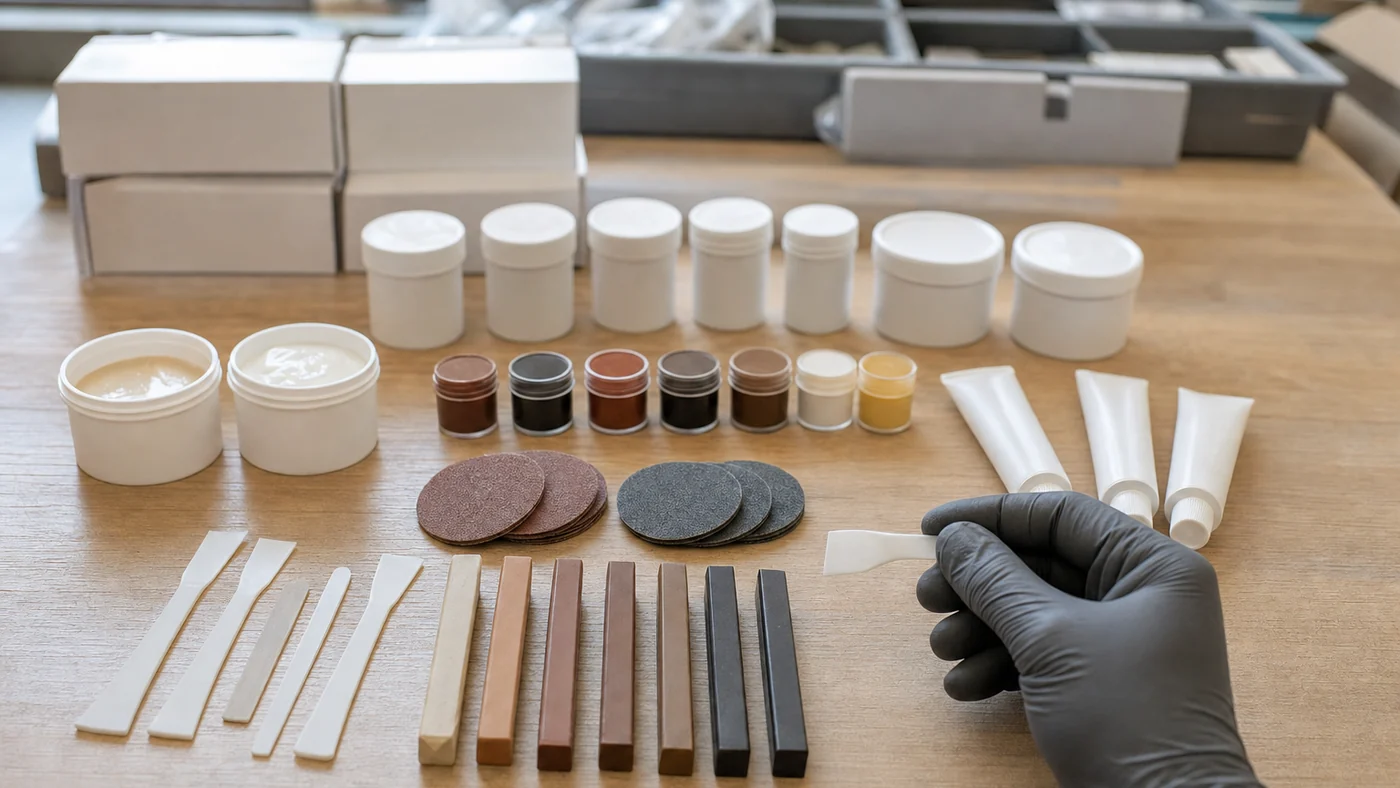
| Kit family | Typical contents (from catalog listings) | Main buyer | Biggest risk |
|---|---|---|---|
| Tub, tile and porcelain | Two-part A/B paste in tubs or a dual cartridge, colour tints, spatulas, sanding pads, gloves | Hardware and bathroom retail, property maintenance | Colour match on off-white enamel; mixing errors |
| Wall repair | Ready-to-use paste in a tube or bottle, scraper; some kits add mesh patches and sanding discs | DIY retail, rental and moving-out market | Shrinkage and cracking on deep holes; freezing in transit |
| Wood furniture touch-up | Touch-up markers, wax sticks, fillers, wood putty, sometimes beeswax | Furniture retail, flooring and moving services | Shade range versus the finishes your customers own |
| Leather and vinyl | Colour compound tubes, mixing tray, applicators, backing fabric | Furniture, auto-accessory and marketplace sellers | Colour mixing skill; flexibility of the repair |
Do not launch every family at once with full colour ranges. Start with the family that fits your channel and the colours that sell most (white and off-white for tub and tile, mid-brown shades for wood), and expand from sell-through data.
Tub, Tile and Porcelain Kits: Colour and Mixing
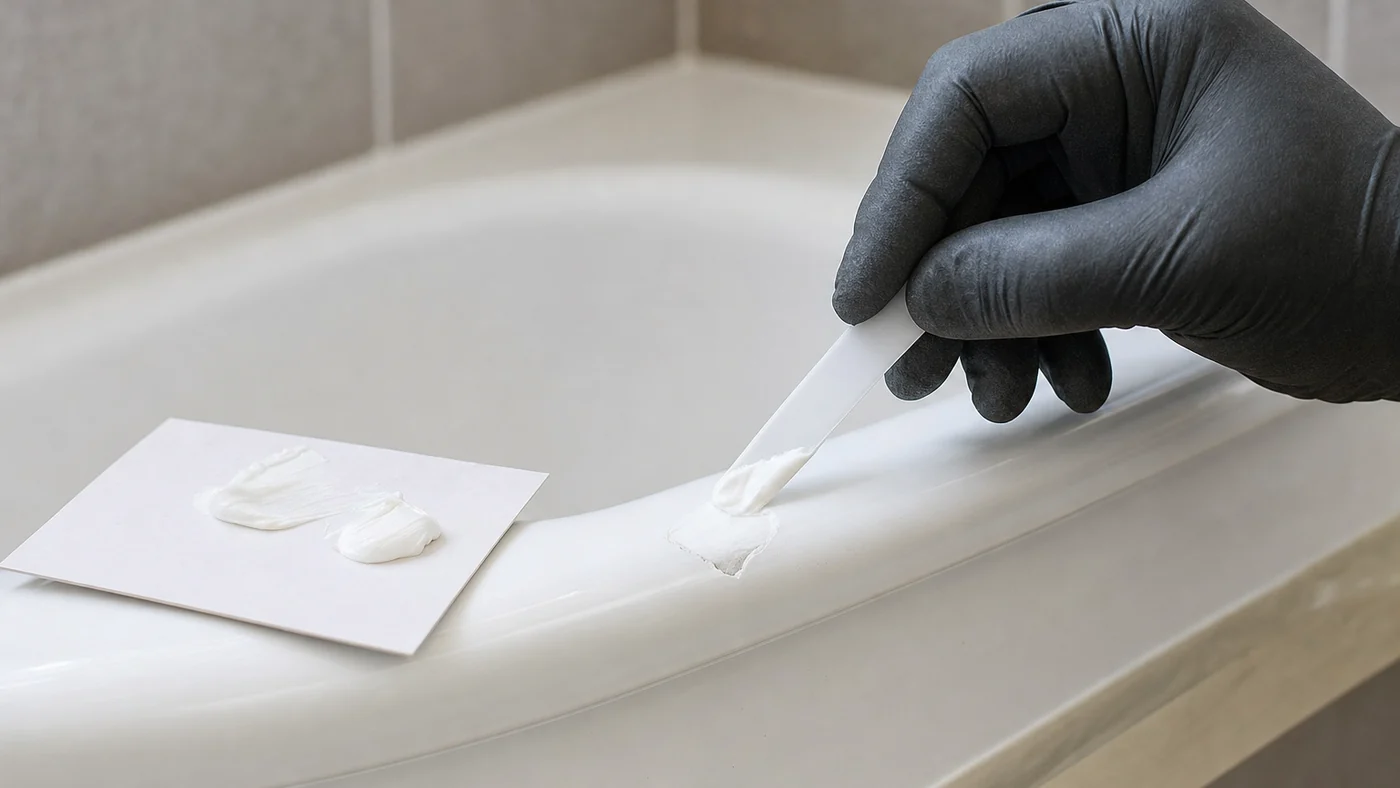
- Two-part systems: most tub and tile kits in GlueMFG's catalog are A/B pastes, some in a dual cartridge. Ask for the mixing ratio, working time and cure time, and print them clearly on the instructions.
- Colour tints: white bathtubs and sanitaryware are rarely pure white. Check how many tints are included and whether the instructions show how to mix common off-white and beige shades.
- Scope on the box: chips, small cracks and scratches, not refinishing a whole bath or repairing a tub that flexes. A clear scope cuts returns.
- Market language: one catalog listing (GLE-072) already shows a German-language box, so language versions exist; confirm the language set for your markets.
Joint sealing around baths and sinks is a sealant job, not a repair-kit job; see kitchen and bathroom silicone sealant.
Wall Repair Paste: Shrinkage, Finish and Season
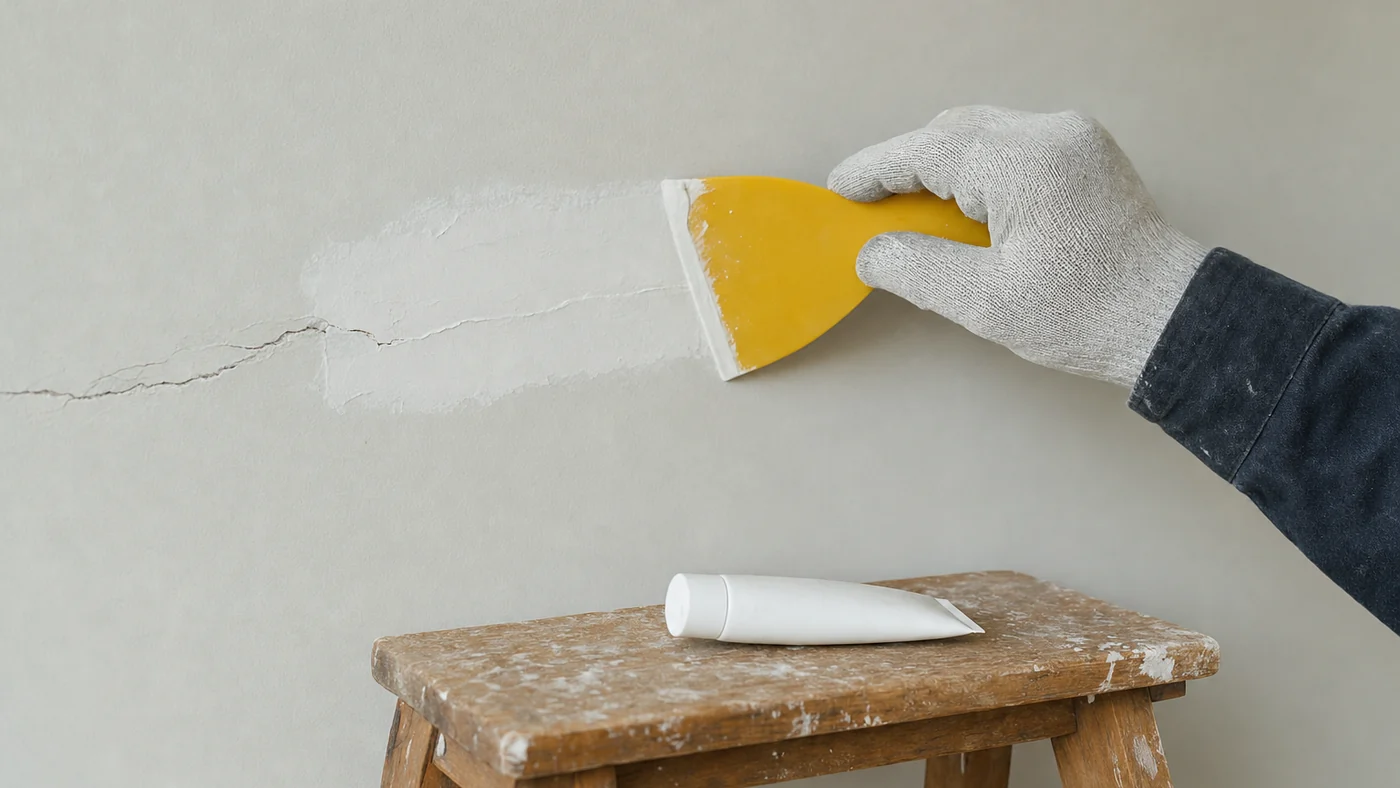
- Depth limits: ask the maximum fill depth per layer and whether deep holes need two passes. Shrinkage on deep fills is the most common complaint.
- Finish: check sanding, paintability and colour after drying. A paste that dries a different white from the wall still needs paint.
- Contents: GLE-080's listing shows 100 g tubes with mesh patches and sanding discs; GLE-079 adds a scraper. Decide which accessories your price point needs.
- Freezing: ready-to-use pastes are often water-based. Ask whether the grade passed a freeze-thaw test before planning winter shipments.
Wood and Leather Touch-Up: Shade Range and Claims
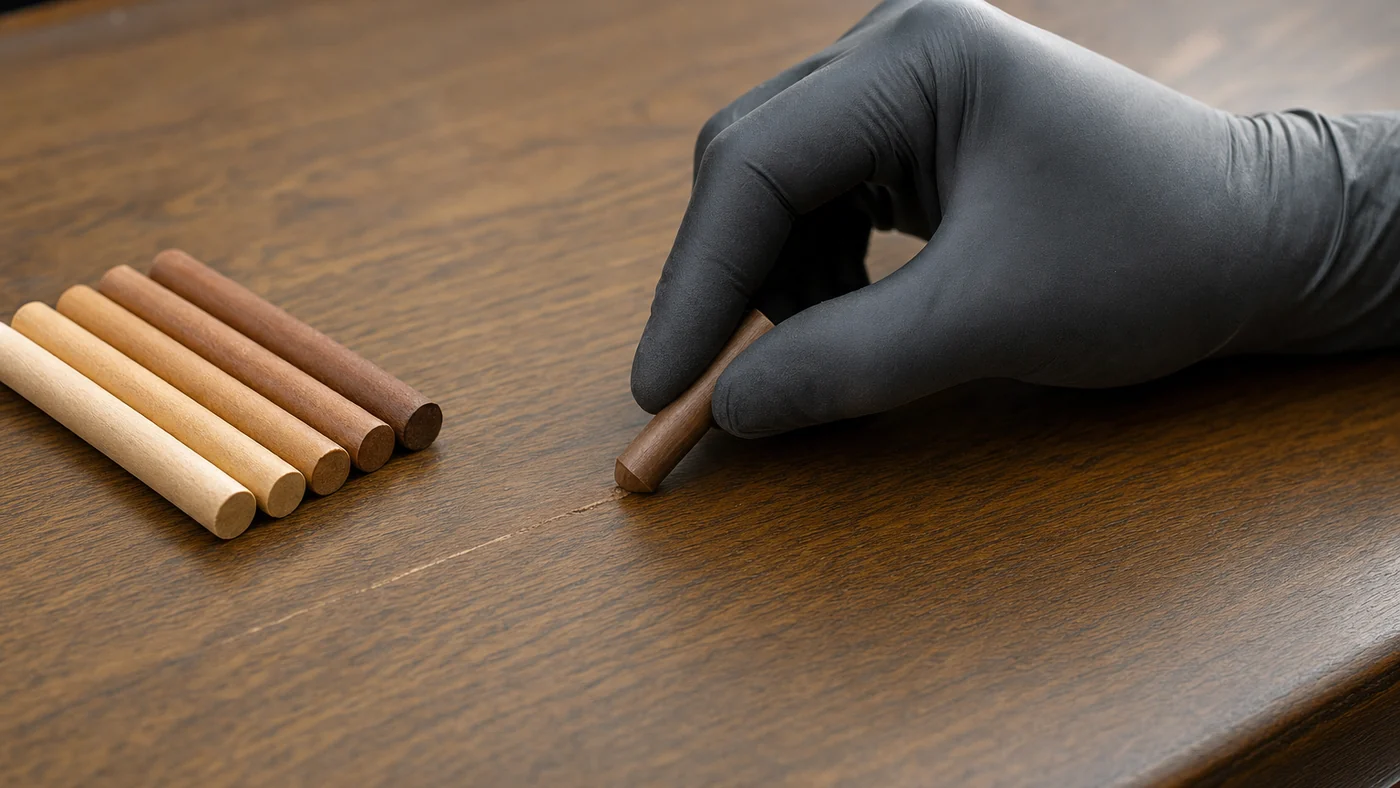
- Shade sets: wood kits such as GLE-092 and GLE-083 combine markers, wax sticks and fillers in several shades. Match the set to the furniture and flooring finishes common in your market.
- Leather and vinyl: GLE-086's listing shows a multi-colour compound set with mixing accessories. Ask whether the cured compound stays flexible and how it holds up on worn seating.
- Claims: skip "invisible", "permanent" and "professional results". Realistic before-and-after photos protect you from marketplace disputes.
- Packaging: printed boxes, inserts, blister cards and display trays add lead time and MOQ. See OEM adhesive packaging options.
Documents, Labels and Transport
- SDS per component: a kit can contain a two-part paste, a solvent-based marker and a water-based filler, each with its own classification. Ask for an SDS for every chemical component; see how to read an adhesive SDS.
- Hazard labels: if any component is classified, the outer pack may need hazard pictograms and statements in the local language (for example under CLP in the EU).
- Transport: most kits ship as general cargo, but Section 14 of each component's SDS decides it. Check before booking air or express.
- Shelf life: the shortest-lived component sets the kit's shelf life. Ask for lot dating on the box.
RFQ Checklist for Private-Label Repair Kits
- Kit family, channel and the surfaces and colours your customers need to repair.
- Contents list: components, accessories, number of tints or shades.
- Instructions: language set, mixing ratios, working and cure times, scope of use.
- Documents: SDS per component, any test reports, label wording for each market.
- Packaging: printed box, insert, blister or display tray, carton count, barcode.
- Shelf life and lot dating, freeze-thaw needs for water-based components.
- Quantity per kit and colour set, destination and target price for sample, trial and container orders.
What GlueMFG Can Support Around This Topic
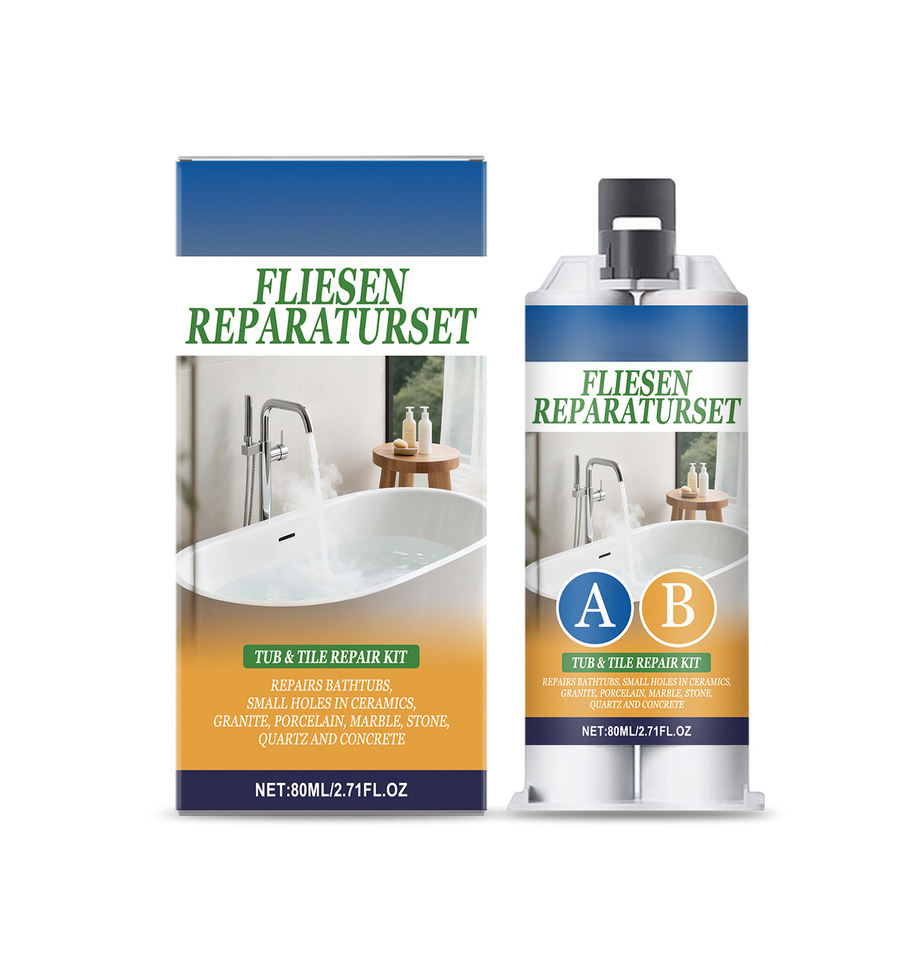
GLE-072 Porcelain tile repair kit
Two-part A/B system in a dual cartridge; listing shows an EU-language box. Low sampling MOQ; contents confirmed by inquiry.
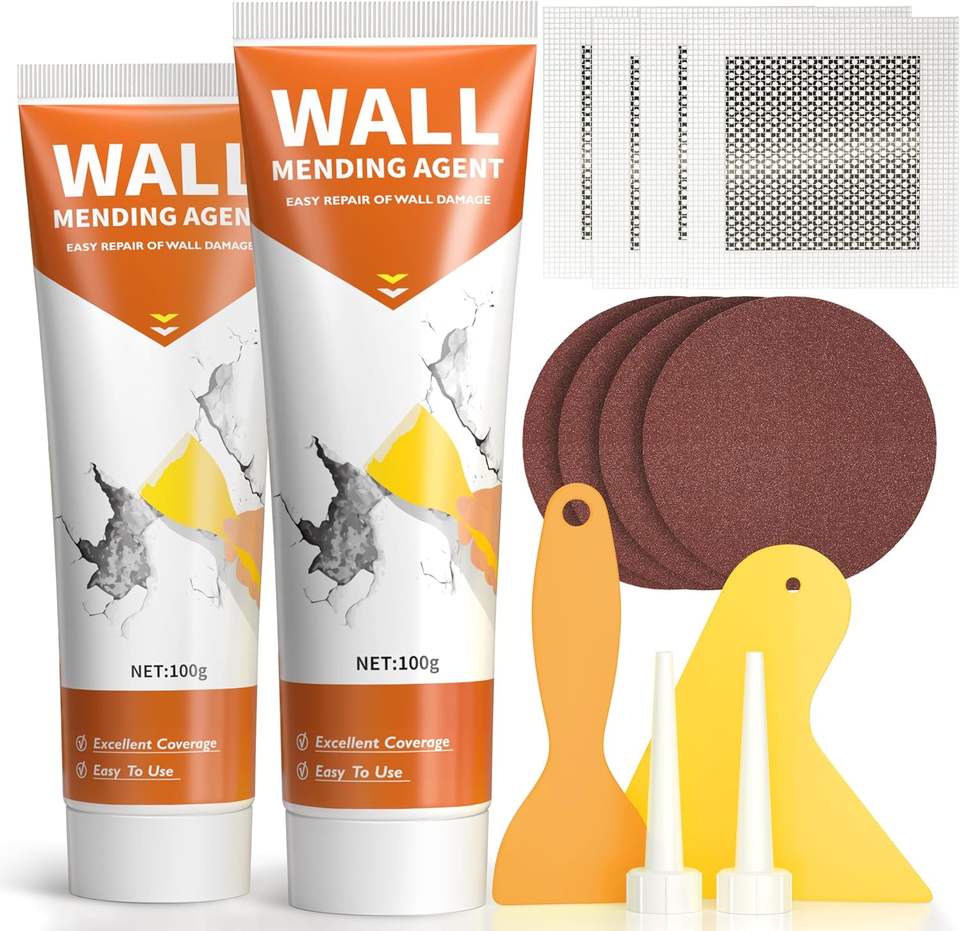
GLE-080 Wall repair paste
100 g tubes with mesh patches and sanding discs per listing. Listed MOQ 1,000; formula and freeze-thaw confirmed by inquiry.
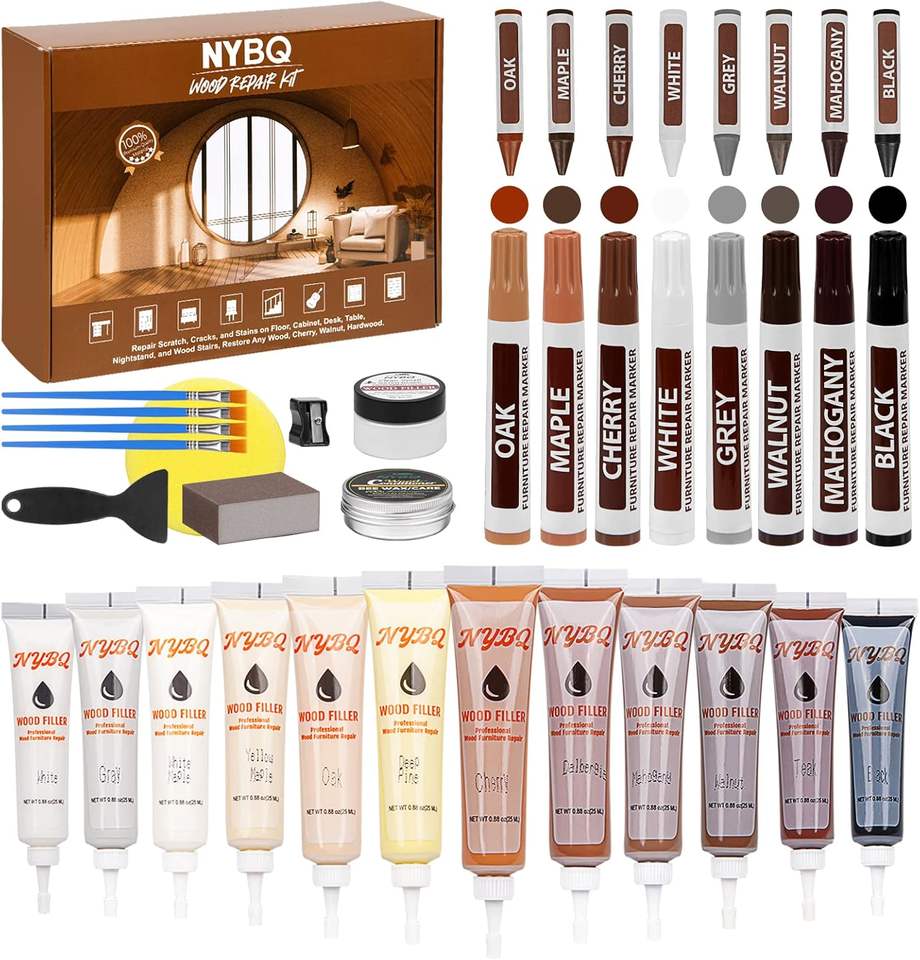
GLE-092 Wood touch-up kit
Markers, wax sticks and fillers in wood shades. Shade set and box artwork confirmed by inquiry.
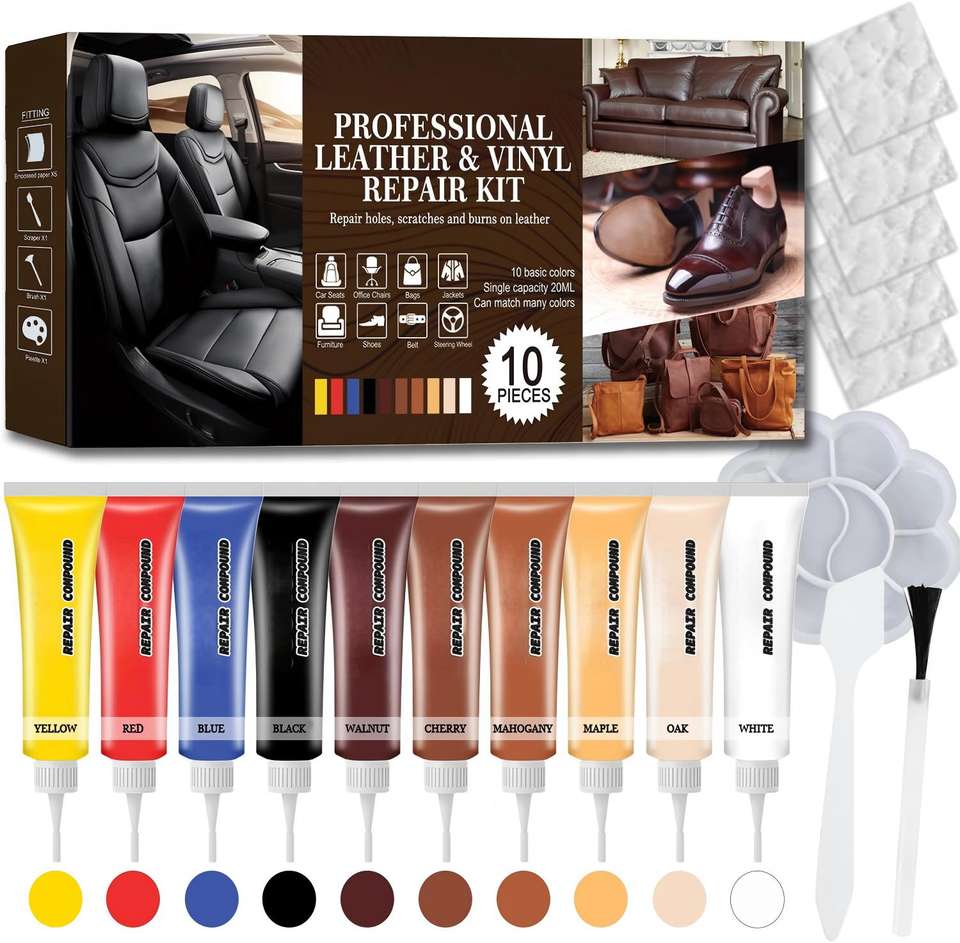
GLE-086 Leather and vinyl kit
Multi-colour compound set with mixing accessories. Listed MOQ 1,000; colours confirmed by inquiry.
Related GlueMFG Resources
- Kitchen and Bathroom Silicone Sealant: Mould-Resistant Grades
- Craft Glue and White School Glue: Private-Label Sourcing
- OEM Adhesive Packaging Options
- How to Read an Adhesive SDS: A Checklist for Importers
- GlueMFG product catalog
FAQ
What types of home repair kits can be private labelled?
The common families are tub, tile and porcelain repair kits (two-part A/B paste with colour tints), wall crack and hole repair paste with a scraper, wood furniture touch-up kits (markers, wax sticks, fillers, putty) and leather and vinyl colour repair kits. GlueMFG's catalog lists kits in all four families; contents and MOQ per kit are confirmed by inquiry.
What should I check first when sampling a repair kit?
Count every component against the contents list, test the kit on the surfaces and colours your customers actually have, check how close the colour match gets with the included tints, and read the instructions as a first-time user would. Then ask for the SDS of each chemical component.
Do repair kits need an SDS?
Each chemical component may need one. Two-part pastes, solvent-based markers or fillers can be classified as hazardous and then need an SDS and hazard labelling in markets such as the EU. Ask the supplier for an SDS per component and check Section 2 and Section 14 for labelling and transport.
Can the box say invisible or permanent repair?
Avoid it. Results depend on colour matching, surface preparation and the user's skill. Before-and-after photos on retail boxes are already read as promises; keep claims to what the kit does, such as filling chips or scratches, and show realistic results.
What is the MOQ for private-label repair kits?
It varies by kit. GlueMFG's catalog lists some kits from a few units for sampling and others at 500 to 1,000 units. Custom colour sets, printed boxes and language versions usually raise the MOQ; confirm per kit by inquiry.