A fast "5-minute" epoxy reaches handling strength in minutes but still needs about 24 hours to reach full cure. Standard 30-minute epoxies typically reach full strength in 24 hours, and slow structural formulas can need 24–72 hours. Unopened two-part epoxy is commonly rated for 12–24 months of shelf life from the production date when stored cool and sealed. The exact numbers are formula-specific — confirm them on the TDS of the SKU you are stocking, not on the front of the carton.
Cure time is one of the most common questions end users ask about epoxy — and one of the most common sources of complaints when the answer on the packaging is only half the story. For a distributor, the difference between "dry in 5 minutes" and "fully cured in 24 hours" is the difference between a satisfied repeat buyer and a warranty dispute.
This reference covers the three time figures that matter, what changes them in the field, and how shelf life should be handled when epoxy sits in a container, a warehouse, and then a shelf.
Three Numbers, Not One: Pot Life, Handling Time, Full Cure
Every two-part epoxy has three separate clocks running after mixing. Packaging usually advertises only the fastest one.
| Term | What it means | Why buyers should care |
|---|---|---|
| Pot life (working time) | How long the mixed epoxy stays fluid enough to apply. For a fast epoxy this can be only a few minutes. | Too short for the end user's job means wasted product and complaints; too long slows production lines. |
| Handling time | When bonded parts can be moved or take light load. This is the "5 minutes" or "30 minutes" on the label. | This is the number end users remember — and the one they misread as full strength. |
| Full cure | When the joint reaches final chemical and mechanical strength, typically 24 hours, up to 72 for slow structural formulas. | Load-bearing, sanding, drilling, immersion, and temperature exposure should wait for this clock. |
If your customers ask "how long until it dries", the safe distributor answer is: "You can let go of the parts after the handling time on the pack, but don't load or stress the joint until the next day." That one sentence prevents most epoxy complaints.
Typical Cure Profiles by Epoxy Type
| Epoxy type | Pot life | Handling time | Typical full cure | Channel fit |
|---|---|---|---|---|
| Fast / 5-minute epoxy | ~2–5 min | ~5–15 min | ~24 h | Retail repair, household, quick fixes |
| Standard 30-minute epoxy | ~20–30 min | ~1–2 h | ~24 h | Workshop, hardware, general bonding |
| Slow / structural epoxy | ~1 h or more | Several hours | 24–72 h | Industrial assembly, high-strength joints |
These are typical ranges for the category, not specifications. Two formulas with the same "5-minute" label can differ meaningfully in full-cure strength and temperature tolerance. When you shortlist a SKU, ask the factory for the TDS values of that exact formula.
What Changes Cure Time in the Field
Cure times printed on packaging assume room temperature, roughly 20–25°C, correct 1:1 mixing, and a thin-to-moderate bond line. Four things commonly break that assumption:
- Cold. Below about 10°C the reaction slows sharply. Joints can stay soft long past the advertised time — a frequent winter complaint in northern markets.
- Heat. High temperature accelerates cure and can cut pot life to a fraction, which end users read as "the product went bad".
- Mix ratio and mixing quality. Off-ratio or poorly mixed epoxy cures soft or tacky. Syringe and dual-cartridge formats reduce this risk versus separate tubes.
- Mass. A large mixed volume cures faster and hotter than a thin bead, because the reaction is exothermic; a very thin film can cure slower.
Shelf Life: The Number Importers Actually Need
Unopened two-part epoxy is commonly rated for 12–24 months from production date, stored cool, dry, and sealed. But the nominal rating is not the number that matters to an importer. What matters is remaining shelf life when the goods land.
Sea freight, port time, and warehouse transfer can consume months. A SKU with an 18-month rating that ships four months after production and spends two months in transit arrives with only 12 months of sellable life — before it sits on your shelf.
- Confirm the production date code format with the factory before the first order, and check it on arrival.
- Ask for fresh-production runs for stocking orders, not goods pulled from old inventory.
- Rotate first-in, first-out in your own warehouse, and keep cartons away from heat and direct sun.
- Watch for symptoms of aged stock: crystallized or thickened resin, separated hardener, or tubes that no longer cure to full hardness.
Do not stock fast 5-minute epoxy as your only epoxy SKU if your channel includes industrial or structural buyers. Its convenience trades away pot life and, in some formulas, ultimate strength and heat resistance. Tenders and assembly customers are usually better served by a standard or slow-cure structural formula — even though the fast SKU sells better at retail.
What GlueMFG Can Prepare for This Category
GlueMFG manufactures two-part AB epoxy adhesive lines in retail and trade formats. For epoxy stocking orders, we can confirm formula-level TDS values — pot life, handling time, full cure, and shelf life rating — plus production date coding, packaging format, and export documents (MSDS, COA) before you commit to bulk.
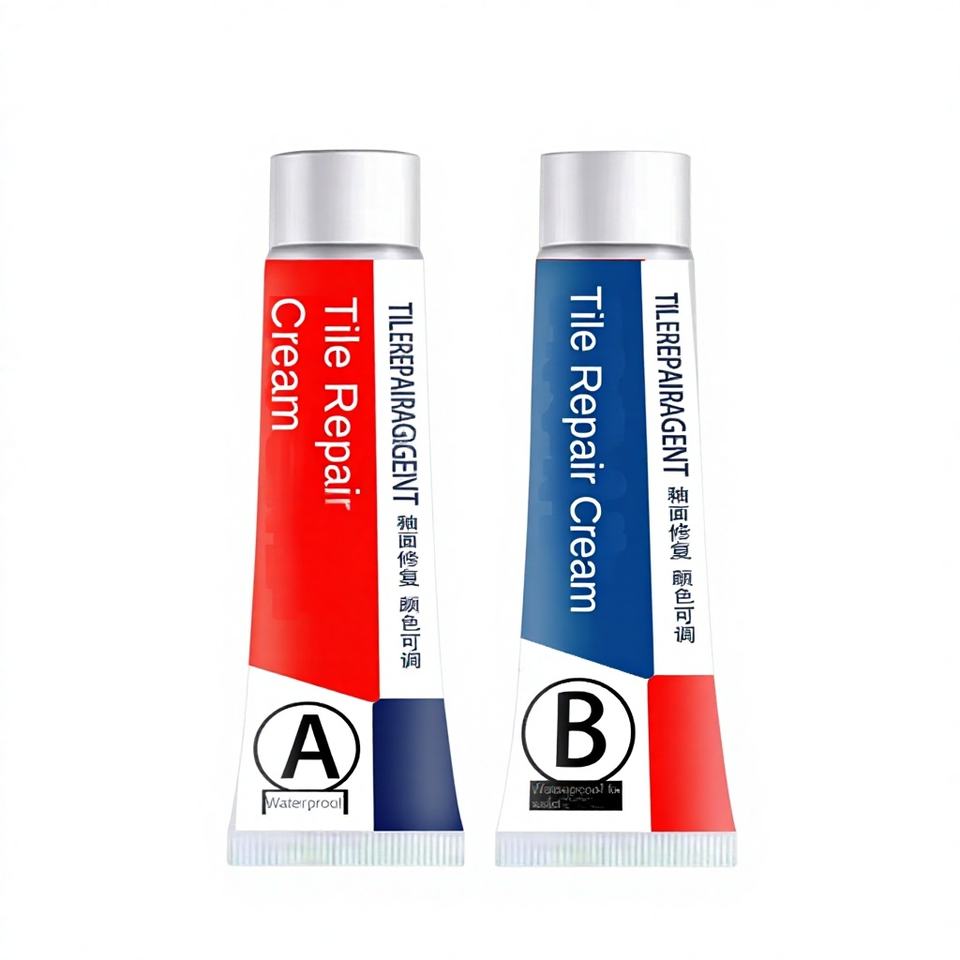
AB / Epoxy Adhesive Sets
Two-part epoxy in syringe and tube formats for repair, bonding, and assembly channels.
Epoxy Repair Lines
Formats and formulas positioned for hardware, workshop, and industrial buyers.
Private-Label Epoxy
Custom labels, cartons, and multipack formats built around your market — see the industrial adhesive manufacturer page.
Related GlueMFG Pages
Browse the GlueMFG product catalog for current epoxy and adhesive SKUs, read the silicone sealant sourcing guide, or review factory-direct industrial adhesive supply.
FAQ
How long does epoxy take to cure?
Fast 5-minute epoxies reach handling strength in minutes but still need roughly 24 hours for full cure. Standard formulas typically fully cure in 24 hours; slow structural formulas can need 24–72 hours. Confirm the TDS of the exact SKU.
What is the difference between pot life, handling time, and full cure?
Pot life is how long mixed epoxy stays workable, handling time is when parts can be moved, and full cure is when the joint reaches final strength. Quoting only the fastest number misleads end users.
What is the typical shelf life of epoxy adhesive?
Commonly 12–24 months unopened from production date, stored cool, dry, and sealed. The rating is formula-specific — and importers should track remaining shelf life at landing, not the nominal figure.
Does temperature change epoxy cure time?
Yes, strongly. Cold slows cure and can leave joints soft past the advertised time; heat shortens pot life and accelerates cure. Label times assume roughly 20–25°C.
How should distributors store epoxy stock?
Sealed cartons, cool dry warehouse, off the floor, away from sun and heat. Rotate first-in first-out using the production date code, and avoid long storage in hot containers.