The best glue for glass and the best glue for ceramic depend on the joint. UV-curing adhesive is common for clear glass-to-glass and glass-to-metal joints where light reaches the bond; clear two-part epoxy fits joints that light cannot reach and rigid ceramic repairs; silicone fits joints that must seal and move; repair fillers and kits fit chips in tiles, sinks and bathtubs. Ask for tests on your glass or ceramic; for GlueMFG products this is confirmed by inquiry.
Buyers for furniture, display, giftware, bathroom and repair-kit ranges ask for glue that holds on glass or ceramic and still looks clean. Both materials are smooth, hard and often visible, so appearance and washing matter as much as strength. This guide explains how to identify the surface, when UV adhesive, epoxy, instant glue or silicone fits, what changes for ceramic repair, and what to test and ask in the RFQ. For UV equipment and grades, see UV curing adhesive.
Identify the Glass or Ceramic Surface First
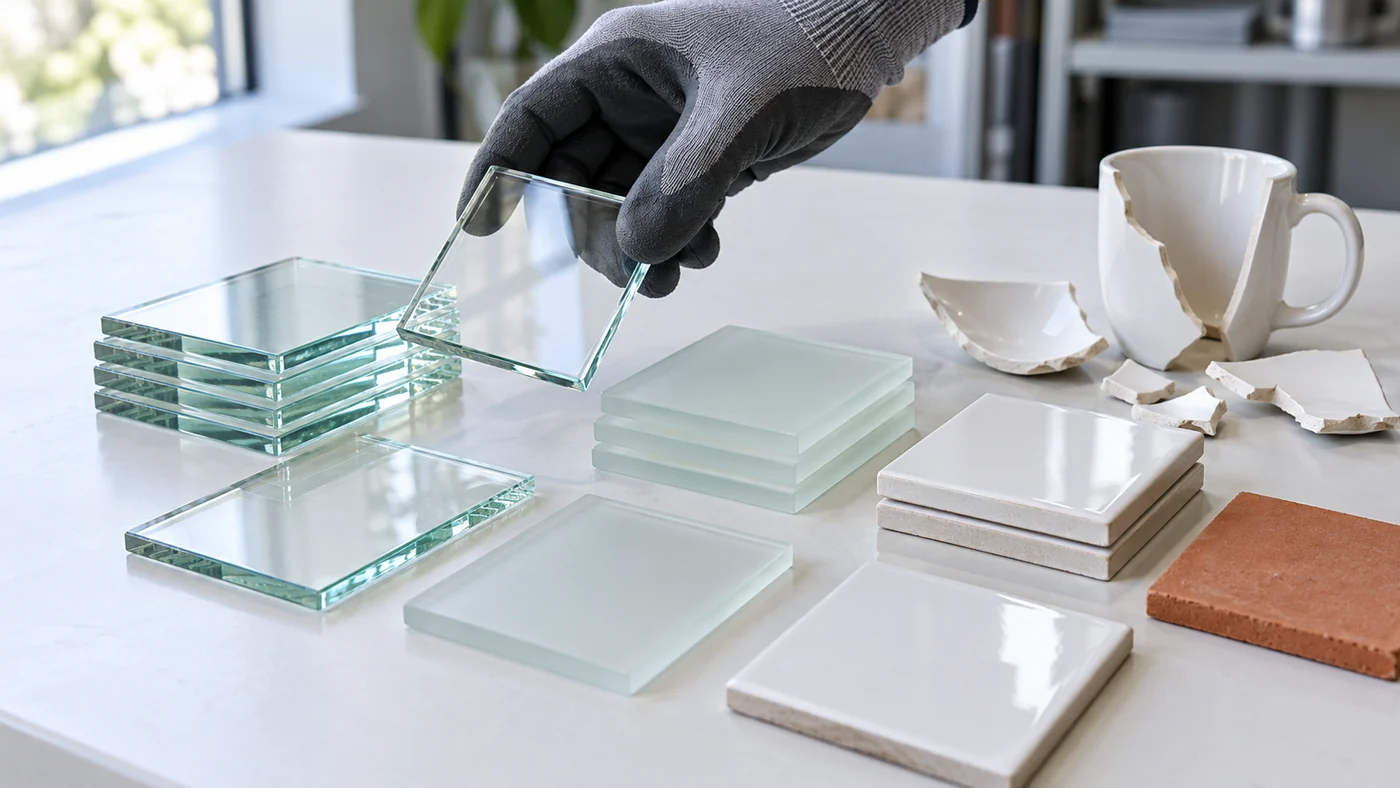
| Surface | Typical products | What affects bonding | Usual starting point |
|---|---|---|---|
| Clear float or tempered glass | Furniture, display cases, shelves | Smooth surface; bond line is visible | UV-curing adhesive or clear epoxy |
| Frosted or coated glass | Doors, decorative panels | Coatings and films can be the weak link | Test on the coated side |
| Glazed ceramic and porcelain | Tableware, sanitaryware, tiles | Hard, non-porous glaze | Two-part epoxy; instant glue for small pieces |
| Unglazed ceramic and terracotta | Pots, garden products, bisque | Porous; absorbs thin glue | Thicker epoxy or gel grades; test |
| Glass or ceramic to metal | Hinges, table bases, handles, fittings | Different expansion with temperature | UV adhesive, toughened epoxy or silicone; test |
Do not sell a general instant glue as a glass or dishwasher-safe glue without test data. Smooth glass bonds made with general grades can turn brittle or let go after washing and temperature change.
UV-Curing Adhesive for Clear Glass Joints
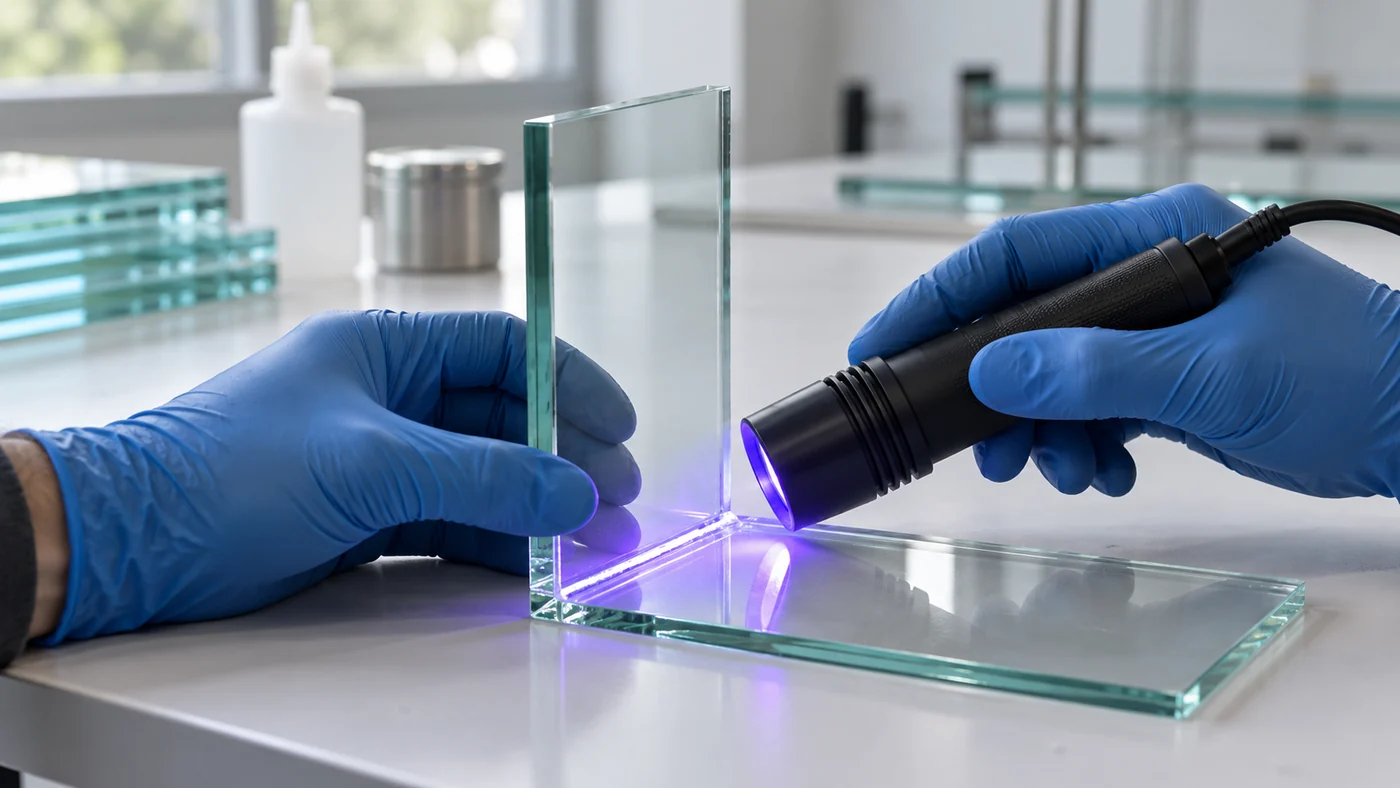
- Where it fits: glass-to-glass and glass-to-metal joints in furniture, display cases and giftware where a clear, fast joint is needed.
- Light must reach the bond: UV light passes through clear glass but not through metal, ceramic or dark coatings. Some glass blocks part of the UV range; ask which wavelength and lamp the grade needs.
- Clarity and yellowing: ask about clarity after cure and after sunlight or heat aging if the joint is visible.
- Equipment: lamp type, intensity and exposure time are part of the process. See UV curing adhesive sourcing guide.
Epoxy, Instant Glue and Repair Fillers for Ceramic
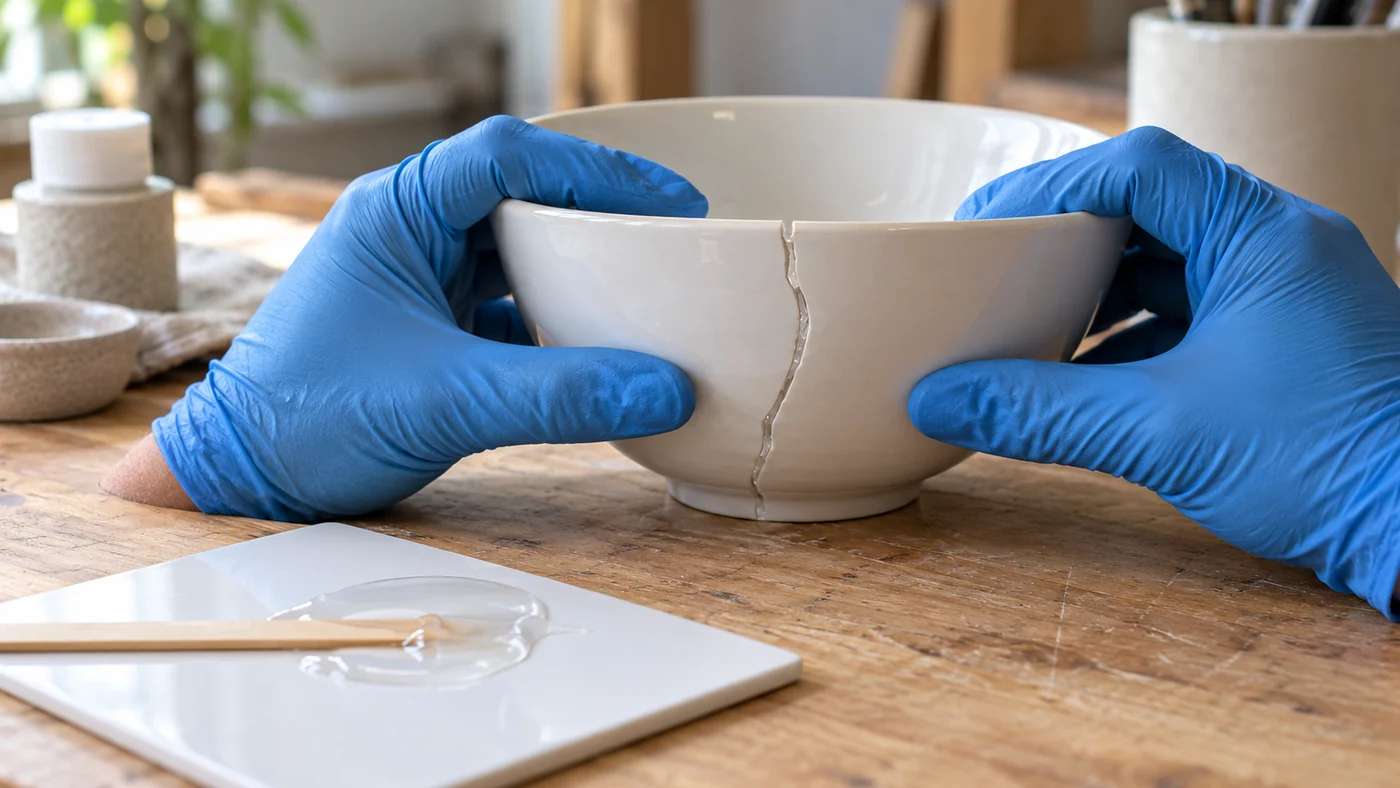
- Two-part epoxy: common for broken ceramic and porcelain, and for glass joints that UV light cannot reach. Clear grades suit visible joints; check yellowing over time. See epoxy cure time and shelf life.
- Instant glue: fits small, close-fitting pieces and quick repairs; it does not fill gaps and can whiten near the joint. See cyanoacrylate grades.
- Repair fillers and kits: chips and cracks in tiles, sinks and bathtubs are filled and colour-matched rather than glued. See home repair kit private label.
- Tile fixing: fixing tiles to walls and floors uses tile adhesive, a different product family with its own standards.
- Food and dishwasher use: only claim it with test data and a certificate for the product and market.
Glass-to-Metal Joints and Testing Before You Order
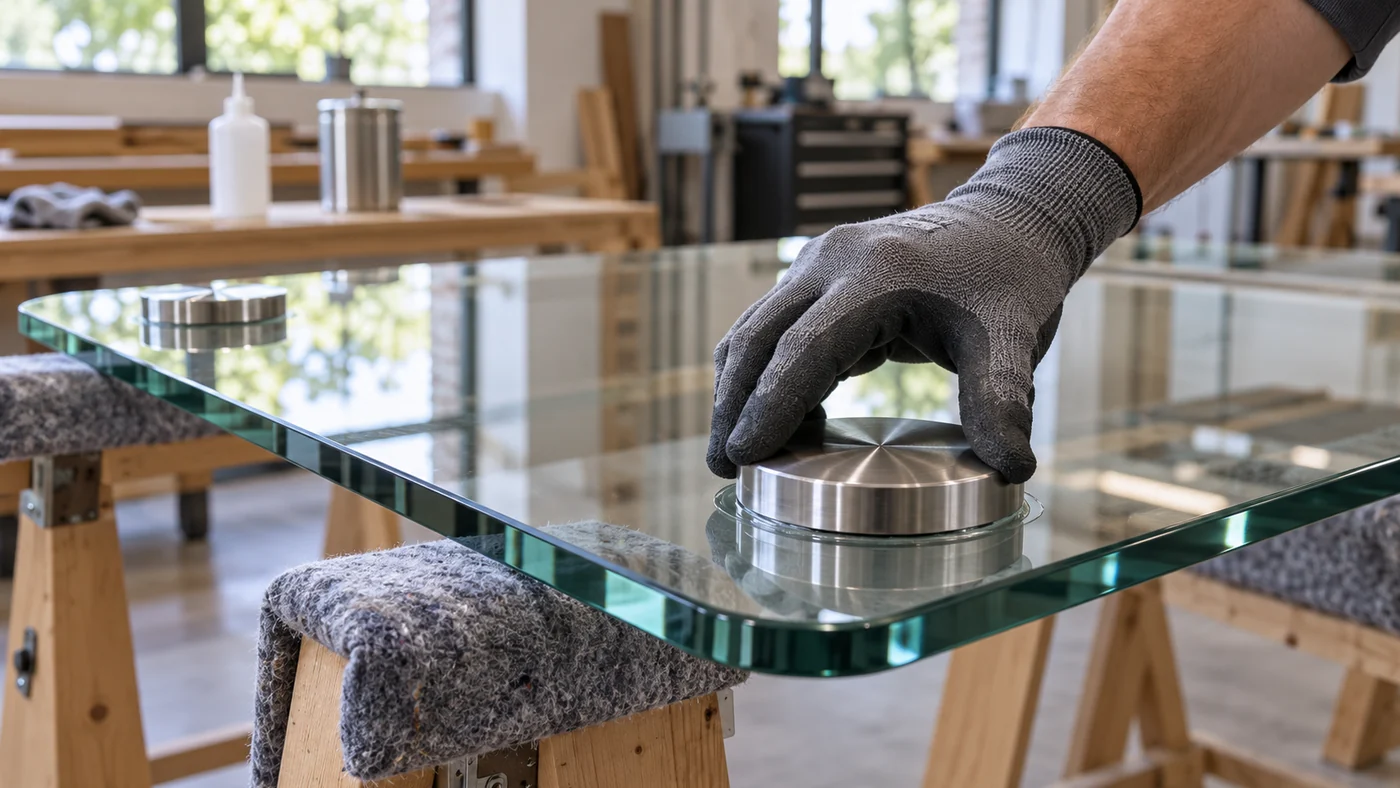
- Hardware on glass: tempered glass cannot be drilled after tempering, so mounts, hinges and handles are often bonded. Ask for data on glass-to-steel or glass-to-aluminium with your hardware finish.
- Movement: glass, ceramic and metal expand differently with temperature. Very rigid bond lines can crack glass or let go; toughened or flexible grades and the right bond-line thickness help.
- Age the samples: test after heat, cold, humidity, washing and sunlight if the product will see them, and check appearance as well as strength.
- Seal or bond: glazing, shower screens and tanks usually need silicone. See window silicone sealant and aquarium silicone sealant.
- Agree the method: write the test and pass level into the order. See adhesive strength testing for buyers.
RFQ Checklist for Glass and Ceramic Adhesives
- Materials on each side: clear, frosted, coated or tempered glass; glazed or unglazed ceramic; metal hardware and its finish.
- Joint size, load and whether the joint is visible and must stay clear.
- Process: UV lamp available or not, fixture time, clamping, and line speed.
- Environment: indoor or outdoor, temperature change, washing, dishwasher, water or sunlight.
- Any food-contact, dishwasher or other certificate needed, and for which market.
- Pack format for line, repair kit or retail, label language, SDS and test reports.
- Quantity and destination for sample, trial and container orders.
What GlueMFG Can Support Around This Topic
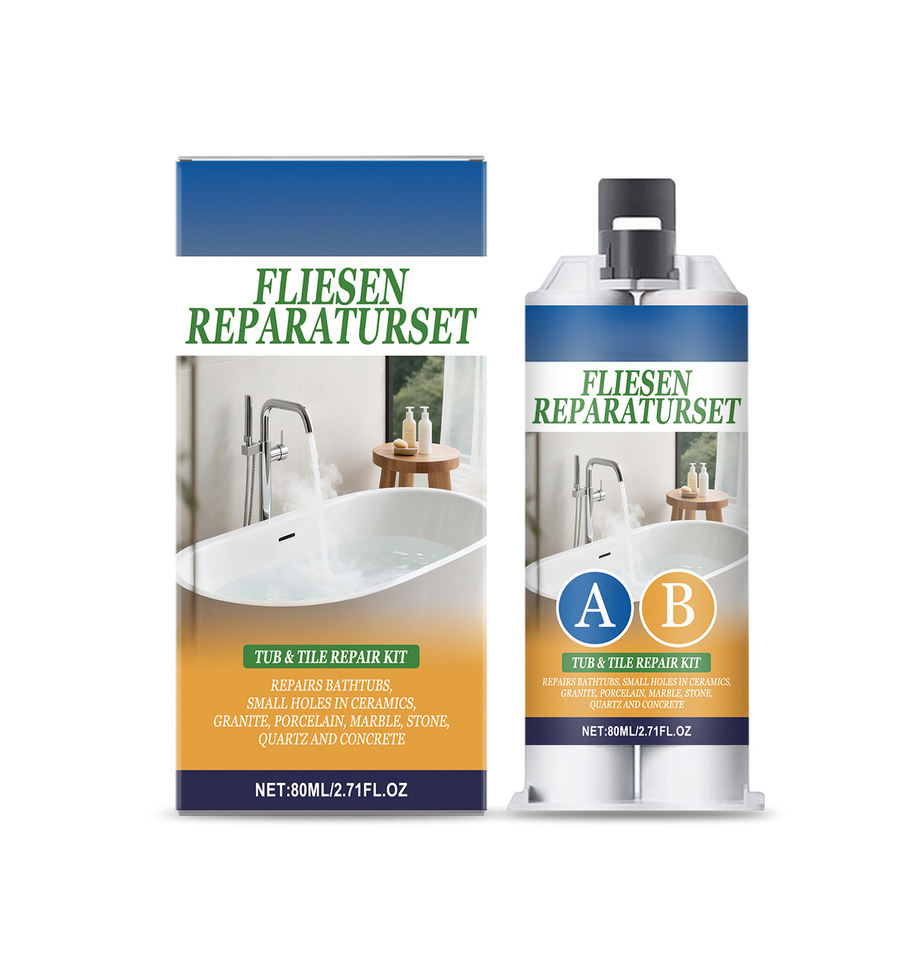
GLE-072 Porcelain tile repair kit
Listed repair kit for porcelain and tile chips. Colours, pack contents and MOQ are confirmed by inquiry.
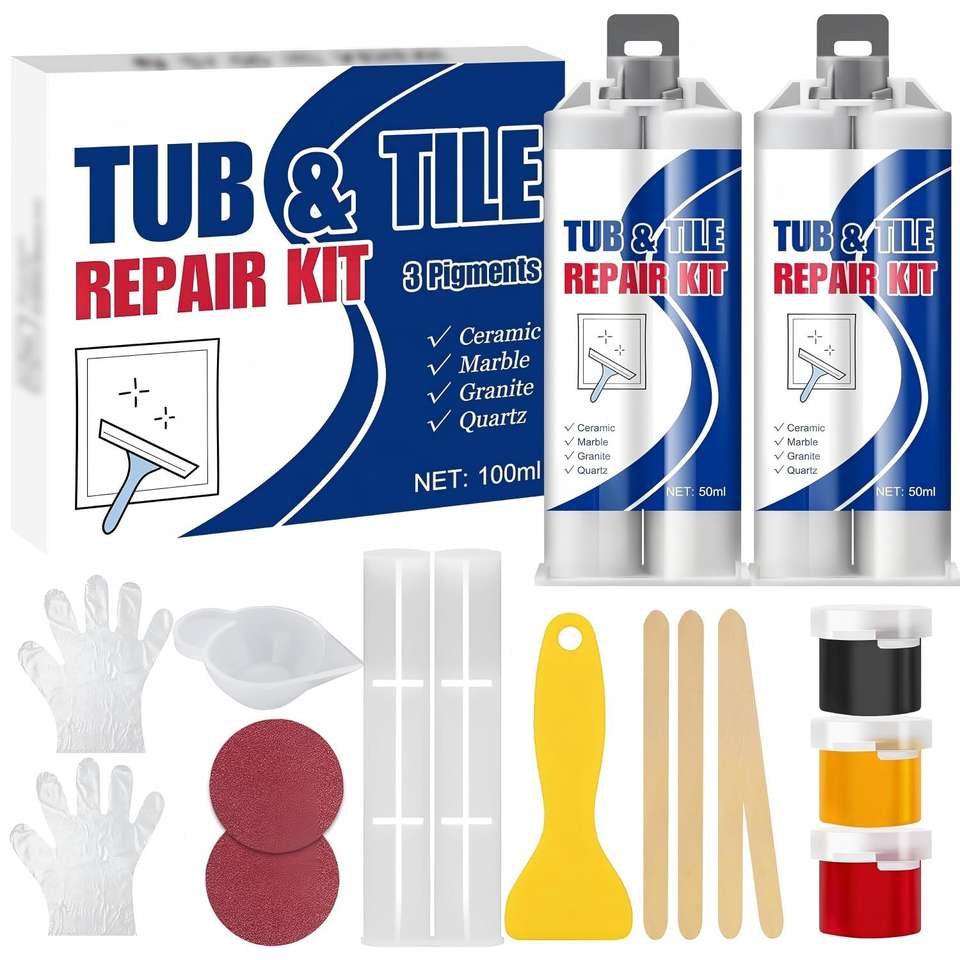
GLE-010 Ceramic repair filler
Listed ceramic repair filler. Suitable surfaces, colour match and documents are confirmed by inquiry.
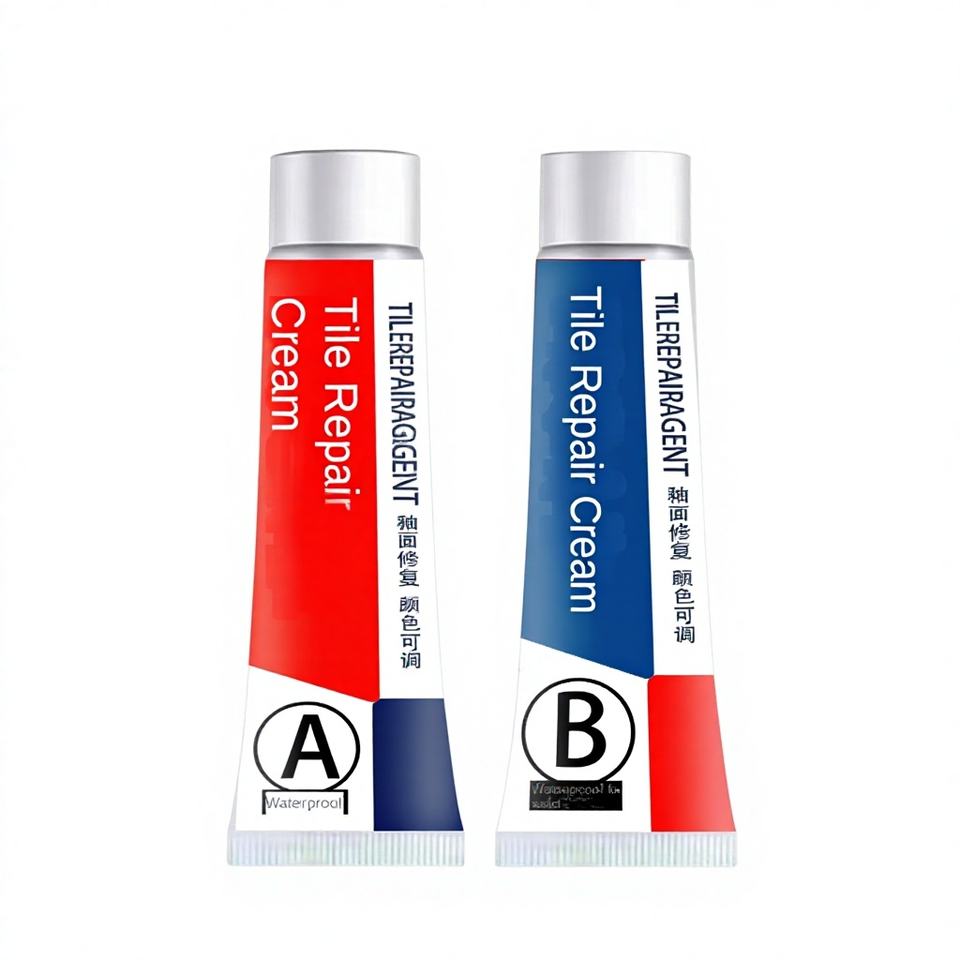
GLE-001 Epoxy resin adhesive
Listed two-part epoxy in sets. Clarity, glass and ceramic suitability and test data are confirmed by inquiry.
Related GlueMFG Resources
- UV Curing Adhesive Sourcing Guide
- Metal Bonding Adhesives for B2B Buyers
- Home Repair Kit Private Label Sourcing
- Plastic Bonding Adhesives for B2B Buyers
- GlueMFG product catalog
FAQ
What is the best glue for glass?
It depends on the joint. UV-curing adhesives are widely used for clear glass-to-glass and glass-to-metal joints in furniture and displays when light can reach the bond line; clear two-part epoxy suits joints where UV light cannot reach; silicone suits glazing, tanks and joints that must seal and move. Test the shortlisted grade on your glass and hardware.
Does super glue work on glass?
Instant glue can hold small glass parts, but bonds on smooth glass are often brittle and can weaken with washing, temperature change or long water exposure. It can also leave a white haze near the joint. For visible or load-bearing glass joints, compare UV-curing adhesive or clear epoxy on your own parts.
What glue works on ceramic and porcelain?
Two-part epoxy is a common choice for rigid ceramic and porcelain repairs, and instant glue suits small, tight-fitting pieces. Chips in tiles, sinks and bathtubs are usually filled with a repair filler or kit rather than glued. Tile fixing to walls and floors is a different job that uses tile adhesive.
Is glue for glass and ceramics food safe or dishwasher safe?
Do not assume so. Food-contact or dishwasher claims need test data and certificates for the specific product and market. If repaired tableware or kitchenware will be marketed for food use, ask the supplier for the certificate and its scope before printing the claim.
Which glass and ceramic products does GlueMFG list?
GlueMFG lists a porcelain tile repair kit (GLE-072), a ceramic repair filler (GLE-010), two-part epoxy (GLE-001) and instant glue (GLE-036). Suitability on your glass or ceramic, clarity, test data, SDS and MOQ are confirmed by inquiry.