Clear epoxy glue (epoxy resin glue, AB glue) is a two-part adhesive chosen when the glue line is visible: glass, acrylic, displays, giftware and decorative parts. Check initial clarity, yellowing over time, bubbles, cure speed and water resistance on your own materials, and do not use adhesive grades for thick pours. For GlueMFG products, clarity and these properties are confirmed by inquiry.
Display and shopfitting makers, giftware and craft brands, small furniture and lighting assemblers, and distributors of repair adhesives often specify “clear epoxy” and assume all clear grades look the same. In practice some start slightly amber, some turn yellow in a few months near a window, and fast grades trap bubbles. This guide covers where clear epoxy fits, how to mix and apply it for a clean line, what to check for appearance and water exposure, and the RFQ data to agree before ordering. For pack formats and mix ratio QC, see AB glue and two-part epoxy for importers; for glass and ceramic across glue families, see glass and ceramic bonding adhesives.
Where Clear Epoxy Fits
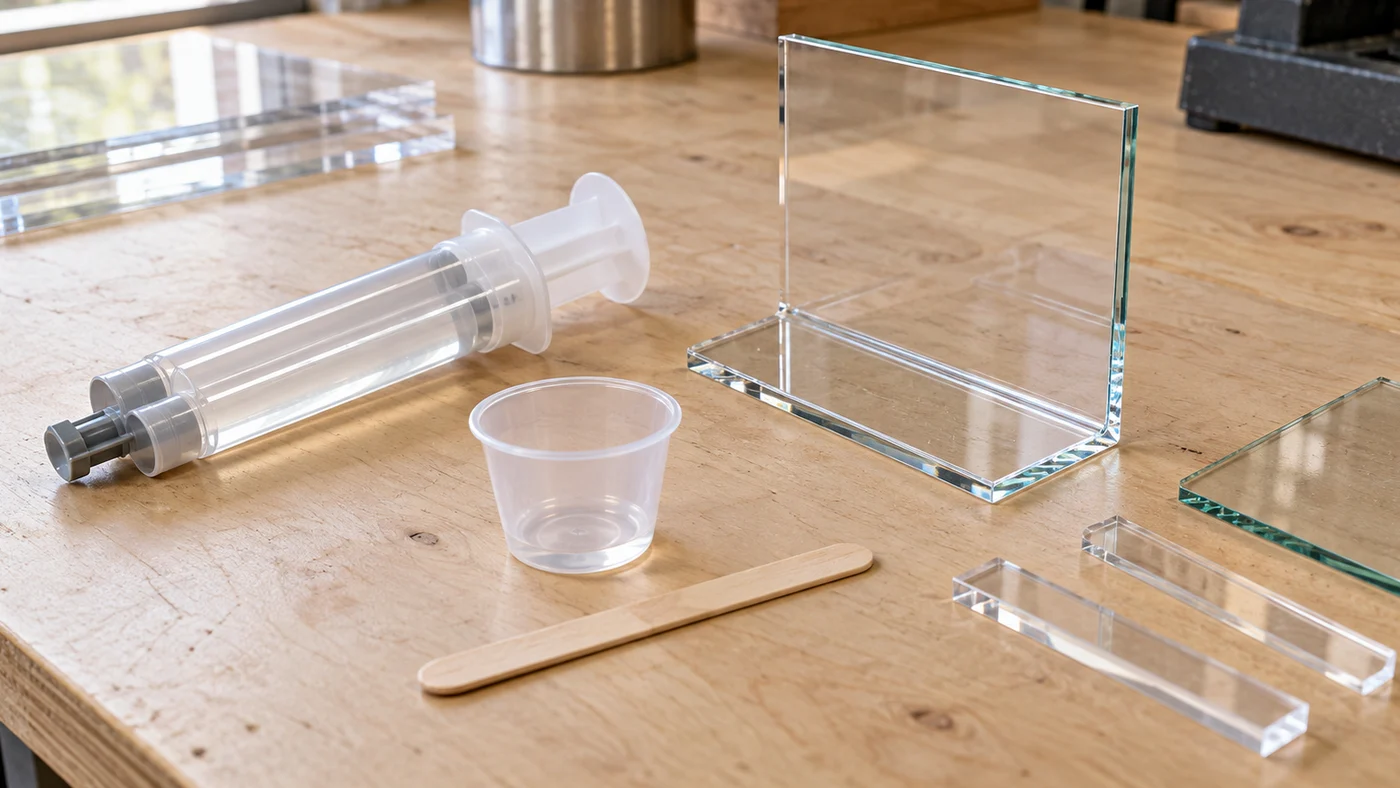
| Job | Why clear epoxy | Check first |
|---|---|---|
| Glass and acrylic displays | Visible joints, gap filling, rigid bond | Clarity, yellowing, stress cracking on acrylic |
| Giftware, jewellery, decorative parts | Bonds metal, stone, glass and wood together | Cure time per piece, squeeze-out clean-up |
| Fittings in furniture and lighting | Strong, small, neat joints | Heat from lamps, load and peel |
| Retail repair packs | Multi-material repairs at home | Mix ease, pack format, label claims |
Do not use clear epoxy adhesive for thick pours, coatings or river tables. Glue grades can overheat, crack and yellow when poured deep; ask for a casting or coating resin for those jobs.
Mixing for a Clean, Bubble-Free Line
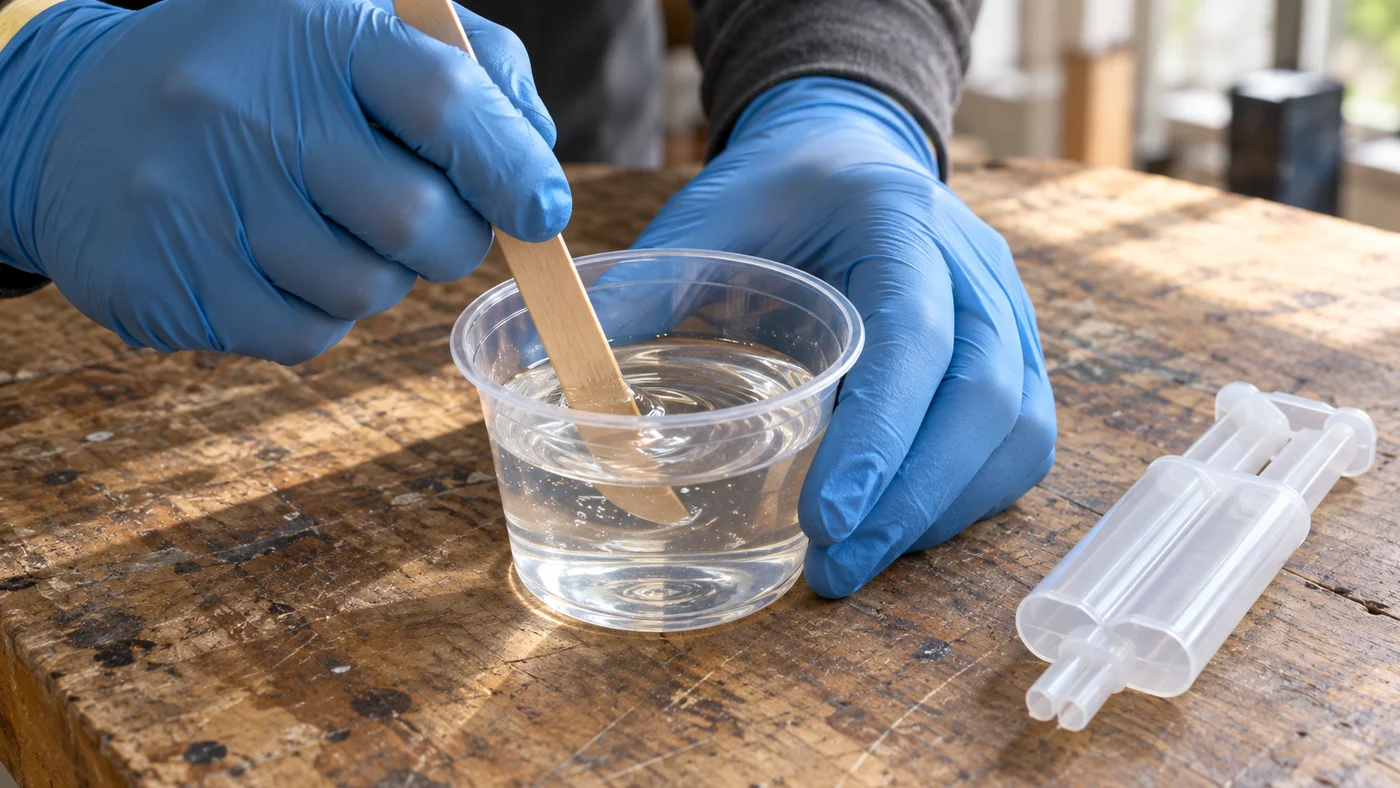
- Ratio: dispense the stated ratio exactly; dual syringes and cartridges with static mixers reduce errors. Off-ratio mixes can stay tacky or cloudy.
- Stir slowly: scrape the sides and bottom, avoid whipping air in, and let small bubbles rise before applying.
- Pot life: fast grades give little time to release bubbles and position parts; slower grades usually give clearer lines. See fast vs slow cure epoxy.
- Temperature: cold epoxy is thick and holds bubbles; warm the components to room temperature, not above the supplier's limit.
Bonding Glass and Acrylic
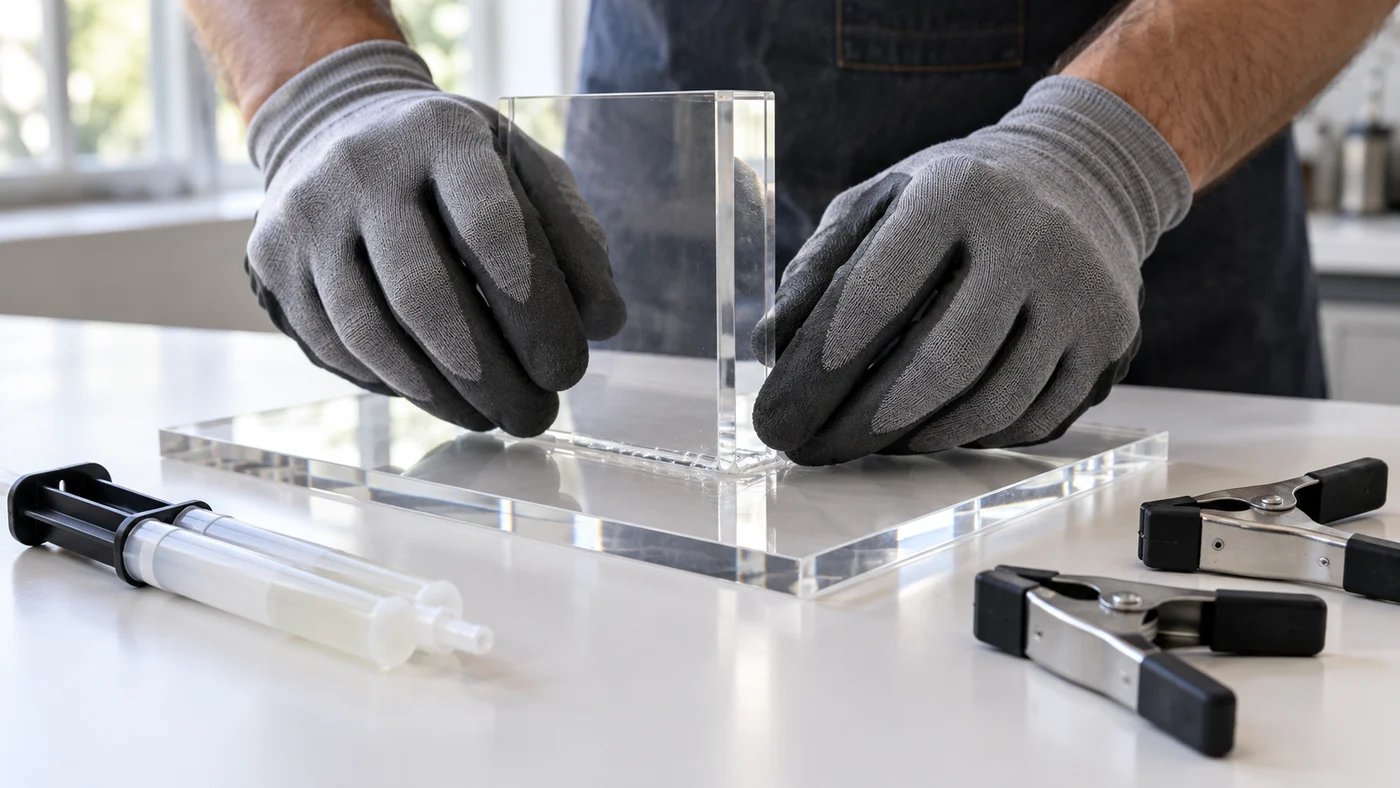
- Preparation: clean glass and acrylic with a suitable cleaner and avoid fingerprints; light abrasion helps on hidden faces but shows on visible ones.
- Acrylic stress cracking: some solvents and cleaners craze acrylic; confirm the cleaner and adhesive are compatible with your sheet.
- Glass and movement: glass and metal expand differently; large rigid bonds between them can crack under temperature change. Test the actual part.
- Squeeze-out: remove it before gel time; cured epoxy is hard to remove without marking the surface.
- Alternatives: for very fast, invisible glass joints, UV-curing adhesives may fit better. See UV-curing adhesive sourcing.
Clarity, Yellowing and Water Tests
| Check | Why it matters | How buyers check |
|---|---|---|
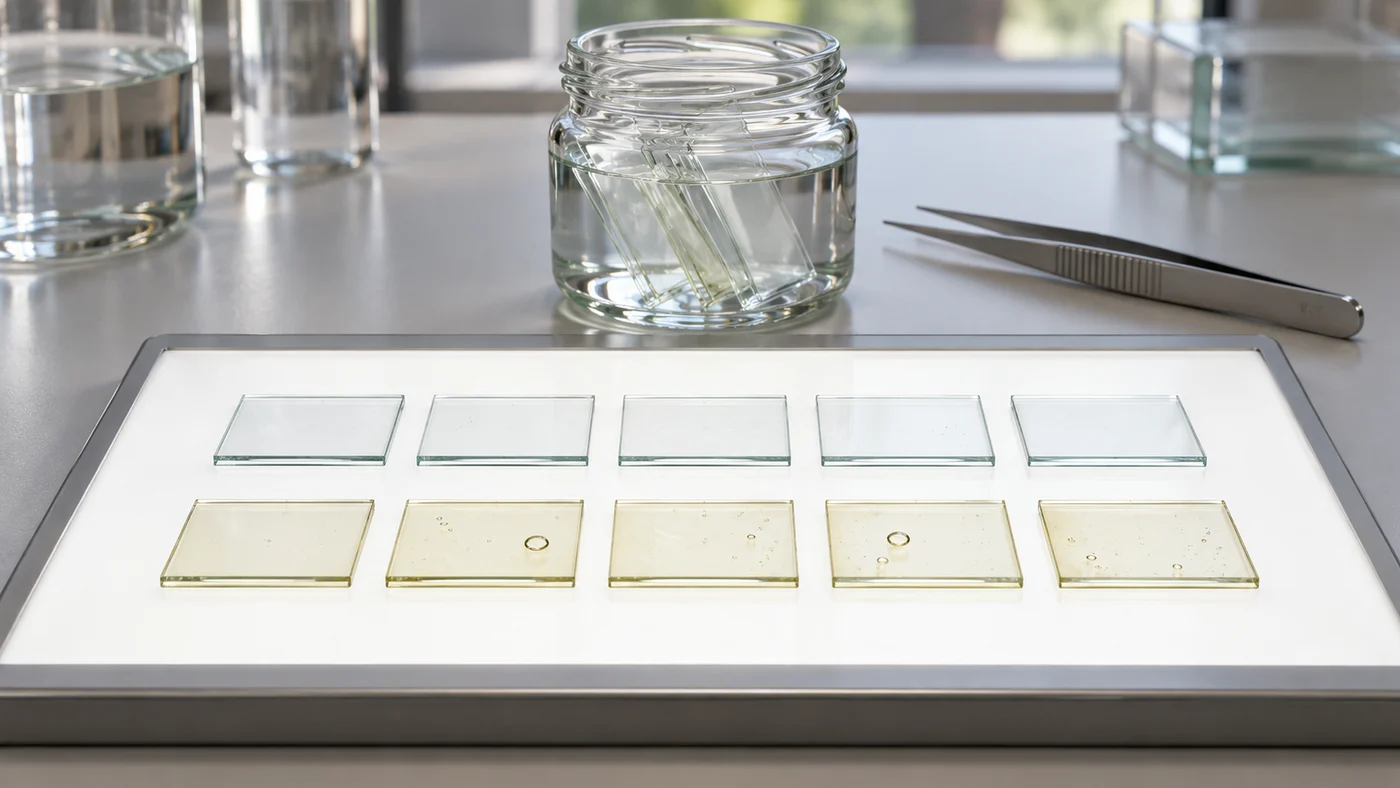
| Initial clarity and colour | Some grades start amber or hazy | Bond glass slides; view on a white light panel |
| Yellowing | Display and giftware returns | Age samples in sunlight or warm storage, compare with fresh ones |
| Bubbles | Visible defects in the joint | Inspect bonded samples from your real mixing method |
| Water and humidity | Bathroom, outdoor and washed items | Soak bonded samples, then check clarity and strength |
- Strength: agree sample size, cure time and test method. See adhesive strength testing for buyers.
- Cure and shelf life: see epoxy cure time and shelf life; some hardeners darken with age in the pack.
- SDS and transport: resin and hardener often carry different hazard labels; check SDS sections 2 and 14 for both parts. See how to read an adhesive SDS.
RFQ Checklist for Clear Epoxy Glue
- Products and job: displays, giftware, fittings, repair packs or other.
- Materials on both sides of the joint (glass, acrylic type, metal, stone, wood).
- Appearance: clarity needed, acceptable tint, non-yellowing requirement, light and heat exposure.
- Water, humidity or cleaning exposure in use.
- Process: mixing method, pot life and handling time needed, clamping.
- Pack format (dual syringe, cartridge, bottles, bulk), label language and documents: TDS, SDS, test reports.
- Quantity per SKU, destination port and sample, trial and order plan.
What GlueMFG Can Support Around This Topic
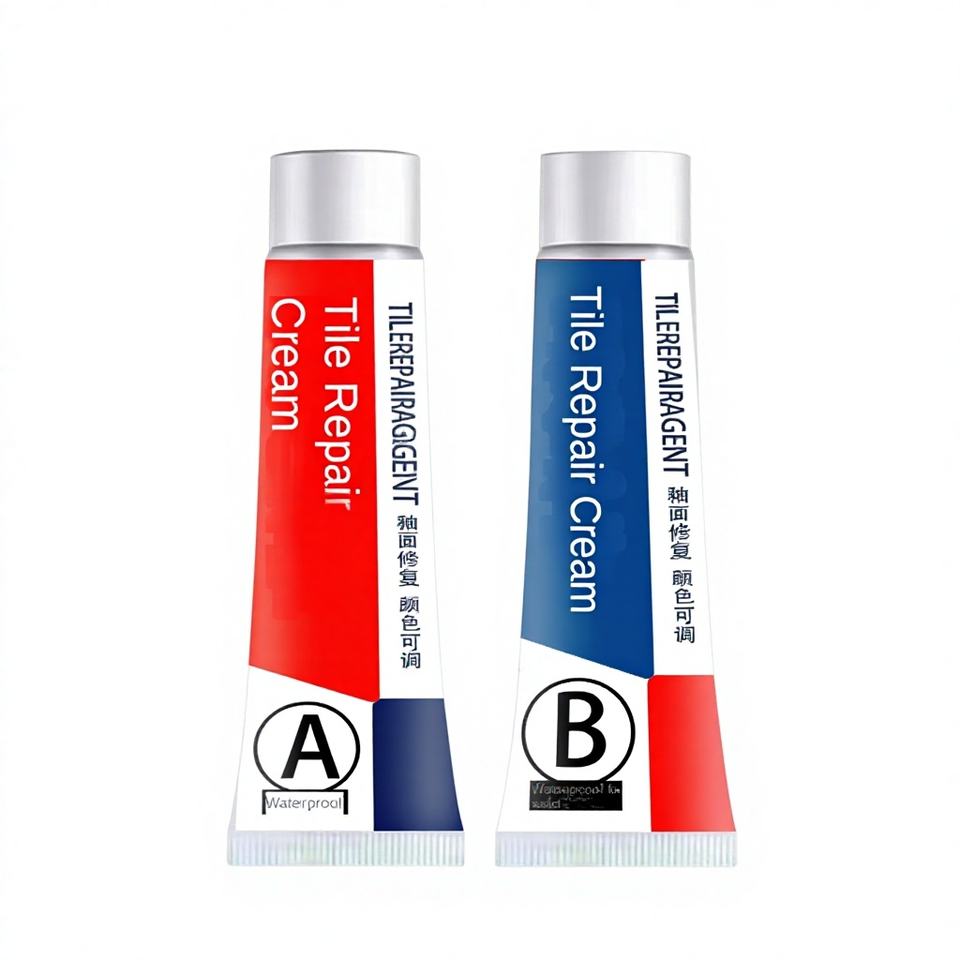
GLE-001 Epoxy resin adhesive
Listed two-part epoxy. Clarity, yellowing resistance, cure time and documents are confirmed by inquiry.
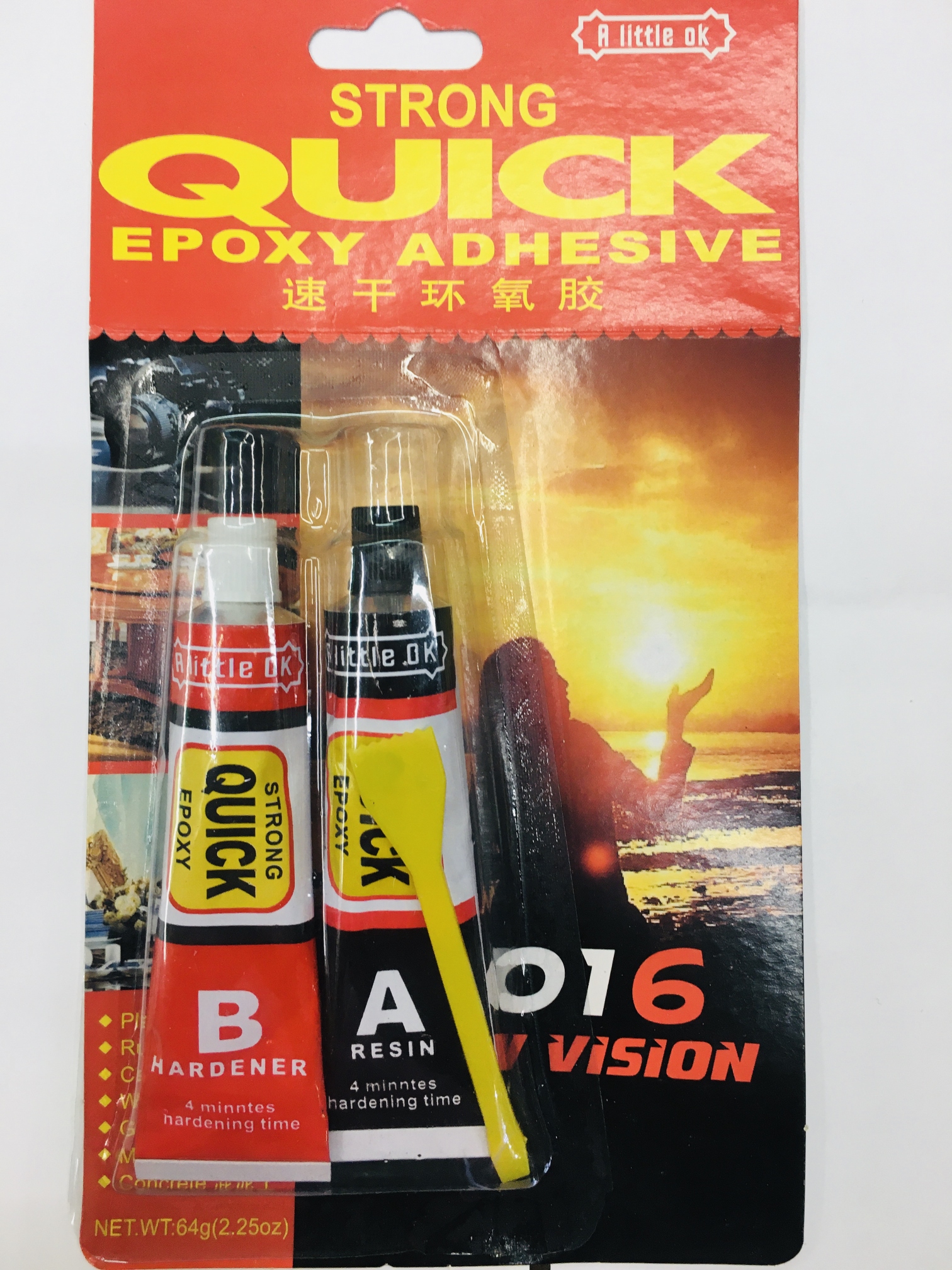
GLE-004 Quick epoxy
Listed fast two-part epoxy. Pot life, clarity and pack options are confirmed by inquiry.
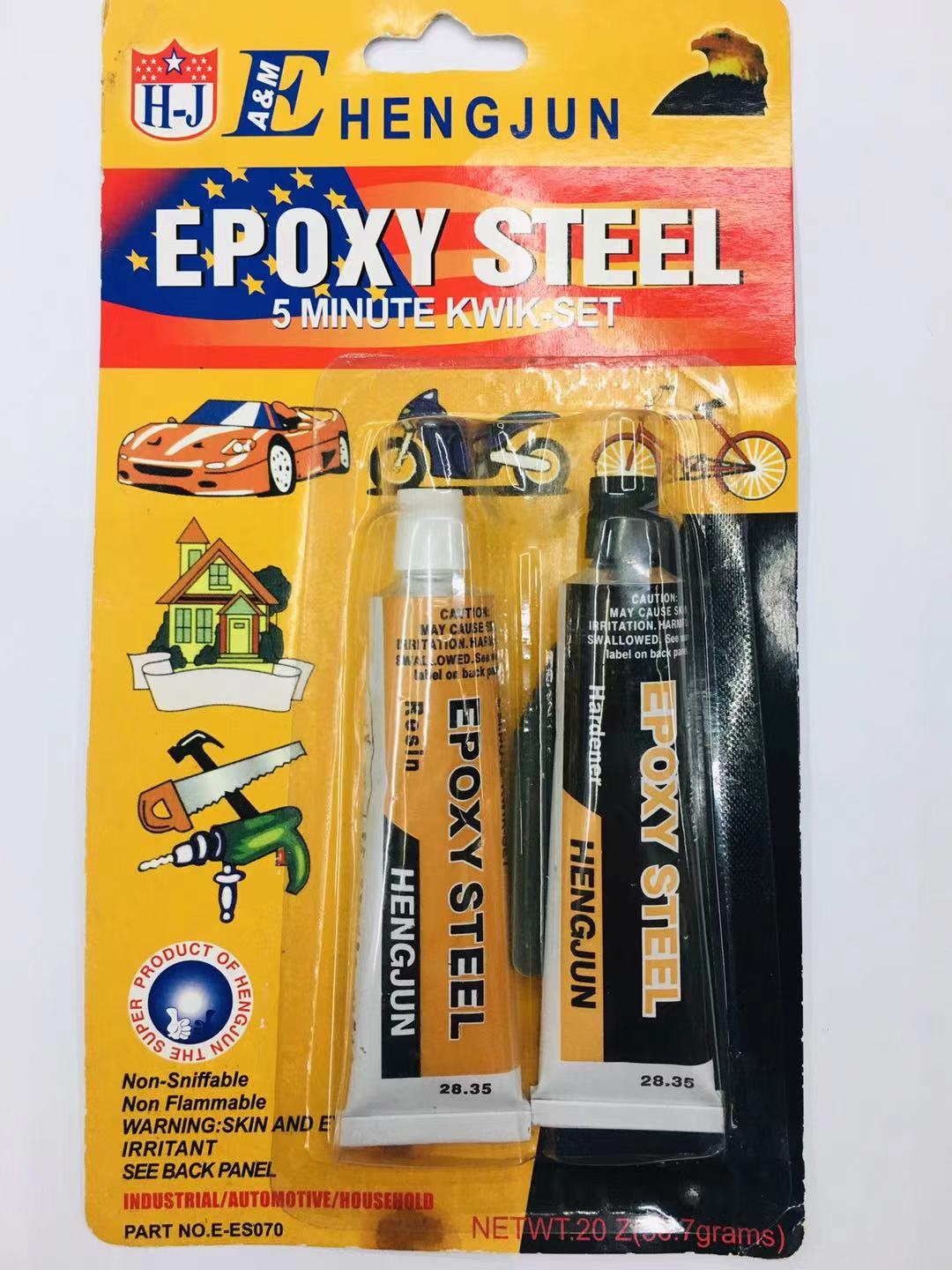
GLE-002 AB epoxy
Listed AB epoxy adhesive. Colour, water resistance, SDS and MOQ are confirmed by inquiry.
Related GlueMFG Resources
- AB Glue for Importers and Distributors
- Glass and Ceramic Bonding Adhesives
- Fast vs Slow Cure Epoxy for Production
- Waterproof Glue for B2B Buyers
- GlueMFG product catalog
FAQ
What is clear epoxy glue used for?
Clear epoxy is used where the glue line is visible: glass and acrylic displays, giftware, jewellery and decorative parts, small furniture fittings, electronics housings and repairs where a dark or cloudy joint would look poor. It is a two-part adhesive, so it also fills small gaps and bonds rigid materials that instant glue struggles with.
Does clear epoxy turn yellow?
Many clear epoxies yellow over time, especially in sunlight or heat, and some start with a slight tint. Grades vary a lot. If appearance matters, ask for non-yellowing or UV-resistant grades and age samples near a window or under heat before approving the batch.
Is epoxy resin glue waterproof?
Fully cured epoxy generally resists water well and is often chosen for damp service, but resistance varies by grade, and hot water, steam, cleaning chemicals and long immersion can weaken bonds. Ask for water and humidity test data and soak bonded samples of your materials.
Is epoxy resin glue the same as casting resin?
No. Epoxy glue (AB glue) is formulated to bond parts in thin layers, often with faster cure; casting and coating resins are made to pour thick layers with low heat build-up. Using adhesive grades for thick pours can crack, overheat or yellow, and casting resins may bond poorly as glue.
Which clear epoxy products does GlueMFG list?
GlueMFG's catalog includes two-part AB / epoxy adhesives such as GLE-001 epoxy resin adhesive, GLE-002 and GLE-004 quick epoxy. Clarity, yellowing resistance, cure time, pack format, SDS and MOQ are confirmed by inquiry: send the materials, the look you need, water exposure and quantity.