For fast vs slow cure epoxy on a production line, buy the grade whose TDS documents pot life and handling strength for your takt — not a generic “5 minute epoxy” label alone. Fast grades suit short stations and small bonds; slow grades suit alignment, larger gaps, and fixtures. Specify substrates, mix ratio, pack, and clamp plan before price. This is the takt-time OEM angle; for general cure/shelf vocabulary see the epoxy cure time & shelf life reference, and for metal vs plastic substrate choice see metal & plastic epoxy for production.
OEM engineers and private-label buyers search 5-minute epoxy when a station cannot wait overnight. On the factory side the RFQ must name pot life, handling strength, and fixture time — “quick epoxy” alone is not a specification.
Start With Takt Time and Bond Geometry
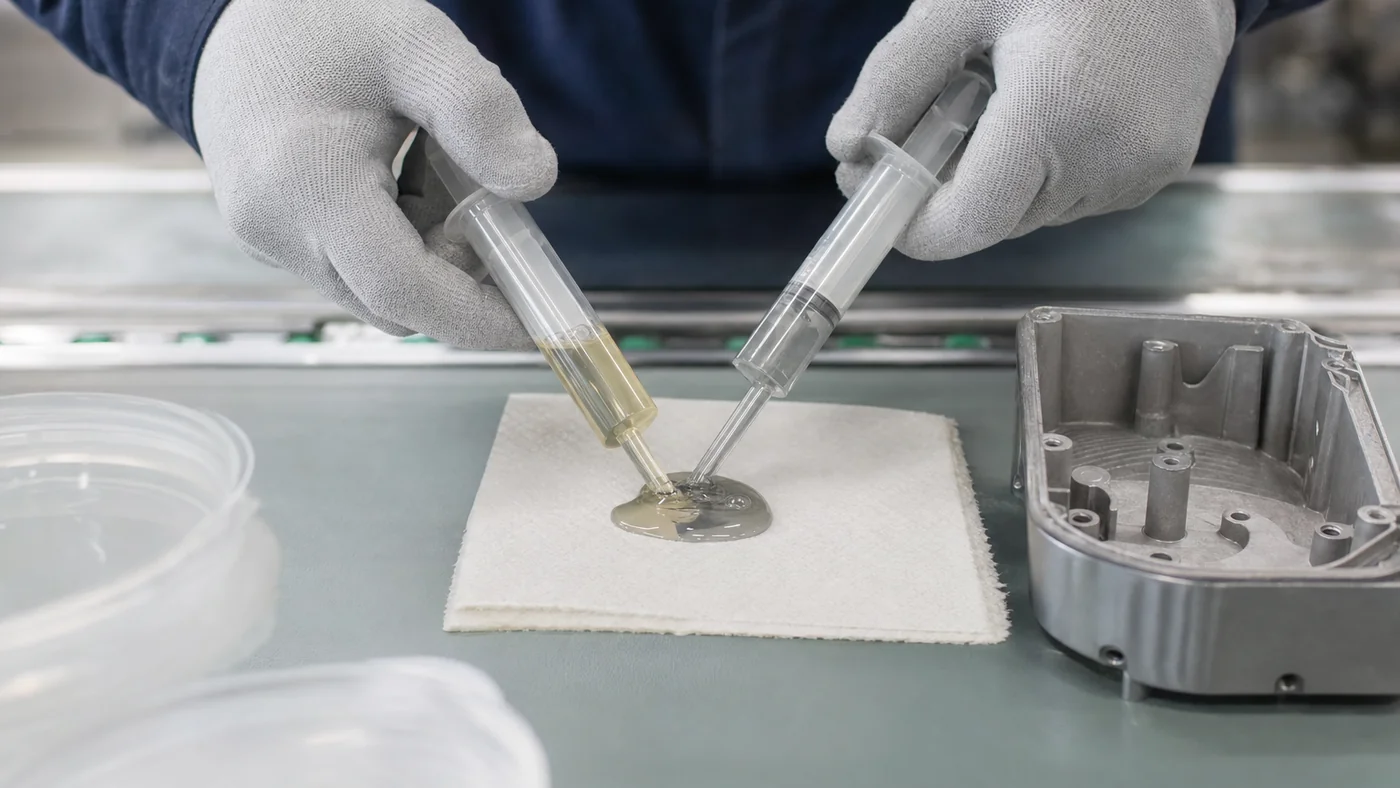
Fast-cure epoxy fails more often from mismatched station timing than from a slightly higher set price. Ask for:
- Pot life / working time: how long the mixed resin stays usable at your shop temperature.
- Handling strength: when the part can leave the fixture without bond smear.
- Full cure: when to test shear or put the assembly into service.
- Bond size: small brackets tolerate short open time; large or gap-filling joints often need slower grades.
Do not force a retail 5-minute epoxy into every structural or large-gap station. And do not print a cure-minute claim on OEM sleeves unless the factory TDS documents that number for that exact grade and mix ratio.
When Slow Cure Wins on the Line
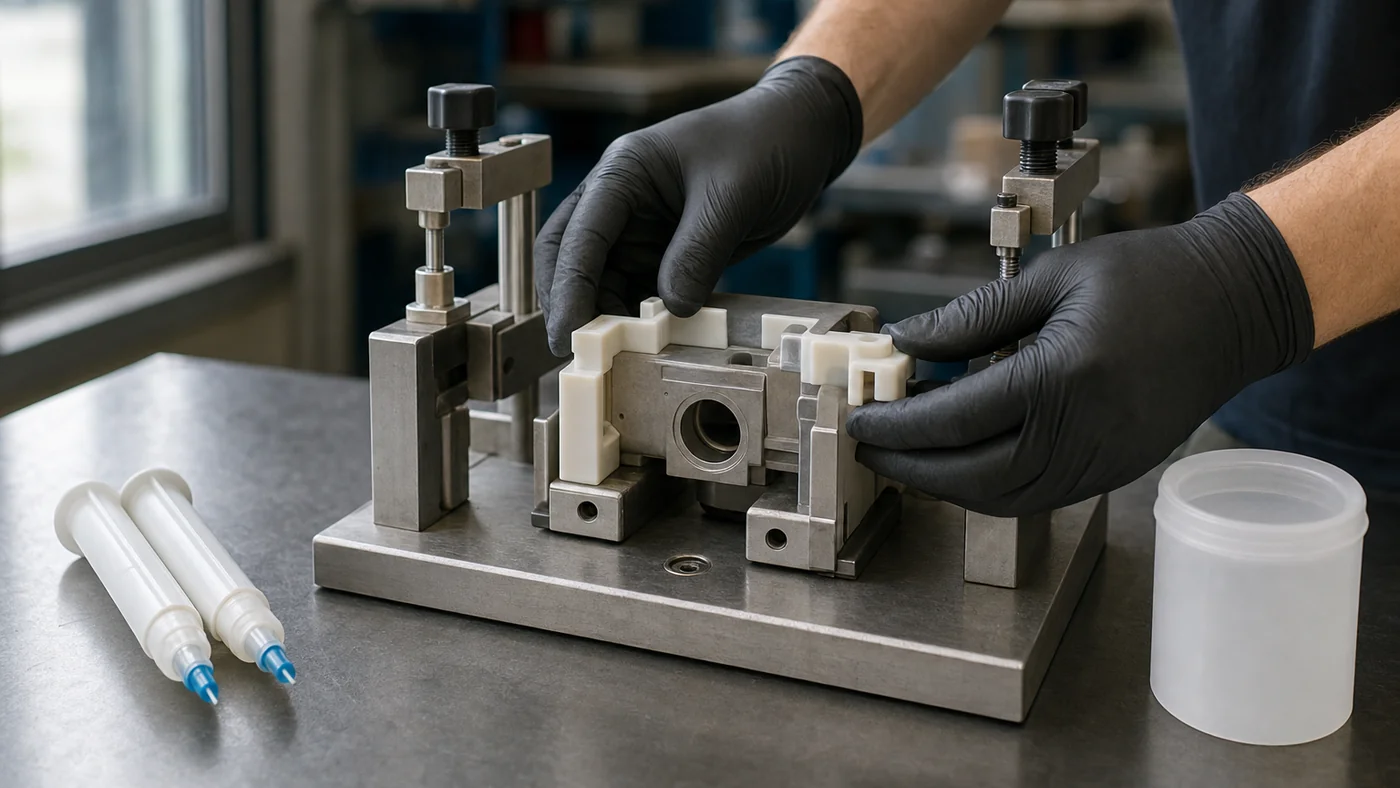
Slow-cure epoxy keeps open time for wet-out, alignment, and multi-part fixtures. Overnight or shift-end cure is normal when final strength or larger bond lines matter more than instantaneous handling.
| Line need | Lean toward | Watch-out |
|---|---|---|
| Short takt / small bond | Fast-cure / “5-minute” class | Mixing too much at once; short wet-out window |
| Alignment / large gap | Slow-cure with fixtures | Moving parts before handling strength |
| Structural final strength | Grade with documented full cure | Assuming fast = stronger |
| OEM private label | Documented pot life + pack art | Invented minutes on the sleeve |
Fast and Slow on the Same Floor
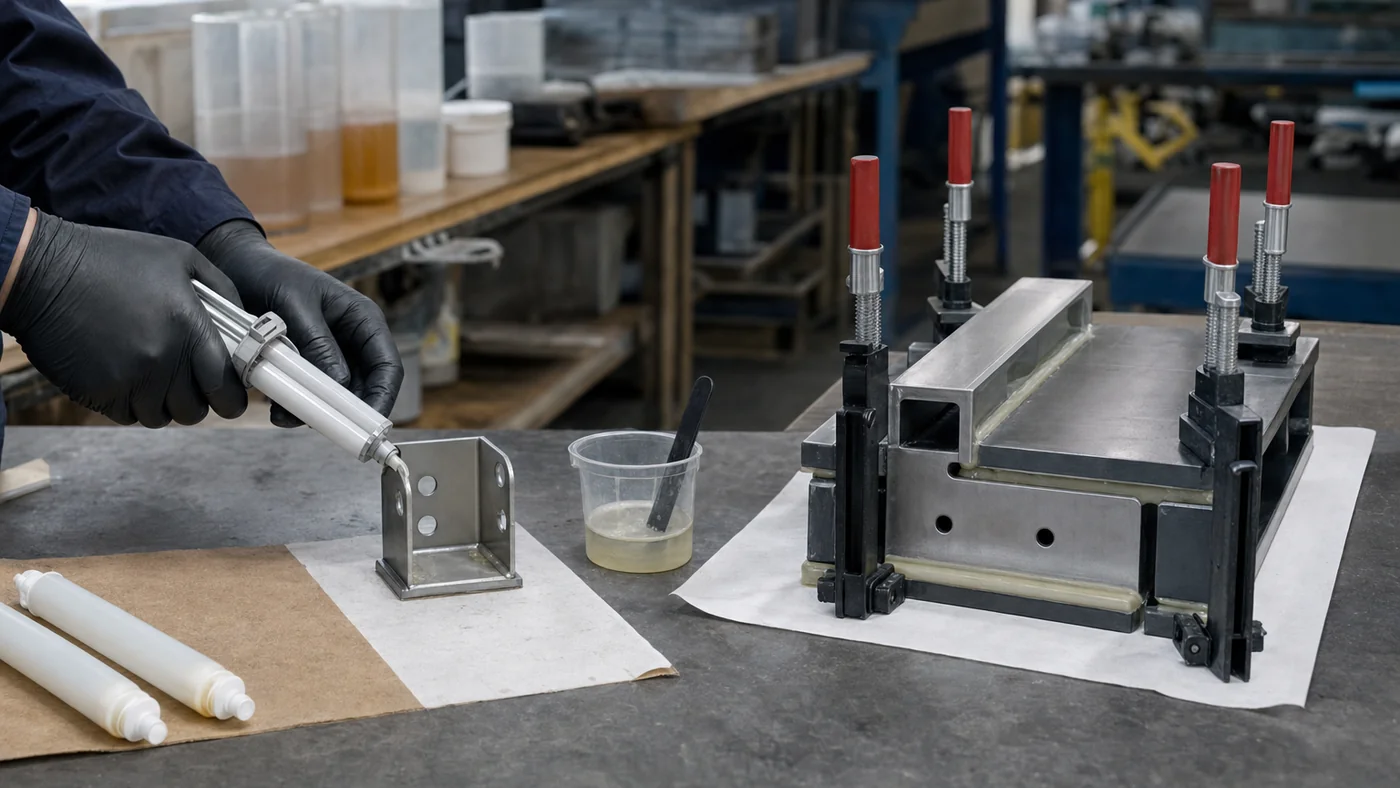
Many plants need both: a fast grade for small hardware and a slow grade for housings or structural joints. Stocking one SKU for every epoxy station creates scrap. Separate RFQs by station, then decide whether one dual-listed grade can cover both jobs.
Pot life is not handling strength, and handling strength is not full cure. Cold shops and thick sections slow everything. Put shop temperature, mix method, and fixture time in the RFQ — use the cure time & shelf life guide for vocabulary only.
RFQ Checklist for Production Epoxy Buyers
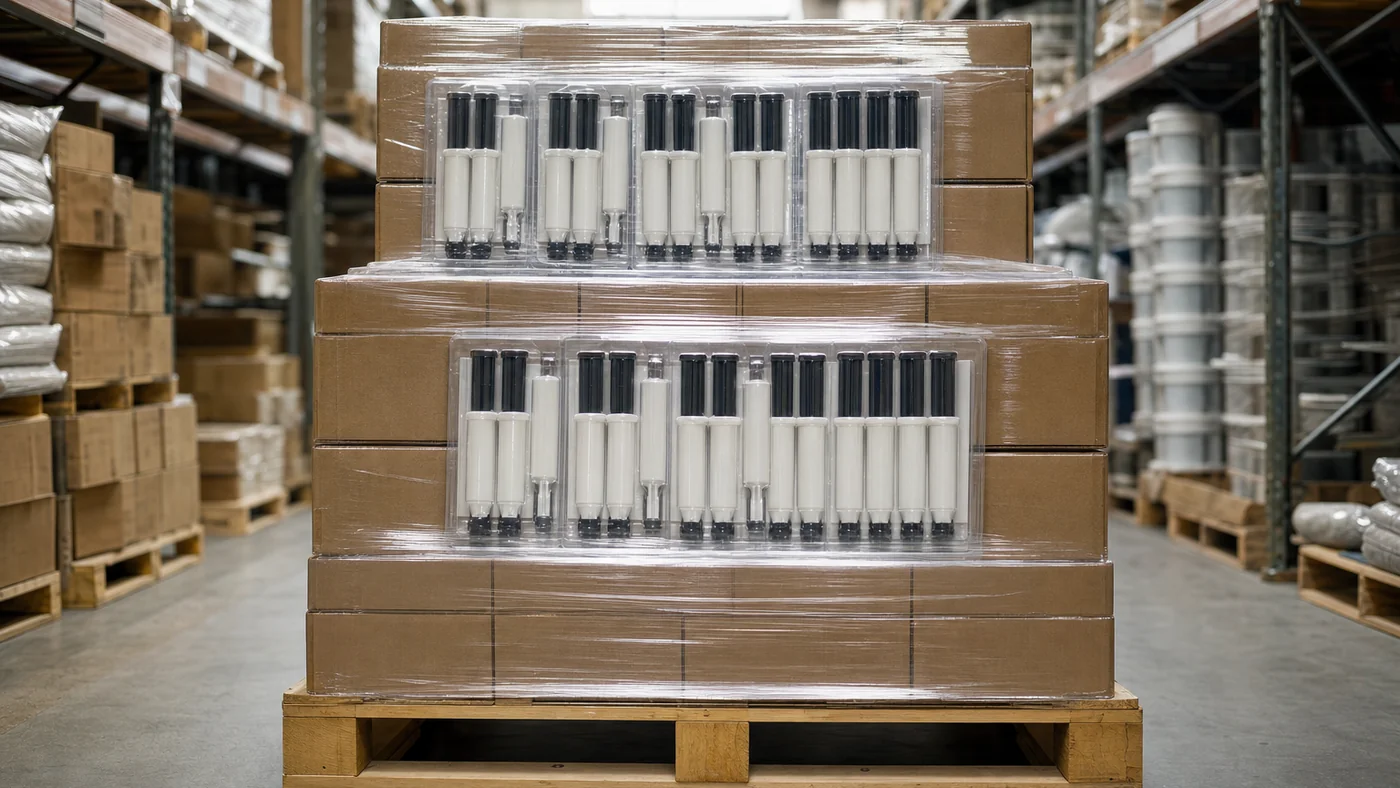
- Station: takt seconds, clamp/fixture available yes/no.
- Substrates: metal, plastic, coated surfaces; surface prep allowed.
- Timing: target pot life, handling strength, full cure at °C.
- Geometry: bond area, gap fill need, reposition window.
- Pack: dual syringe, cartridge, bulk; mix ratio; colour.
- Docs: TDS with timing, SDS, COA; no invented certifications.
- Volume: sample → trial → pallet → container.
What GlueMFG Can Support Around This Topic
GlueMFG lists 93 SKUs across 13 categories. Related AB / epoxy listings include GLE-001 Direct Epoxy Resin Adhesive, GLE-002 HENGJUN, GLE-003 Polyurethane Epoxy Silicone, and GLE-004 STRONG QUICK EPOXY ADHESIVE. Public cards do not state every pot life or full-cure schedule — confirm cure speed, mix ratio, and OEM packs by inquiry.
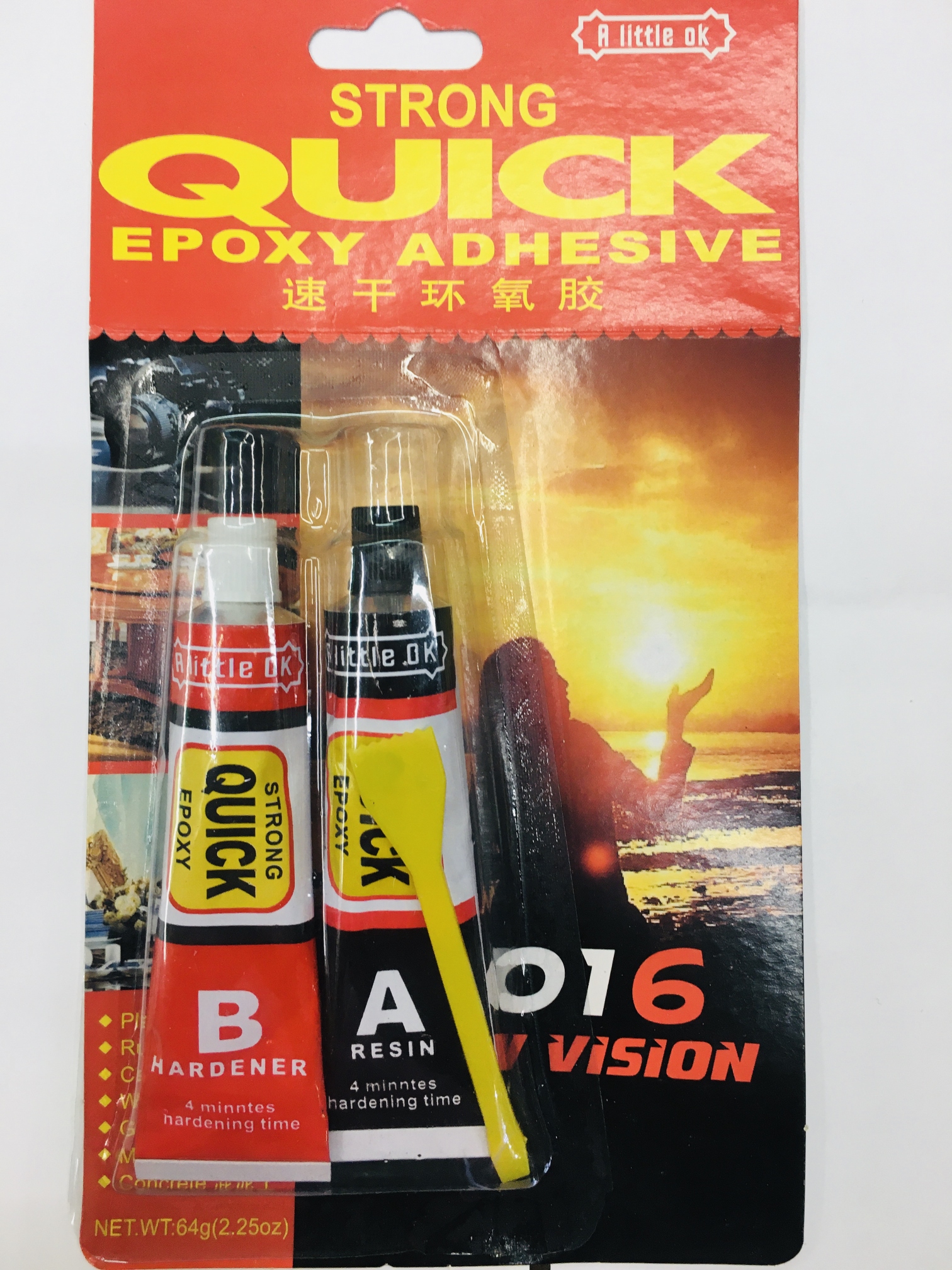
Quick Epoxy (GLE-004)
Quick epoxy listing. Verify handling time on the TDS before takt claims.
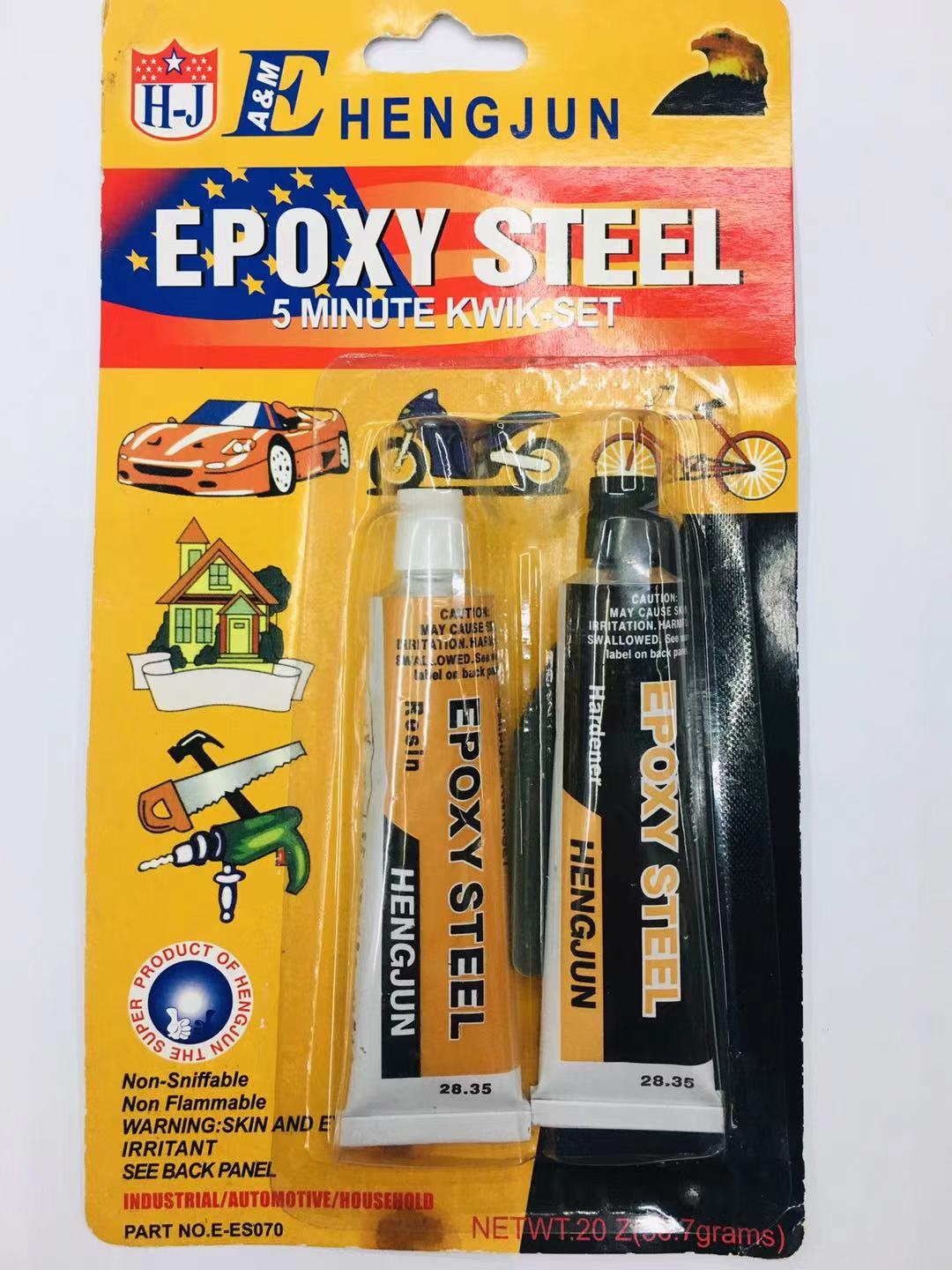
HENGJUN (GLE-002)
AB / epoxy listing. Confirm mix ratio and cure speed by inquiry.
Related GlueMFG Resources
- Product catalog (93 SKUs)
- Epoxy cure time & shelf life reference
- Metal & plastic epoxy for production
- Contact adhesive solvent vs water-based OEM
FAQ
What is fast-cure vs slow-cure epoxy for production?
Fast-cure (often marketed as 5-minute epoxy) reaches handling strength quickly so the line can move the part. Slow-cure grades keep a longer pot life and open time for alignment, larger gaps, or higher final strength. Buyers should ask for pot life, handling time, and full cure at a stated temperature on the TDS — not only a marketing nickname.
Is 5-minute epoxy always best for OEM takt time?
Not always. Short pot life wastes material if operators mix large batches, and very fast grades can leave less time to wet large or poorly fitted joints. Match cure speed to station cycle time, mix method (static mixer vs hand mix), and whether the bond must be repositioned. Confirm numbers by inquiry for the exact grade.
How is this different from a general epoxy cure-time reference?
A cure-time and shelf-life page explains vocabulary (pot life, handling, full cure, warehouse life). This guide is the production-line decision: when to buy fast vs slow grades for takt, fixtures, and OEM packs. For substrate metal vs plastic selection see GlueMFG’s metal & plastic epoxy production guide.
What should buyers put in a fast/slow epoxy RFQ?
Substrates, gap size, target pot life and handling strength time, fixture/clamp plan, service temperature, mix ratio and pack (syringe/cartridge/bulk), colour, and document languages. Ask for TDS numbers — do not invent cure minutes from a retail name.
Does GlueMFG list AB / epoxy SKUs?
Yes. The catalog AB / Epoxy Adhesive category lists GLE-001 Direct Epoxy Resin Adhesive, GLE-002 HENGJUN, GLE-003 Polyurethane Epoxy Silicone, and GLE-004 STRONG QUICK EPOXY ADHESIVE. Public cards do not state every pot life or full-cure schedule — confirm cure speed, mix ratio, and OEM packs by inquiry.