For metal epoxy glue on steel or aluminium, prioritise surface prep (oil-free, abraded), a grade with adequate shear and gap fill, and a cure schedule that fits clamps and line speed. For plastics, start with resin type (ABS, PC, PA, PP/PE) and surface energy — many metal epoxies fail on untreated polyolefins. Send substrates, gap, fixture time, service conditions, and pack format in the RFQ. Do not buy on “strongest epoxy” claims alone.
Production buyers often treat epoxy as one commodity SKU. On the line it is three decisions: whether the chemistry wets your metal or plastic, whether the mix and cure fit takt time, and whether the pack feeds operators or meter-mix equipment without waste.
This guide is for OEM and importer buyers specifying epoxy for metal and engineering plastics. For pot life, handling time, full cure, and warehouse shelf life numbers, see our epoxy cure time and shelf life reference — that page does not cover substrate selection.
Start With the Substrate, Not the Colour of the Resin
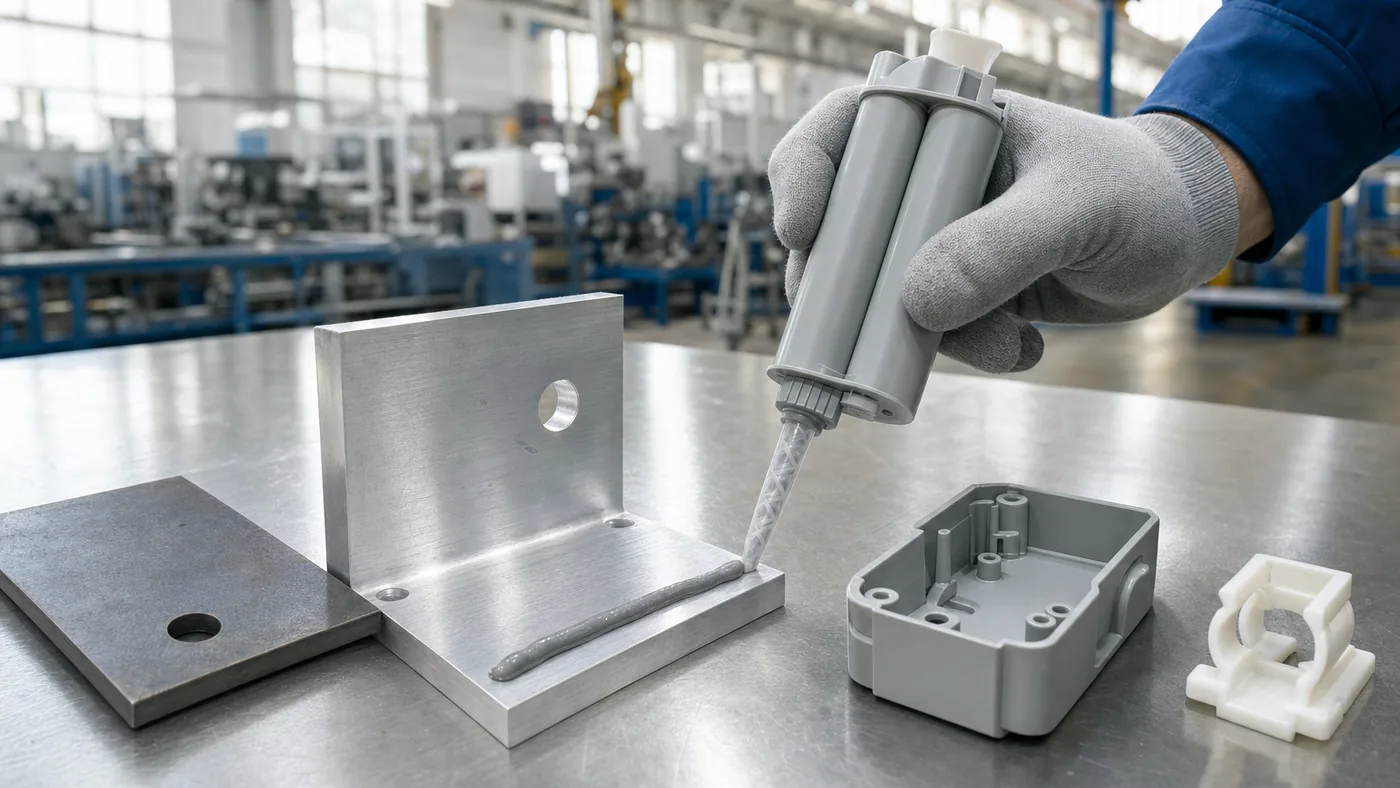
Metals (mild steel, stainless, aluminium, galvanised, powder-coated) usually have high surface energy once oil and oxide are controlled. Abrasion plus solvent wipe is often enough; some aluminium and oily castings still need a primer called out on the TDS.
Engineering plastics split sharply:
- Higher-energy plastics such as ABS, PC, and many nylons (PA) are common epoxy candidates after degreasing and light abrasion.
- Low-energy polyolefins (PP, PE, many TPO blends) often need primer, flame/plasma treatment, or a different adhesive family. A metal-grade epoxy that “sticks to steel” can peel cleanly off untreated PP.
- Filled or painted plastics change the bond surface — always test the moulded part, not a virgin plaque alone.
| Substrate pair | Usual epoxy focus | Main watch-out |
|---|---|---|
| Steel / steel or steel / aluminium | Structural or semi-structural AB epoxy; gap fill; oil resistance | Oil, mill scale, galvanising; mixed-metal corrosion |
| Aluminium housings / brackets | Good wetting, controlled exotherm on thin sections | Oxide film; heat-sensitive assemblies |
| ABS / PC housings | Plastic-friendly epoxy or toughened grade; peel resistance | Mould release; stress cracking from some solvents |
| PP / PE parts | Often primer + specialty grade — or another chemistry | Low surface energy; do not assume metal epoxy will work |
Do not approve a general-purpose metal epoxy for untreated PP/PE clips or living-hinge parts without a peel test. And do not use a 5-minute consumer syringe as the production grade for large metal brackets if you need high final strength and a long open time — fixture speed and ultimate performance are different specs.
Metal Bonds: Prep, Gap, and Fillers
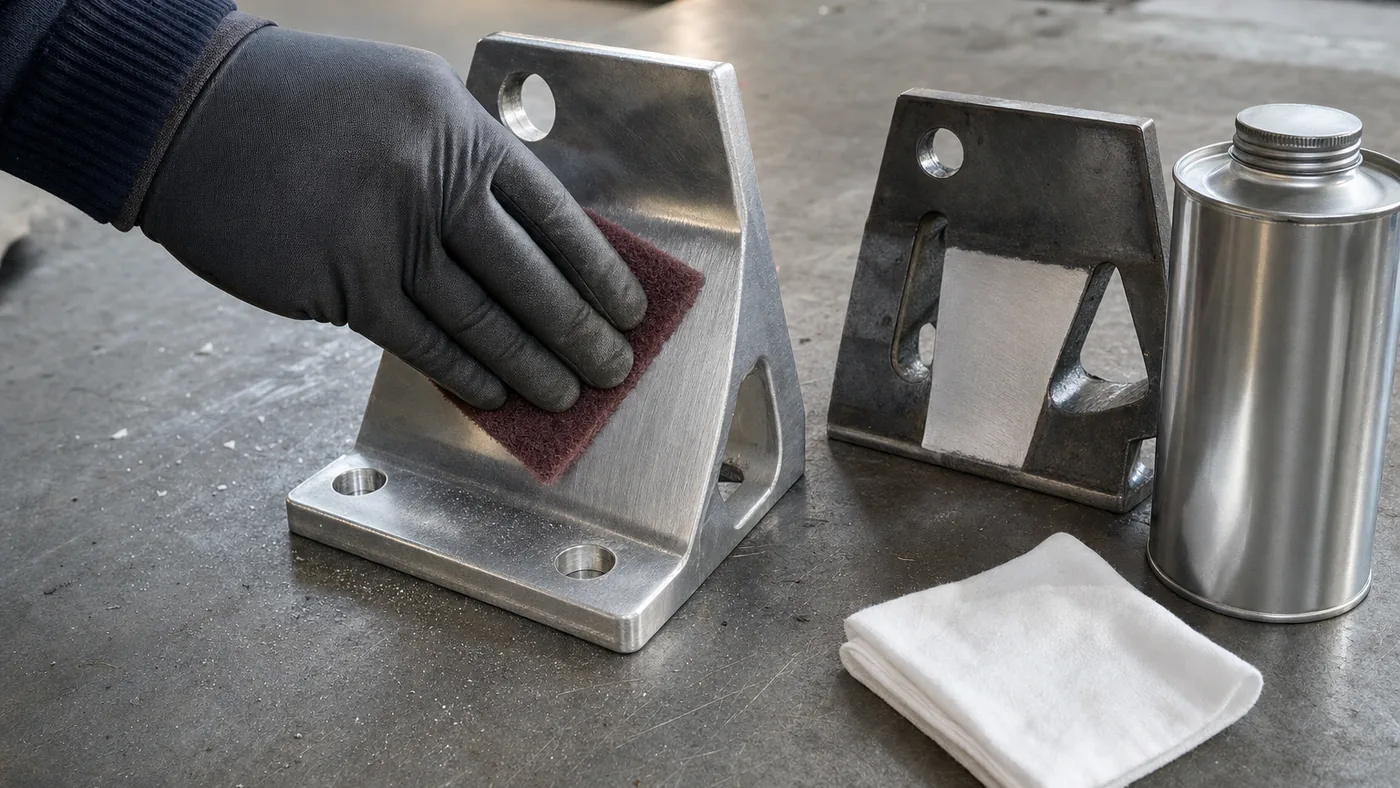
For metal-to-metal production bonds:
- Surface prep: remove cutting oil, fingerprints, and loose oxide; abrade where the TDS allows; wipe with the recommended solvent and dry.
- Bond-line thickness: many epoxies want a controlled gap (often tenths of a millimetre to a few millimetres). Too thin starves the joint; too thick raises peel risk and cure heat.
- Fillers: aluminium-filled or steel-filled grades help gap fill and machining after cure; unfilled clear/amber grades may wet better on tight fits. Ask what the filler does to electrical insulation and thermal conductivity if that matters.
- Clamping: hold until fixture strength; do not move the assembly during the open-time window.
Plastic Bonds: Surface Energy and Peel
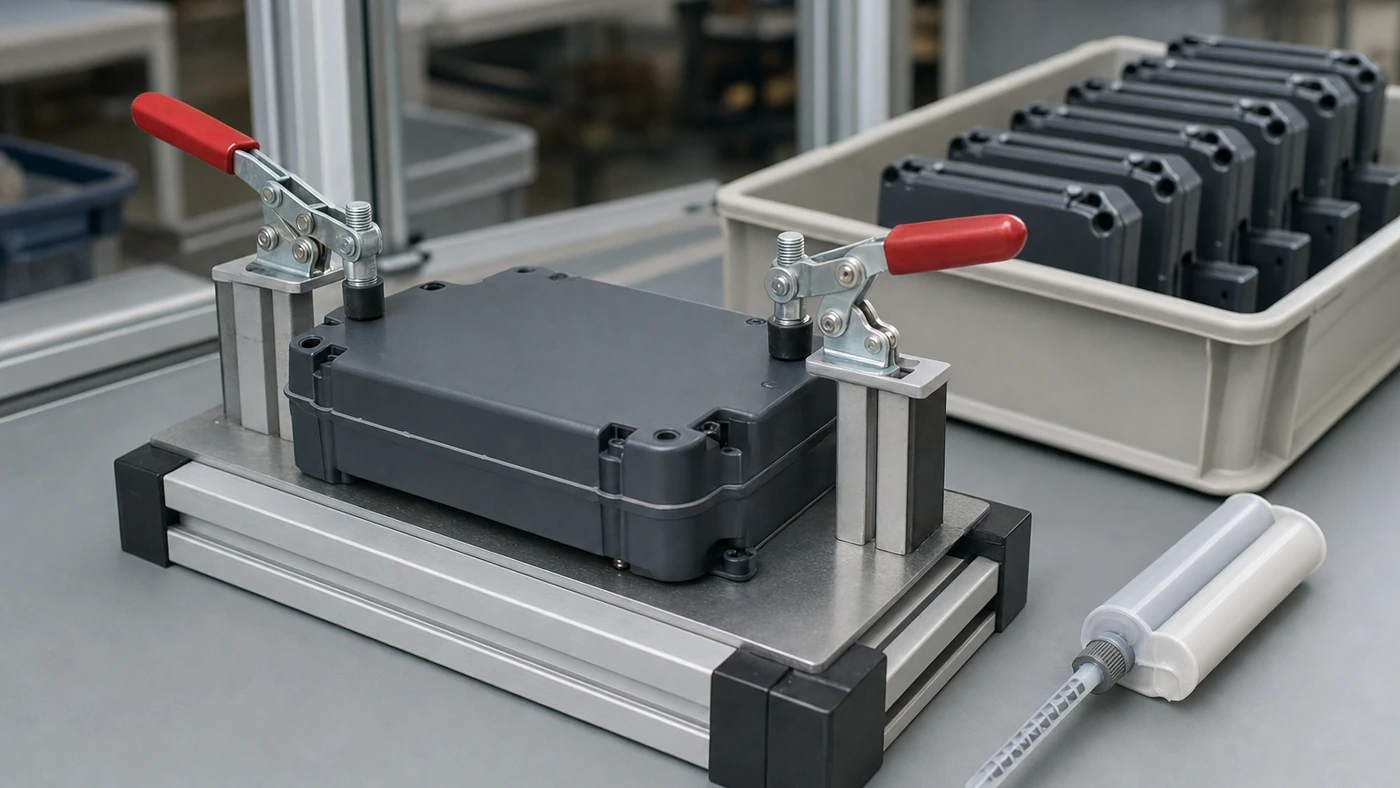
Plastic failures are often peel or impact failures at the edge of a housing, not pure shear. Toughened epoxies and longer open-time grades give operators time to seat covers without starve lines. Confirm:
- Exact resin and colour masterbatch (some pigments and flame retardants change adhesion).
- Whether mould release is present on production parts.
- Expected drop, vibration, and thermal cycling — not only room-temperature lap shear.
If the part is painted or plated plastic, you are bonding to the coating. Specify that in the RFQ.
Cure Schedule and Line Fit
Match three times to the line: pot life after mix, fixture / handling time, and full cure before QC or packing. Heat can shorten cure for many grades but may warp thin plastics or aluminium. For the detailed timing vocabulary, use the cure time and shelf life guide; here the rule is simple — do not pick the fastest syringe if your assembly needs five minutes of positioning.
Bulk resin and hardener only work if operators or equipment hit the TDS ratio (by weight or volume as stated). Wrong ratio leaves soft or brittle bonds that still look “cured.” For high volume, ask about dual cartridges with static mixers or meter-mix dispense — and spare mixers in the pack plan.
RFQ Checklist Before You Ask for Price

- Substrates: metal alloys; plastic resin codes; coatings; oils or mould release.
- Joint: overlap or butt; gap; expected load (shear, peel, impact); outdoor or chemical exposure.
- Process: hand mix, dual cartridge, or meter-mix; pot life and fixture time needed; max cure temperature.
- Packaging: syringe, cartridge, small AB set, or bulk pails/drums; OEM label language; carton count.
- Documents: TDS (mix ratio, viscosity, cure schedule, substrate notes), SDS, COA per batch.
- Volume ladder: sample kits → trial → pallet → container.
What GlueMFG Can Support Around This Topic
GlueMFG lists 93 SKUs across 13 categories, with OEM packaging available. The AB / Epoxy Adhesive category currently includes four listed SKUs, including Direct Epoxy Resin Adhesive (GLE-001) and STRONG QUICK EPOXY ADHESIVE (GLE-004). Public catalog cards do not spell out every metal or plastic substrate, filler type, or production cure class — confirm TDS and run substrate tests by inquiry before you print claims or lock a BOM.
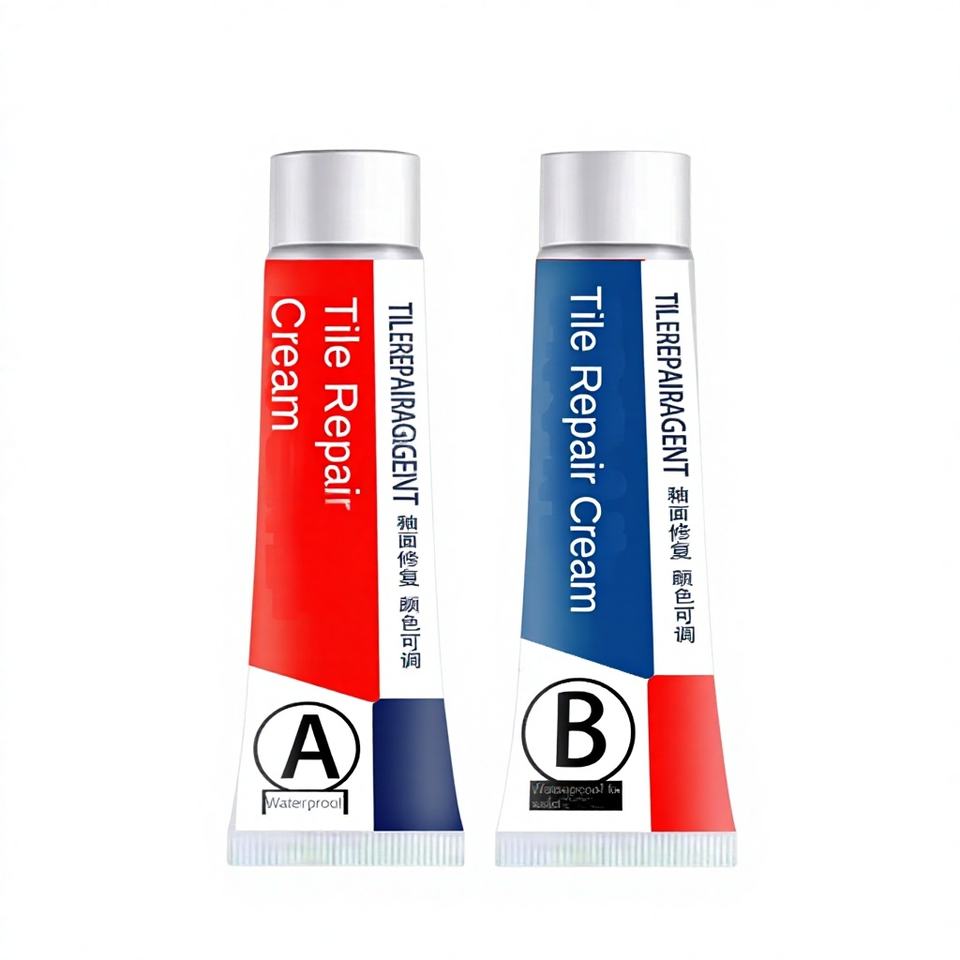
Direct Epoxy Resin (GLE-001)
AB / Epoxy listing. Ask for mix ratio, substrates, and pack options. See catalog.
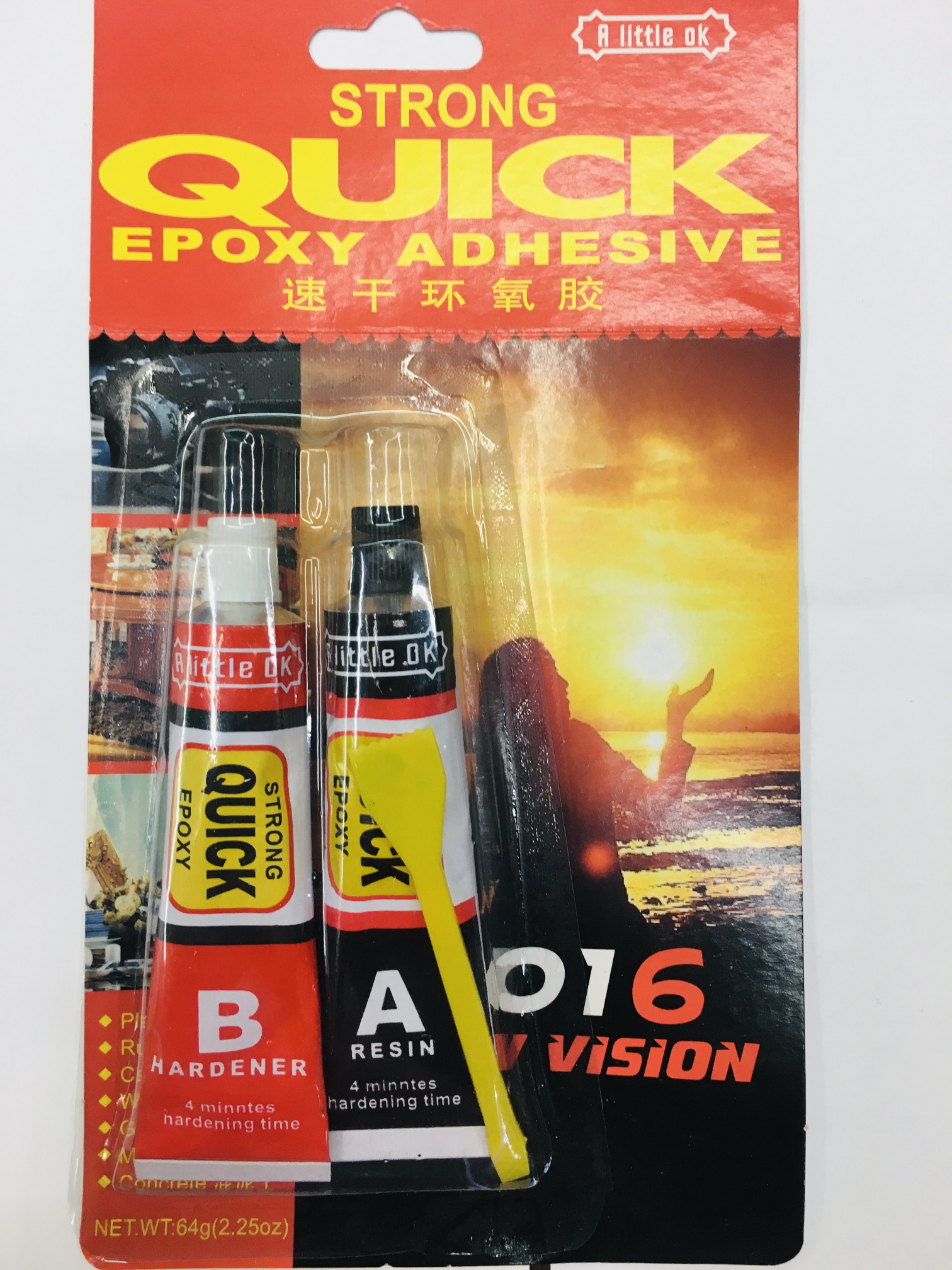
Strong Quick Epoxy (GLE-004)
Listed quick epoxy set. Confirm fixture time vs final strength for your line.
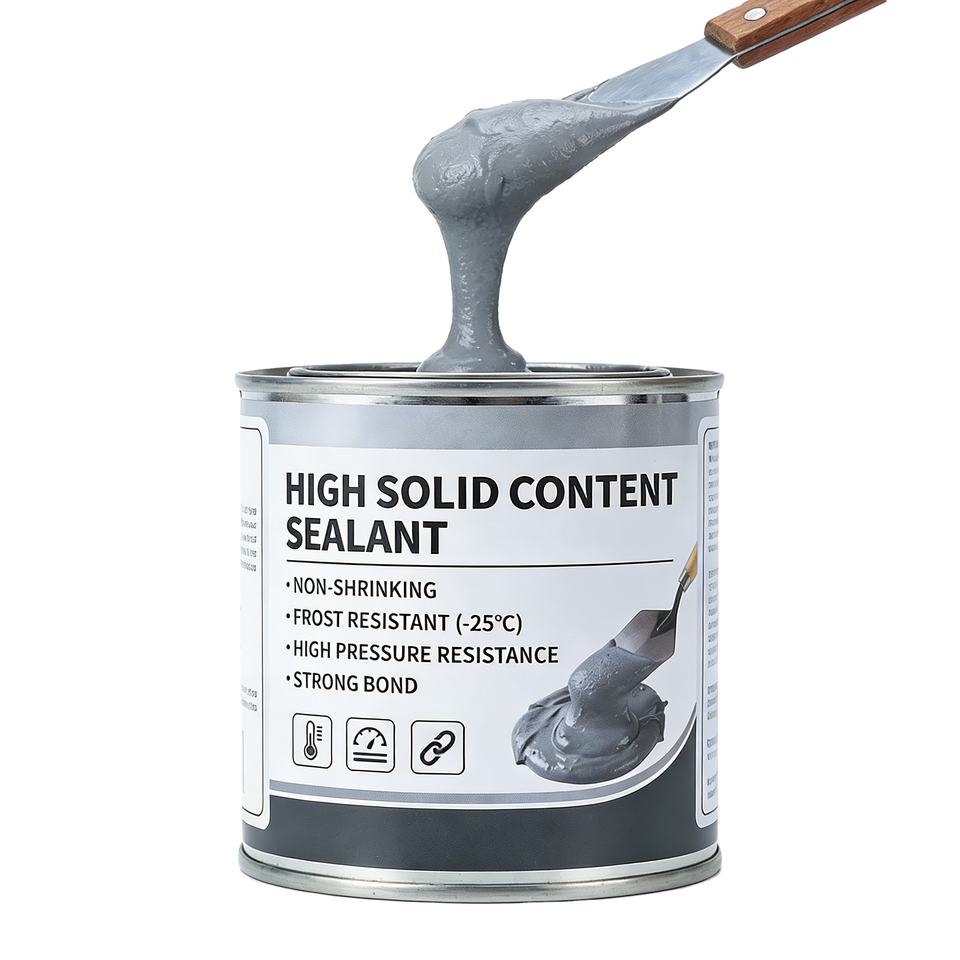
Related AB Set (GLE-003)
Listed multi-chemistry set card. Verify the exact epoxy component on the TDS before OEM use.
Related GlueMFG Resources
- Product catalog (93 SKUs)
- Epoxy cure time and shelf life
- Construction adhesive buying guide
- Contact cement vs spray adhesive guide
- Hot melt adhesive selection guide
FAQ
What is metal epoxy glue used for in production?
Metal epoxy glue is a two-part (or sometimes one-part heat-cure) epoxy formulated to bond steel, aluminium, stainless, and other metals in assembly, repair, and structural or semi-structural joints. Production buyers choose it when the joint needs gap fill, high shear strength, and chemical or heat resistance that cyanoacrylate or hot melt cannot provide.
Can the same epoxy bond metal and plastic?
Sometimes, but not by default. Many metal-grade epoxies wet high-energy metal surfaces well and fail on low-energy plastics such as PP and PE without primer or surface treatment. ABS, PC, and PA often need a plastic-friendly grade, longer open time, and a confirmed peel or lap-shear test on your exact resin and mould-release condition.
What cure schedule should I specify for OEM lines?
Ask for pot life, fixture/handling time, and full cure at your shop temperature — and whether heat acceleration is allowed. A 5-minute epoxy that fixtures fast may leave lower final strength or less open time for large assemblies. Match the schedule to line takt time, clamp capacity, and QC hold points.
What packaging formats suit OEM and distributors?
Common OEM formats are dual syringes, twin cartridges with static mixers, small AB bottles or cans, and bulk resin/hardener pails or drums for meter-mix equipment. Distributors often want carded syringes; factories usually want bulk with documented mix ratio by weight and volume.
Does GlueMFG list metal and plastic epoxy SKUs?
Yes. The GlueMFG catalog AB / Epoxy Adhesive category lists SKUs such as GLE-001 Direct Epoxy Resin Adhesive, GLE-002, GLE-003, and GLE-004 STRONG QUICK EPOXY ADHESIVE. Public listings do not state every substrate, filler, or cure class — confirm TDS, substrate tests, and OEM packs by inquiry before you specify.