Hot melt adhesive is applied molten and bonds as it cools, so the real selection is about chemistry (EVA, polyolefin, polyamide, or reactive PUR), timing (open time and set time at your line temperature), format (sticks, pellets, pillows, or sealed PUR packs), and service temperature of the finished product. Send those four items in the RFQ. “Hot glue, cheapest per kg” usually returns an EVA grade that fails in a hot truck or pops off coated cartons.
Hot melt is attractive to B2B buyers because it is solvent-free, fast, and easy to automate. It is also easy to buy wrong. Two pellets can look identical in the bag and behave completely differently on a cold carton, in a 70 °C container, or in a tank that runs 20 hours a day.
This guide is for importers, distributors, packaging and assembly buyers, and private-label brands — not for choosing a craft glue gun.
Start With the Chemistry Family
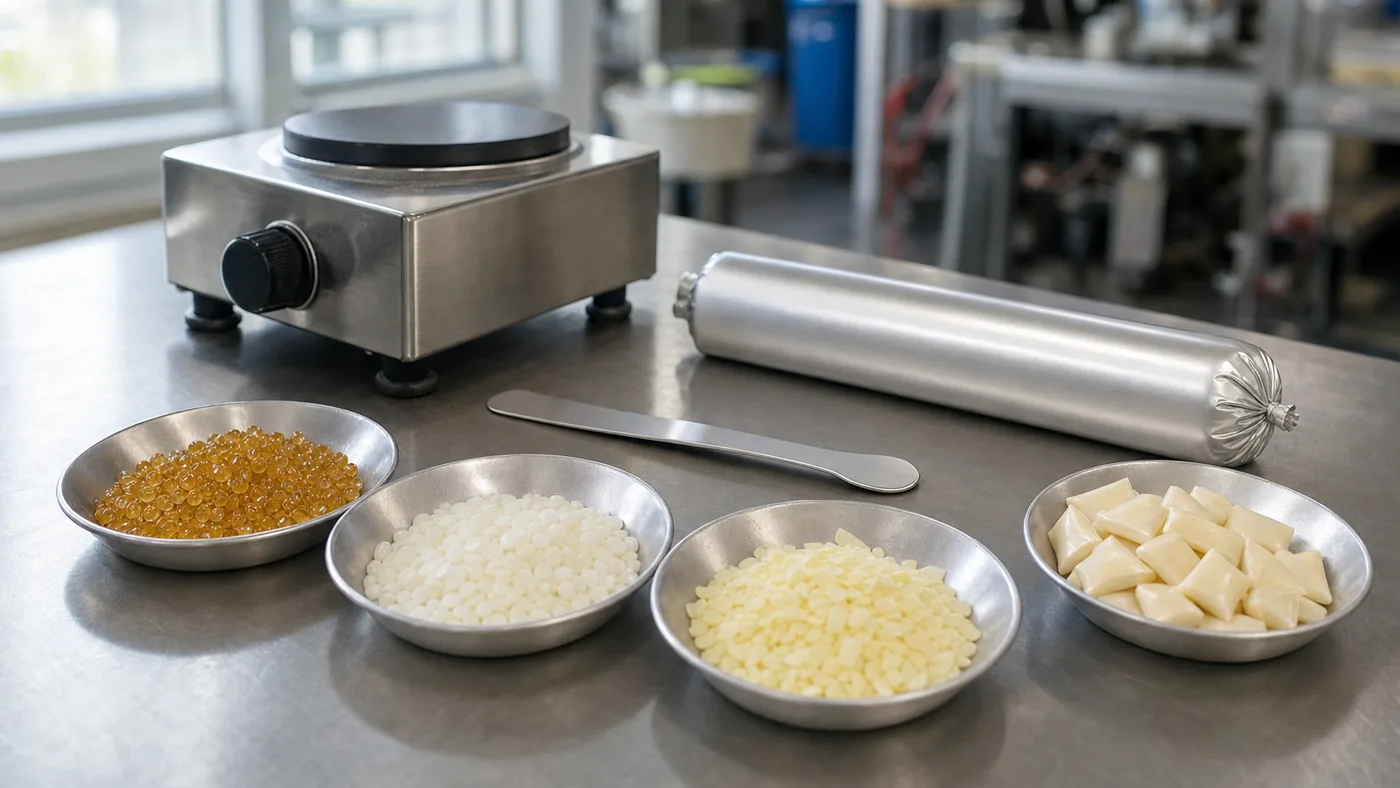
EVA is the workhorse: carton and case sealing, bookbinding, general product assembly, and most glue sticks. It is usually the lowest price per kilogram. Its limits are heat resistance and tank stability — some grades char or skin when held hot for long periods.
Polyolefin grades (amorphous poly-alpha-olefin, or metallocene polyolefin) are chosen when buyers want cleaner melting, lighter color, lower odor, and less charring on high-uptime lines. Some grades are formulated for polyolefin substrates such as PP and PE, but that is grade-specific — ask for a substrate test.
Polyamide hot melts cost more but offer higher heat and oil/fuel resistance. They are common in electronics potting and filter or automotive component assembly. Many grades pick up moisture, so storage and drying matter.
Reactive PUR sets like a normal hot melt and then keeps curing with moisture into a crosslinked bond. That gives better heat, water, and chemical resistance, which is why it is used for edgebanding, profile wrapping, textile lamination, and trim. The trade-off: sealed packaging, dedicated equipment, a purge routine, and an SDS that reflects isocyanate content.
| Family | Typical fit | Main watch-out |
|---|---|---|
| EVA | Cartons, bookbinding, general assembly, glue sticks | Heat resistance; char in long tank dwell |
| Polyolefin (APAO / mPO) | High-speed packaging, nonwovens, cleaner lines | Adhesion is grade-specific; test on your substrate |
| Polyamide | Electronics, filters, heat/oil exposure | Higher cost; moisture pickup before melting |
| Reactive PUR | Edgebanding, profile wrapping, textiles, trim | Sealed packs, purge routine, isocyanate SDS |
Pressure-sensitive hot melts (often rubber-based) are a separate family used for labels and tapes. If that is your application, read our pressure sensitive adhesive sourcing guide instead.
Do not approve a general-purpose EVA stick or pellet for parts that sit in hot vehicles, sunny shop windows, or unrefrigerated containers without checking its heat resistance. A bond that softens in transit is a claim, not a saving. Also do not treat hot melt as a structural adhesive: for load-bearing joints, look at epoxy or engineered systems instead.
Open Time, Set Time, and Line Speed
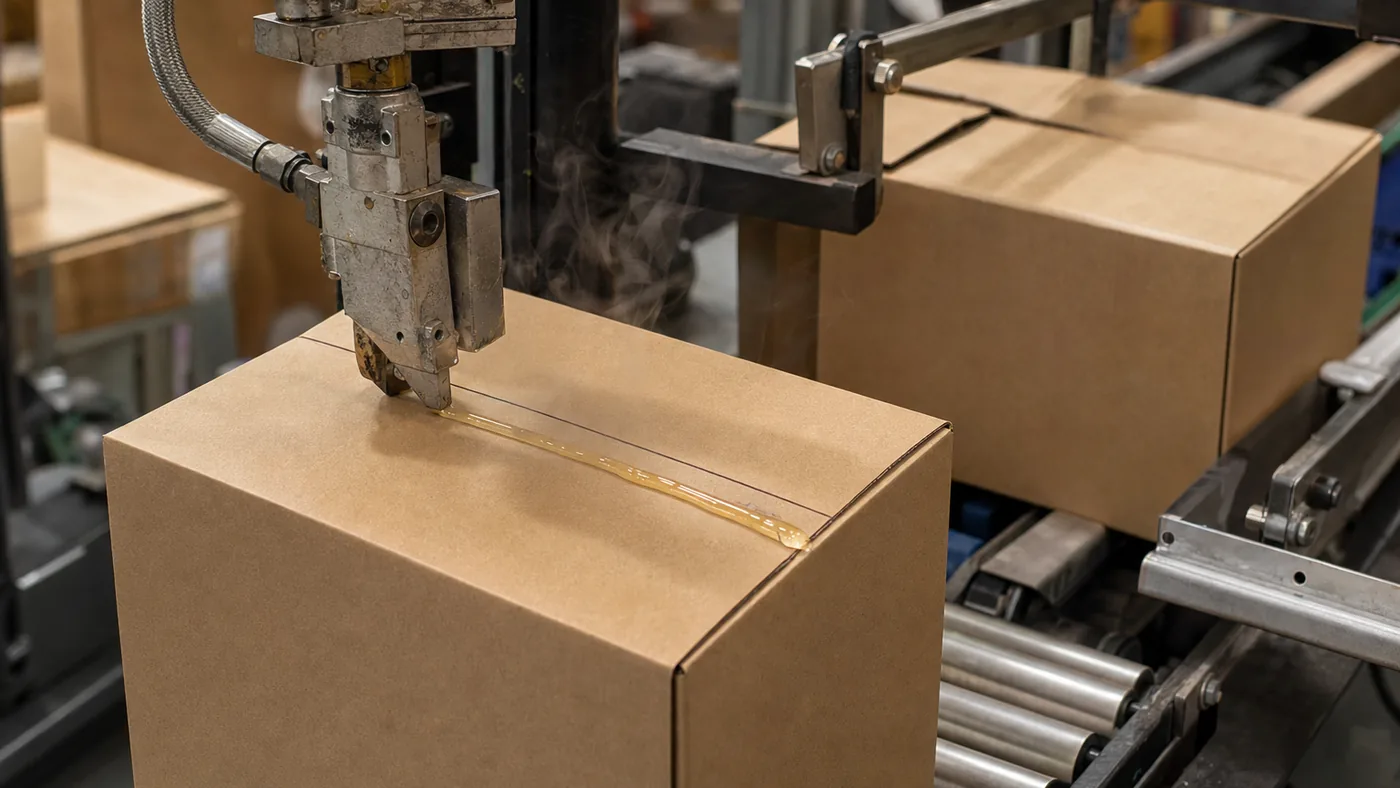
Open time is how long the bead stays able to wet the second surface. Set time is how long the joint needs light compression before it holds. On a packaging line these two numbers decide line speed and reject rate more than peak bond strength does.
- Longer open time helps manual positioning and large panels, but slows automatic lines.
- Cold substrates, thin beads, and drafts shorten real open time — a grade that works in the lab can fail at a winter loading dock.
- Compare suppliers only at the same application temperature. Viscosity and open time change sharply with temperature.
For reactive PUR, handling strength arrives quickly, but final heat and chemical resistance develops over roughly one to three days depending on the grade, bead thickness, and humidity. Plan QC tests after that period, not at the end of the shift.
Match the Format to the Equipment
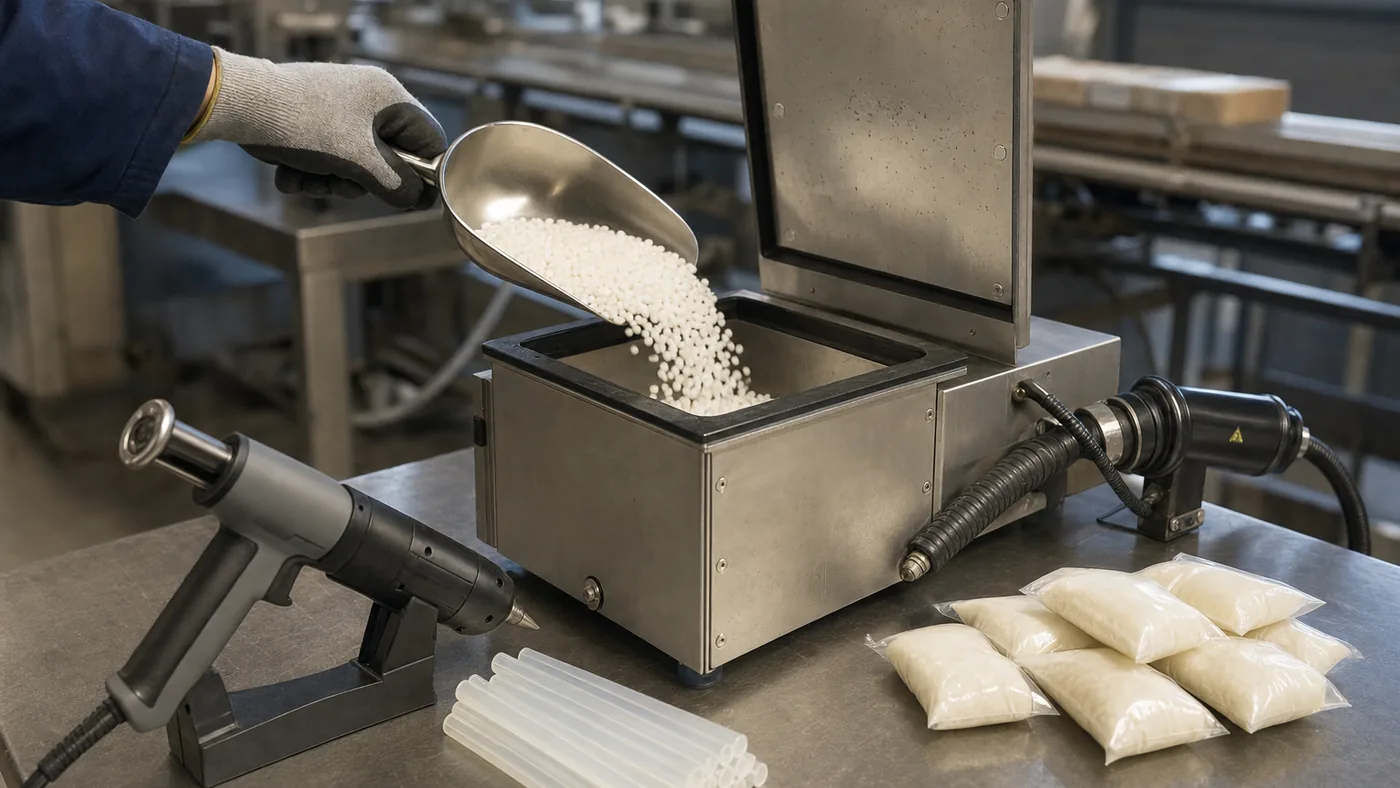
- Glue sticks: for handheld and semi-automatic guns. Common diameters are about 7 mm (mini) and 11–12 mm (standard). Diameter must match the gun, and length affects feed.
- Pellets / chips / pastilles: for tank melters and auto-feed systems on packaging and assembly lines.
- Pillows / blocks / slats: for bulk melters where melt rate and low dust matter.
- PUR cartridges, slugs, pails, drums: moisture-tight packs for reactive grades; once opened, exposure time is limited.
For distributors, retail stick packs and industrial pellet bags are different businesses: different cartons, labels, MOQ, and price basis. Quote them as separate SKUs.
Molten hot melt causes burns; ask for the recommended maximum application temperature and ventilation guidance. Many non-reactive hot melts are shipped as non-dangerous solids, but that must be confirmed from the SDS for the exact grade. PUR grades need the isocyanate information on the SDS and label for the destination market.
Specs to Request and Compare
| Spec | Why it matters | How to compare |
|---|---|---|
| Viscosity at temperature | Bead shape, stringing, nozzle vs roller | Same test temperature (e.g. mPa·s at a stated °C) |
| Softening point | Rough indicator of heat behavior | Same method (e.g. ring & ball) |
| Application temperature range | Tank setting, char risk, substrate damage | Supplier TDS range |
| Open / set time | Line speed and positioning window | Ranges at stated bead size and temperature |
| Heat / cold resistance | Transit, storage, end use | Supplier method; add your own conditioning test |
| Color / odor | Visible glue lines, food-adjacent packaging requests | Sample lots; any compliance claim must be documented |
RFQ Checklist Before You Ask for Price

- Substrates and surfaces: board grade, coatings, varnish, plastic type, wood/MDF edge, dust or release agents.
- Line conditions: gun, tank melter, or roller; tank temperature; line speed; compression time.
- Service conditions: lowest and highest temperature in use and in transit; humidity; oils or cleaners.
- Format and volume: stick diameter and length, pellets, pillows, or PUR packs; sample kilograms → trial → pallet → container.
- Documents: TDS, SDS in the destination language, COA per batch — and only compliance claims the supplier can document.
- Packaging: bag or carton weight, private-label print, pallet pattern.
Send physical samples of your substrates if you can. For hot melt, a ten-minute bench test on the real carton or panel is worth more than a page of TDS numbers.
What GlueMFG Can Support Around This Topic
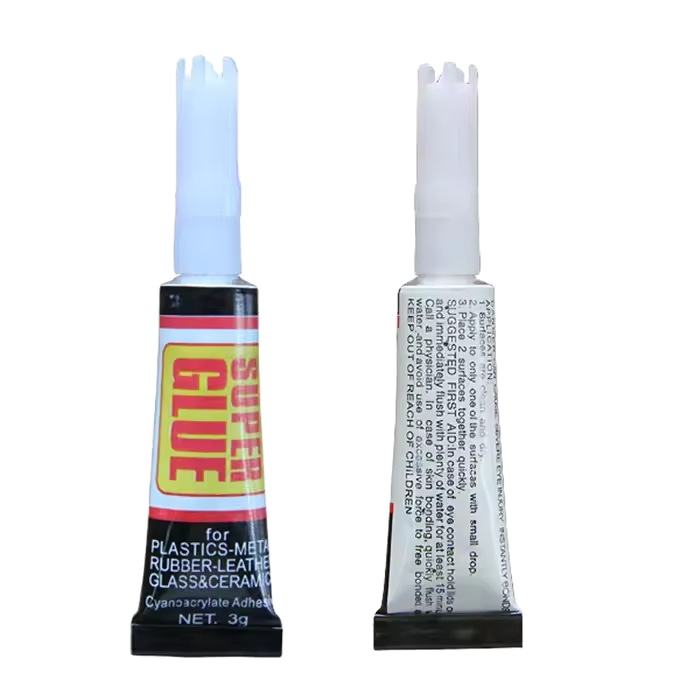
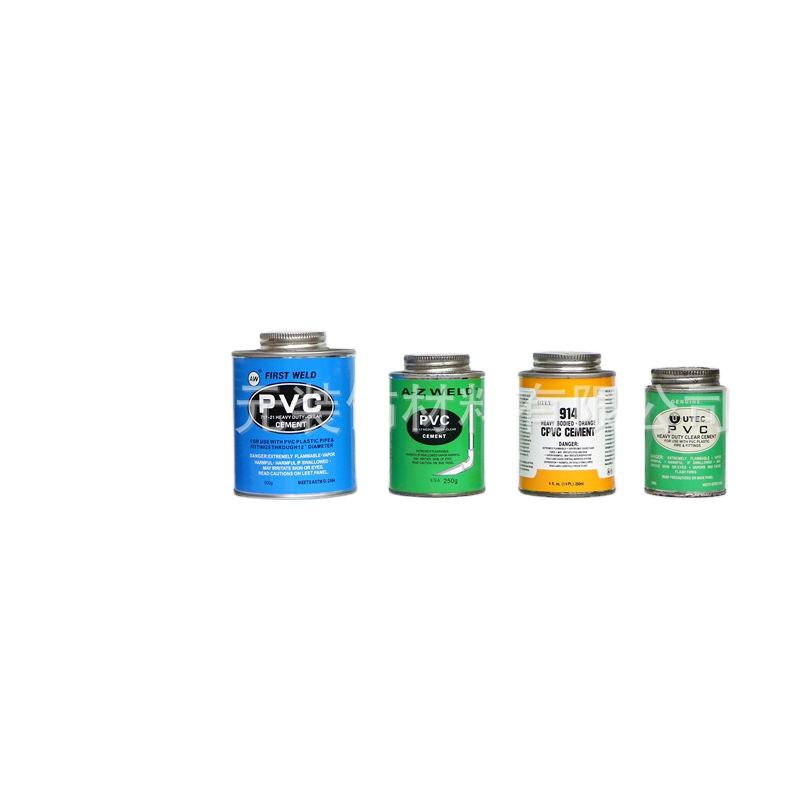
GlueMFG currently lists 93 SKUs across 13 categories, with OEM packaging available. The public catalog focuses on liquid adhesives and sealants — super glue, epoxy, wood/craft glue, contact and acrylic adhesives, silicone/PU, and PVC pipe glue. A dedicated hot melt stick or pellet line is not listed today. If you need hot melt sticks, pellets, or PUR for a private-label or distribution program, send the RFQ checklist above and the factory can confirm what can be sourced for your specification — please confirm by inquiry before planning stock.
If hot melt is not actually required, a liquid adhesive may fit better. Related catalog categories:
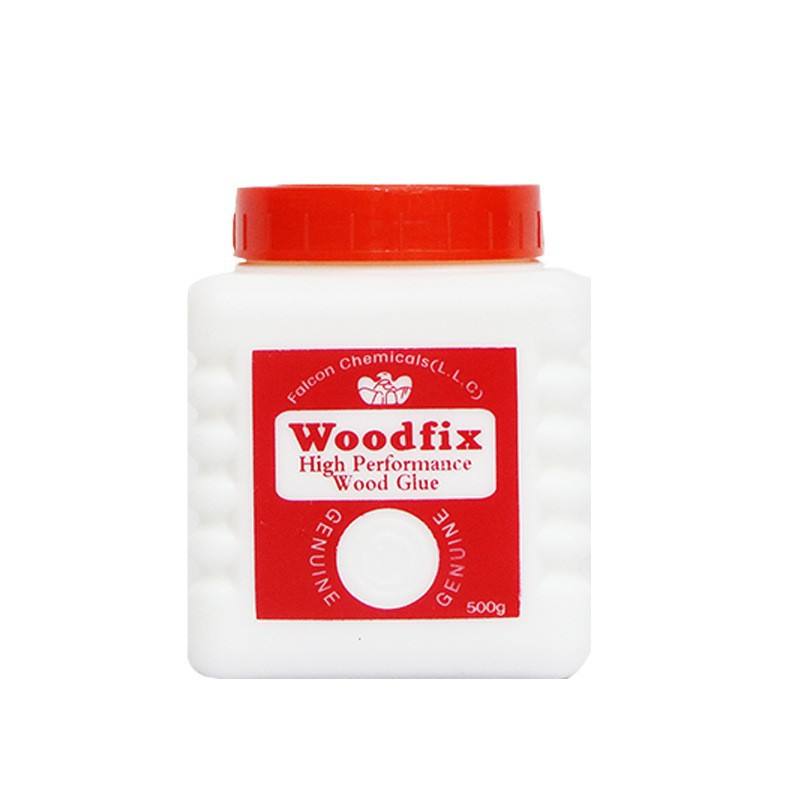
Wood / Craft Glue
For clamped wood assembly where a slower, stronger liquid bond beats hot melt speed. See catalog.
Contact / Acrylic Adhesive
For sheet laminating and larger bond areas. Compare in the contact cement vs spray adhesive guide.
Related GlueMFG Resources
- Product catalog (93 SKUs)
- Pressure sensitive adhesive sourcing guide
- Contact cement vs spray adhesive guide
- Construction adhesive buying guide
- Epoxy cure time and shelf life
FAQ
What is hot melt adhesive?
Hot melt adhesive is a solvent-free thermoplastic (or, for PUR, reactive) adhesive that is solid at room temperature, melted in a gun or melter, applied hot, and bonds as it cools. It is supplied as glue sticks, pellets, pillows, blocks, or sealed PUR packs.
EVA vs polyolefin hot melt — which should I choose?
EVA is the common, lower-cost choice for carton sealing, bookbinding, and general assembly. Polyolefin (APAO or metallocene) grades usually melt cleaner with less odor and char and better pot stability, which matters on high-uptime packaging lines. Choose by line conditions and substrate tests, not by name alone.
When should a buyer specify PUR hot melt?
Specify reactive PUR when the finished bond must resist higher heat, moisture, or chemicals — for example edgebanding, profile wrapping, or automotive trim. PUR keeps moisture-curing after it sets, needs sealed packaging and a purge routine, and its SDS reflects isocyanate content.
What specs should be on a hot melt TDS?
Ask for viscosity at the stated application temperature, softening point, recommended application temperature range, open time, set time, service temperature or heat resistance, color, and format. Compare suppliers only at the same test temperature.
Does GlueMFG list hot melt adhesive SKUs?
The current public GlueMFG catalog (93 SKUs, 13 categories) does not list a dedicated hot melt glue stick or pellet line. Hot melt formats, private-label packs, and volumes should be confirmed by inquiry before you plan stock.