Construction adhesive is a heavy-duty bonding product for building materials — wood, concrete, metal, foam, panels — usually sold in cartridges, sausages, or pails. Before you RFQ, lock four decisions: chemistry (solvent, water-based, hybrid/MS, or polyurethane), substrate + gap, pack ladder (sample → contractor case → pallet), and documents (TDS/SDS language). Do not send only “construction glue, cheapest FOB.” That usually returns the wrong VOC class, open time, and carton claim.
Contractors buy for jobsite pace. Distributors buy for shelf mix and returns. Factories quote by formula family and pack format. Those three views only meet when the RFQ names chemistry and use case — not a vague “multi-purpose construction adhesive” line.
This guide is written for B2B buyers — contractors sourcing through distributors, and distributors building a cartridge/sausage ladder — not DIY craft glue shopping.
Four Chemistry Types Buyers Actually Compare
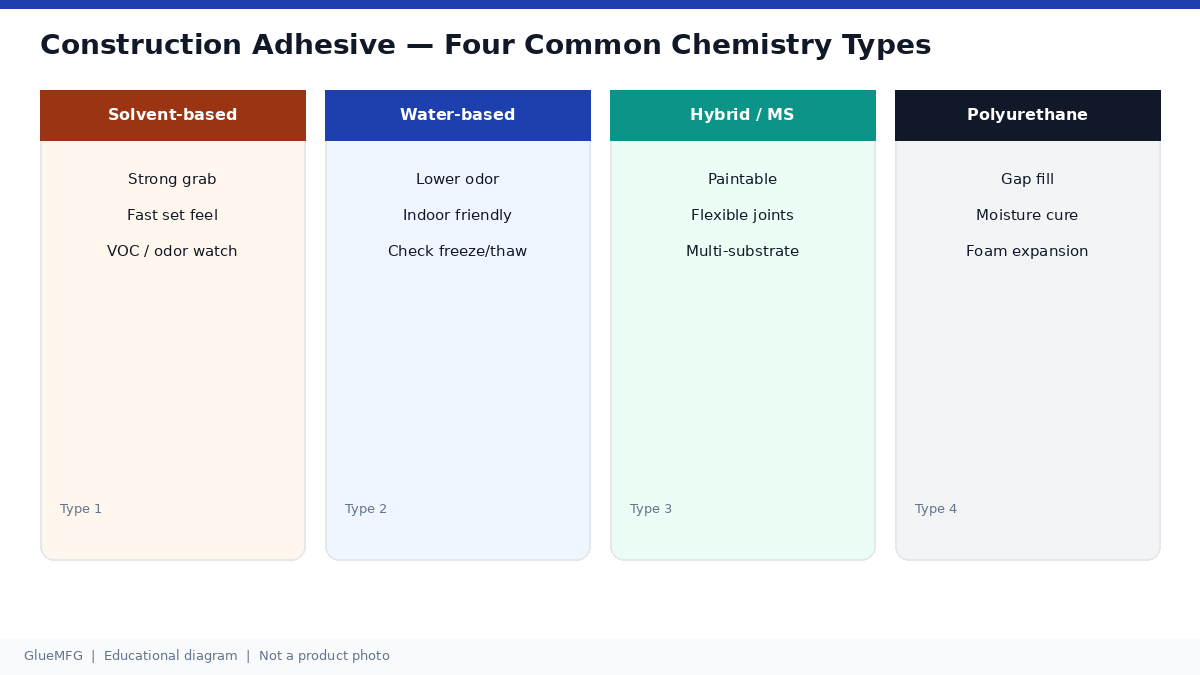
Solvent-based grades often feel grabby and set with a clear “jobsite” pace. Plan VOC, odor, and warehouse flammable rules before you stock them for indoor retail.
Water-based grades suit many indoor panel and wood bonds with lower odor. Check freeze/thaw history if stock moves through cold warehouses.
Hybrid / MS polymer grades are popular when buyers want flexibility, paintability, and multi-substrate claims without classic silicone odor.
Polyurethane grades fill gaps and moisture-cure. Expansion and foam behavior must match the joint — over-expanding foam can push panels.
| Chemistry | Typical strengths | Watch-outs |
|---|---|---|
| Solvent-based | Strong grab, familiar contractor feel | VOC, odor, flammable storage |
| Water-based | Lower odor, indoor-friendly positioning | Freeze/thaw; slower in cold/damp jobs |
| Hybrid / MS | Flexible, multi-substrate, often paintable | Confirm primer needs on difficult plastics |
| Polyurethane | Gap fill, moisture cure, exterior joints | Expansion control; moisture during cure |
Do not stock one “universal construction adhesive” SKU and expect it to cover structural timber, mirror bonding, and foam panel work. One vague SKU creates returns. Split the ladder by chemistry and channel claim.
Substrate and Gap-Fill Decisions
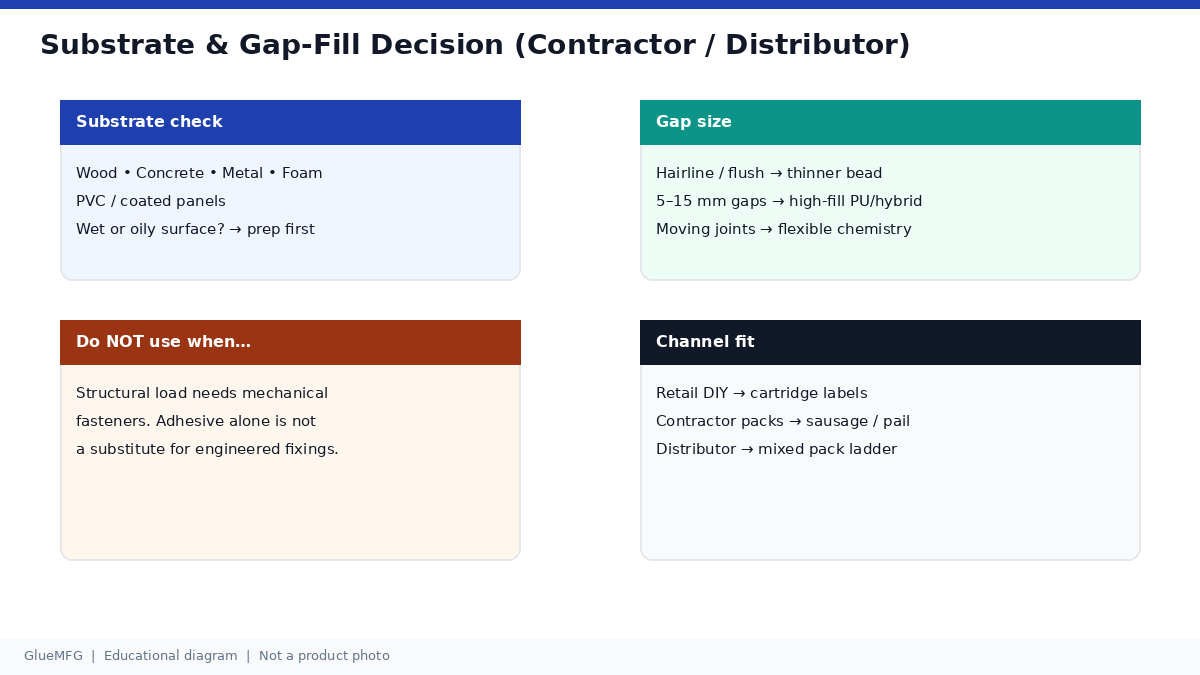
Write the real materials in the RFQ: plywood to concrete, XPS to metal stud, PVC trim to painted wall. Gap size matters as much as chemistry. Hairline joints need a different bead and viscosity than 10 mm voids.
If the joint moves (thermal or structural), prefer flexible hybrid/MS or tuned PU over a brittle hard-set claim. If the job is load-bearing under code, keep mechanical fasteners in the design — adhesive supports; it does not replace engineered fixings.
Distributor returns spike when counter staff promise “no nails needed” on load paths that still need screws or anchors. Print honest use notes on the sleeve.
Pack-Size Ladder (Sample → Container)
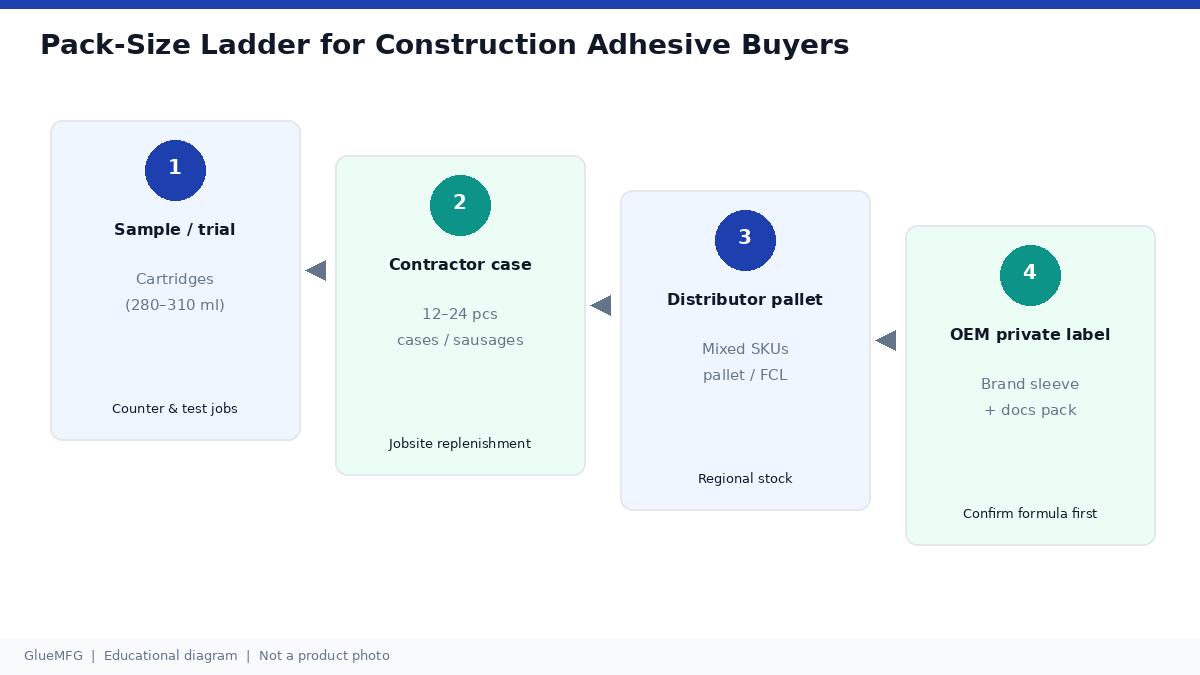
- Sample / trial: 280–310 ml cartridges for counter tests and one-job trials.
- Contractor case: 12–24 piece cases or sausages for jobsite replenishment.
- Distributor pallet / FCL: mixed SKUs by chemistry and color claim.
- OEM private label: brand sleeve, barcode, and language pack — only after formula lock.
Ask for the ladder in the first message. Quoting only a 20 ft container price for a first-time distributor often kills the deal; quoting only a sample with no case MOQ wastes factory time.
RFQ Checklist Before You Ask for Price
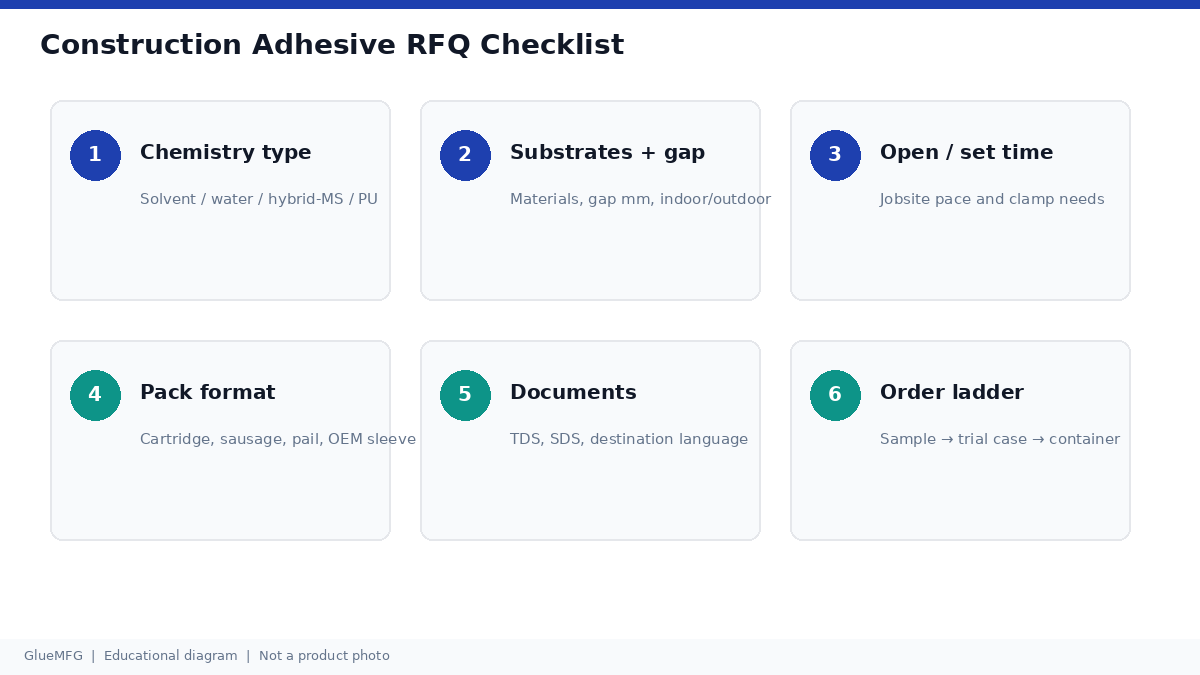
- Chemistry type: solvent, water-based, hybrid/MS, or polyurethane.
- Substrates + gap: materials, gap in mm, indoor vs outdoor, wet service?
- Open / set time: jobsite pace, clamp needs, tool cleanup solvent.
- Pack format: cartridge, sausage, pail; case count; OEM sleeve language.
- Documents: TDS, SDS, destination language, any required marks (only if real).
- Order ladder: sample → trial case → container; target monthly volume.
GlueMFG can provide MSDS/COA, packing list, and invoice for confirmed orders. Do not invent certification marks on cartons unless documents match the exact formula and destination market.
What GlueMFG Can Support Around This Topic
GlueMFG currently lists 93 SKUs across 13 categories, with OEM packaging available. The live public catalog focuses on liquid adhesives and sealants. Dedicated multi-purpose “construction adhesive” cartridge lines should be confirmed by inquiry before you assume in-stock availability.
Closest related categories for construction and bonding buyers today:
- Silicone / PU sealants — joint sealing cartridges for construction channels
- Wood glue — interior wood assembly (different from multi-substrate construction adhesive)
- PVC pipe glue — solvent-weld pipe systems (different process)
If you need a private-label construction adhesive line, send the RFQ checklist above with substrate photos. The factory can confirm whether a matching chemistry and pack format can be sourced or developed — do not treat a silicone sealant SKU as a drop-in for construction adhesive.
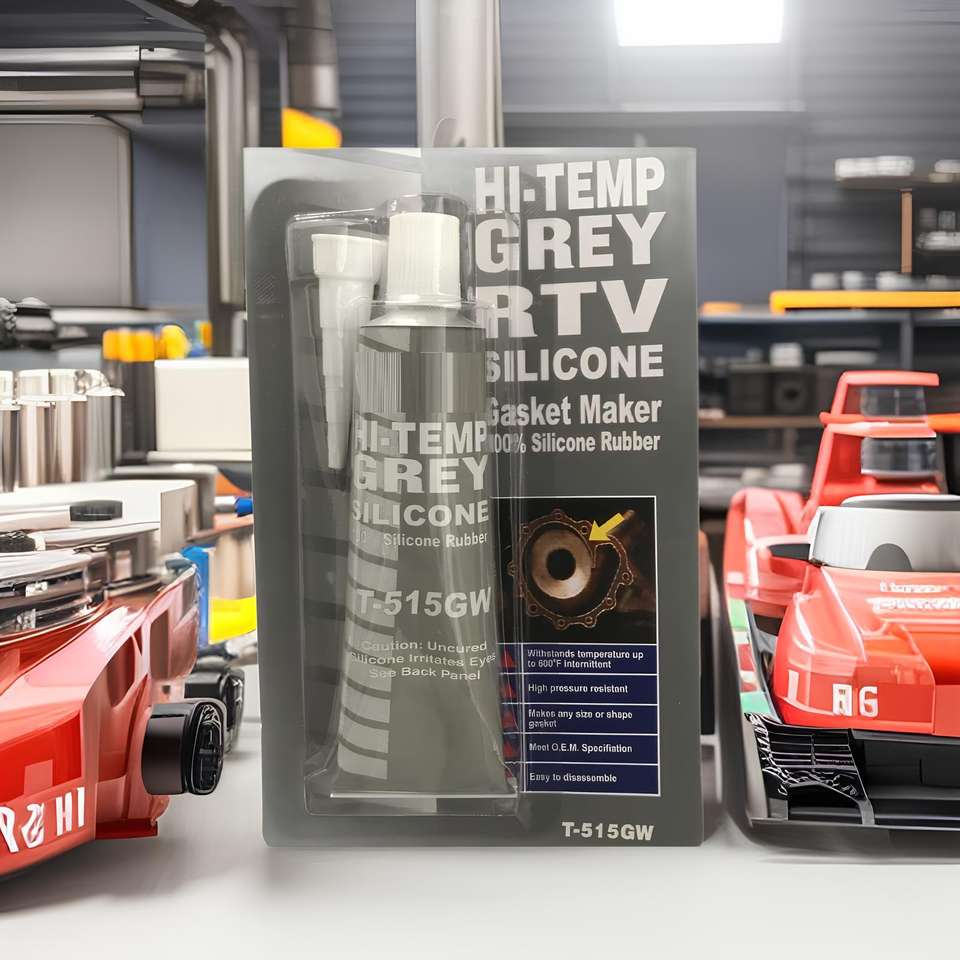
Silicone / Sealant
Cartridge sealants for joints — related channel, different chemistry. See catalog.
PU / Construction Sealant
Construction sealing channels. For cure chemistry, see the neutral vs acetoxy guide.
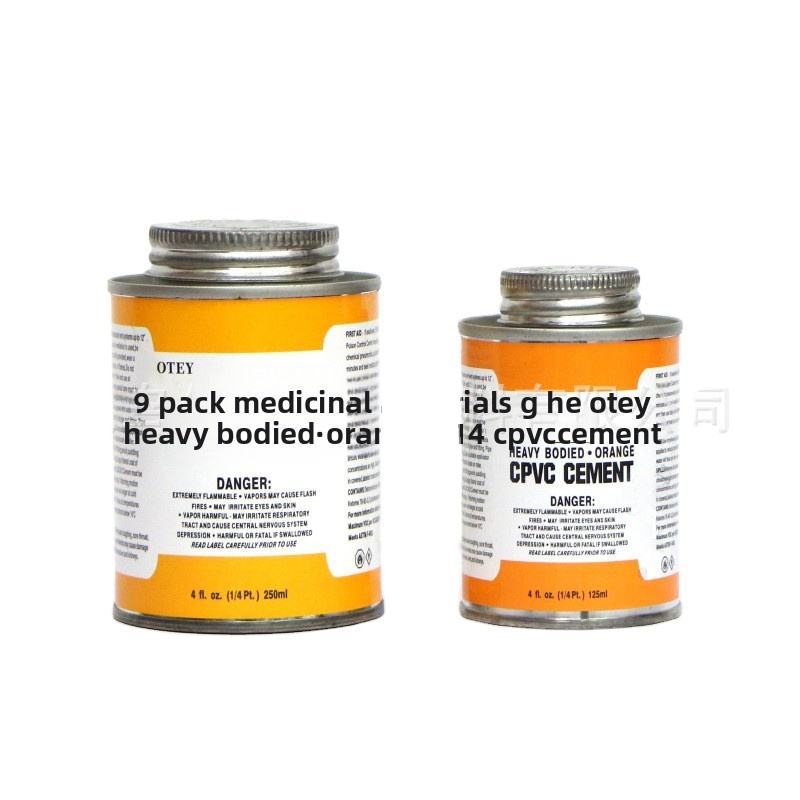
PVC Pipe Glue
Solvent-weld pipe systems — not a construction adhesive substitute.
Related GlueMFG Resources
- Product catalog (93 SKUs)
- Pressure sensitive adhesive sourcing guide
- Neutral-cure vs acetoxy silicone sourcing guide
- Silicone sealant cure time
- Contact cement vs spray adhesive guide
FAQ
What is construction adhesive?
Construction adhesive is a heavy-duty bonding product used to join building materials such as wood, concrete, metal, foam, and panels. It is sold mainly in cartridges, sausages, and pails for contractors and distributors — not as a craft glue.
Solvent vs water-based vs hybrid vs polyurethane — which should I stock?
Solvent-based grades often give strong grab and faster set feel but need VOC and odor planning. Water-based suits many indoor jobs with lower odor. Hybrid/MS polymers are flexible and multi-substrate. Polyurethane fills gaps and moisture-cures. Match chemistry to substrate, gap, and channel — not to the cheapest FOB line.
What should be on a construction adhesive RFQ?
Include chemistry type, substrates and gap size, indoor vs outdoor, open/set time needs, pack format (cartridge, sausage, pail), private-label needs, and documents (TDS, SDS, destination language). State sample vs trial vs container volume.
Can construction adhesive replace mechanical fasteners?
No. Construction adhesive supports bonds and reduces fasteners on many jobs, but it is not a substitute for engineered structural fixings when codes or load paths require mechanical fastening. Write load expectations clearly in the RFQ.
Does GlueMFG currently list dedicated construction adhesive SKUs?
The live public catalog focuses on liquid adhesives and sealants such as silicone, cyanoacrylate, epoxy-related, wood glue, polyurethane sealant, and PVC pipe glue. Dedicated multi-purpose construction adhesive cartridge lines should be confirmed by inquiry before assuming stock.