Contact cement and spray adhesive are not two pack sizes of the same glue. Contact cement is usually coated on both sides, waited through open time, then mated once for permanent laminating bonds. Spray adhesive is misted for fast coverage and often used for temporary hold, foam, or light covering. Before you RFQ, lock process, substrate pair, open time / tack window, and pack + VOC/hazmat. Do not write “contact / spray glue, cheapest.” That returns the wrong formula and freight class.
Furniture plants, sign shops, foam converters, and automotive trim lines all say “contact” in chat messages. Some mean neoprene contact cement. Some mean acrylic contact adhesive. Some mean aerosol spray. Factories quote different lines for each. Mixing names costs sampling weeks.
This guide is for production and B2B sourcing — not craft-store spray cans for poster board.
Decision Tree: Which Process Belongs on Your Line?
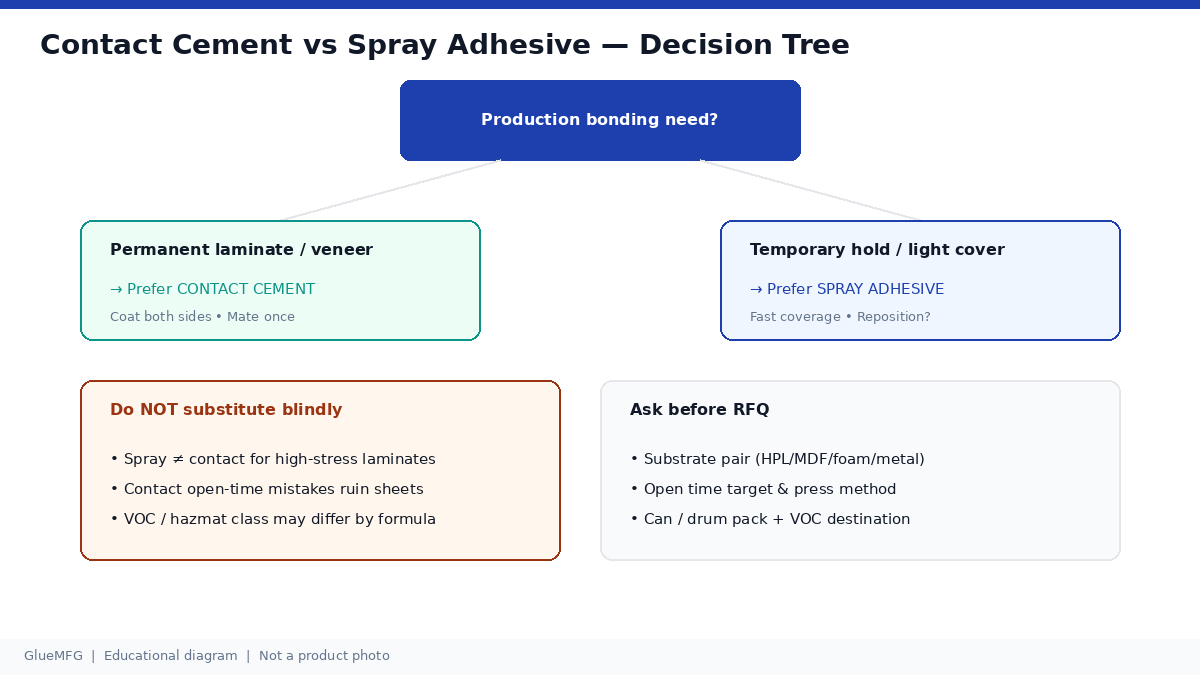
Choose contact cement when: you laminate HPL, veneer, or similar sheets; you can coat both sides; operators understand open time; the bond must stay under stress.
Choose spray adhesive when: you need fast mist coverage; parts are foam, fabric, or light covers; temporary staging or reposition windows matter more than max peel.
Putting a general spray adhesive under a high-stress laminate “because it is faster” is a common production failure. Coupon-test the real substrate pair before changing the line.
Open-Time Timeline (Why Mate Timing Matters)
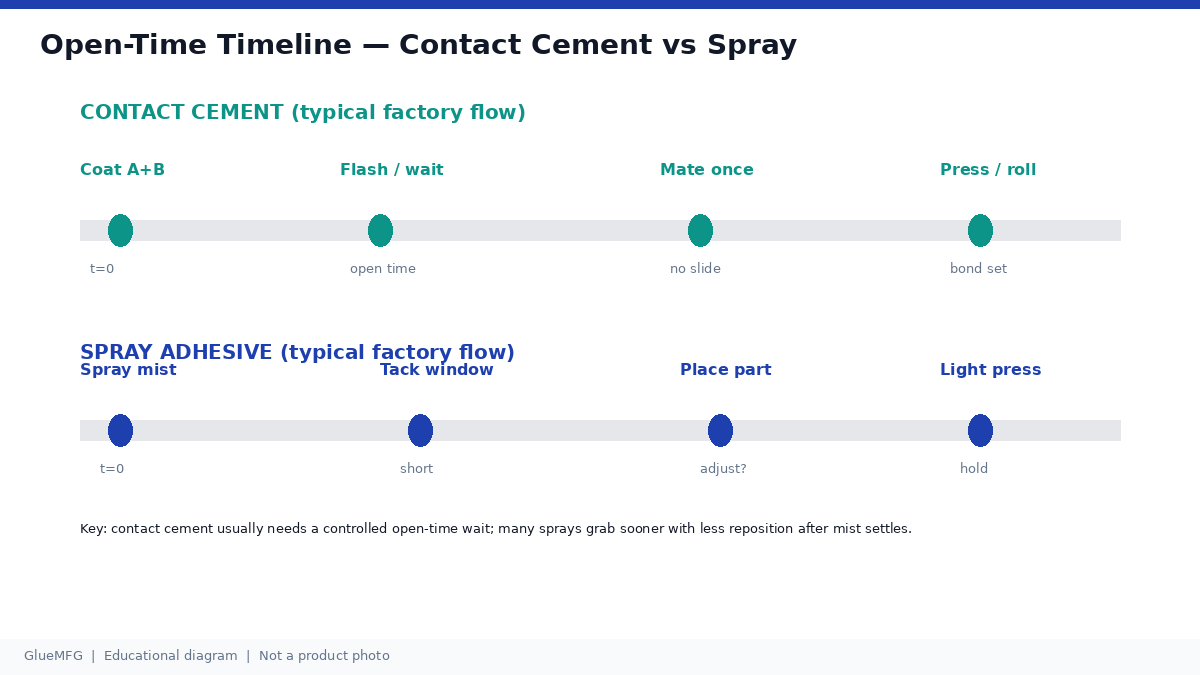
Contact cement fails when operators mate too early (solvent still wet) or too late (past open time). Training and TDS open-time numbers belong in the buyer brief — not only in a PDF nobody reads on the floor.
Spray adhesives vary widely: some grab immediately; some allow short reposition. Write the seconds/minutes your line actually needs. “High tack” alone is not a spec.
Coverage, VOC, and Hazmat Contrast
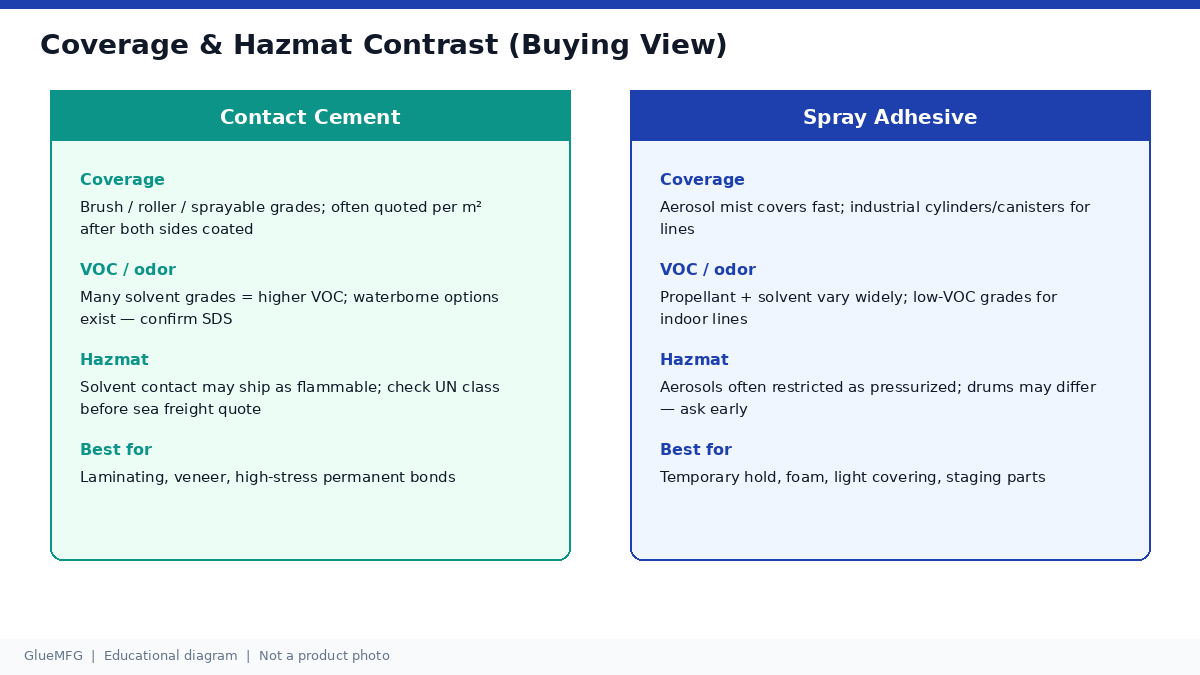
| Factor | Contact cement | Spray adhesive |
|---|---|---|
| Typical process | Coat both sides → open time → mate once | Mist → tack window → place / light press |
| Best fit | Laminating, veneer, permanent high-stress bonds | Temporary hold, foam, light covering, staging |
| Coverage talk | Often m² after two-sided coating | Cans or kg per shift; mist efficiency varies |
| VOC / odor | Solvent grades common; waterborne options exist | Propellant + solvent vary; check indoor line rules |
| Shipping watch | Solvent may be flammable class | Aerosols often pressurized restrictions |
Do not ask the factory to “make spray behave like contact cement” by spraying thicker. Over-application does not recreate two-sided contact chemistry. If the job is contact laminating, buy contact cement (or a proven contact process) and train open time.
RFQ Checklist Before You Ask for Price
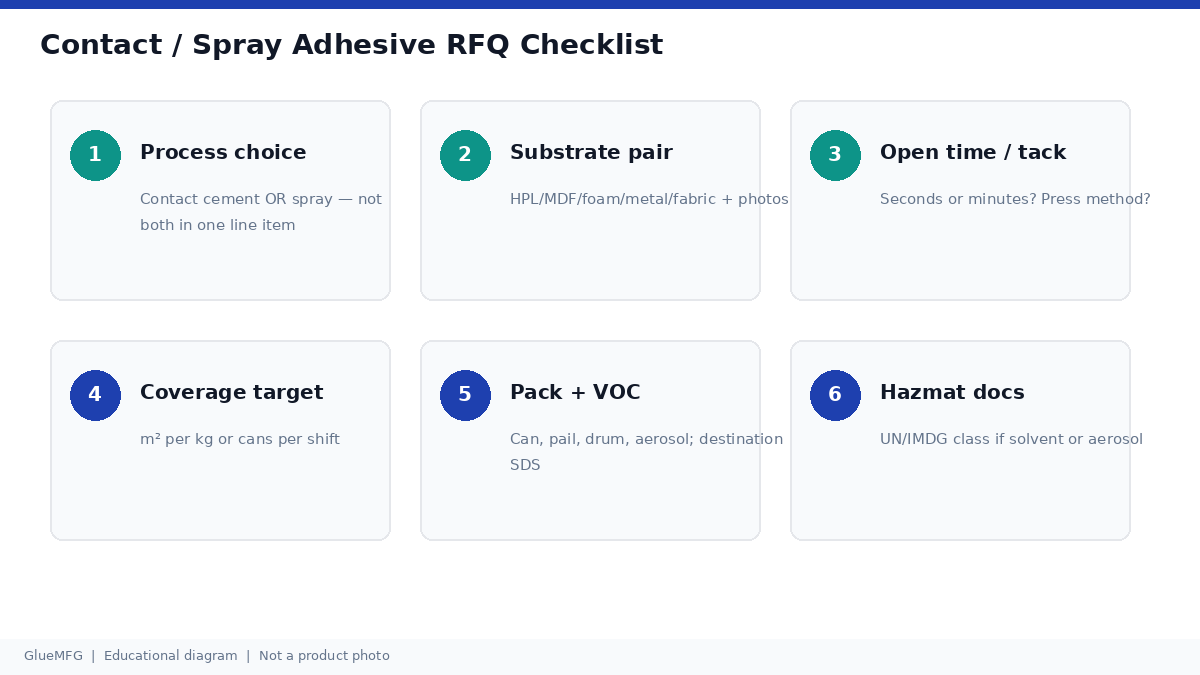
- Process choice: contact cement OR spray adhesive — separate line items.
- Substrate pair: HPL/MDF, foam, metal, fabric — photos or coupons help.
- Open time / tack: seconds or minutes; press or roll method.
- Coverage target: m² per kg, or cans per shift on your line.
- Pack + VOC: can, pail, drum, aerosol/canister; destination SDS language.
- Hazmat docs: UN/IMDG class if solvent or pressurized pack.
GlueMFG can provide MSDS/COA, packing list, and invoice for confirmed orders. Do not invent certification or “non-hazmat” claims on cartons unless the SDS and transport classification match the exact formula and pack.
What GlueMFG Can Support Around This Topic
GlueMFG currently lists 93 SKUs across 13 categories, with OEM packaging available. The live catalog includes a Contact / Acrylic Adhesive category (acrylic-style contact adhesives). Dedicated industrial neoprene contact cement and spray-adhesive (aerosol or canister) lines should be confirmed by inquiry before you assume stock.
Closest related categories today:
- Contact / Acrylic Adhesive — acrylic contact-style adhesives on the public catalog
- Wood / Craft glue — interior wood bonds (different from contact laminating)
- Silicone / PU — sealing channels, not laminating contact cement
If you need export contact cement or spray adhesive as a private-label line, send the RFQ checklist with substrate coupons. Do not treat acrylic contact glue, wood glue, or sealant as automatic substitutes for neoprene contact cement or production spray adhesive.
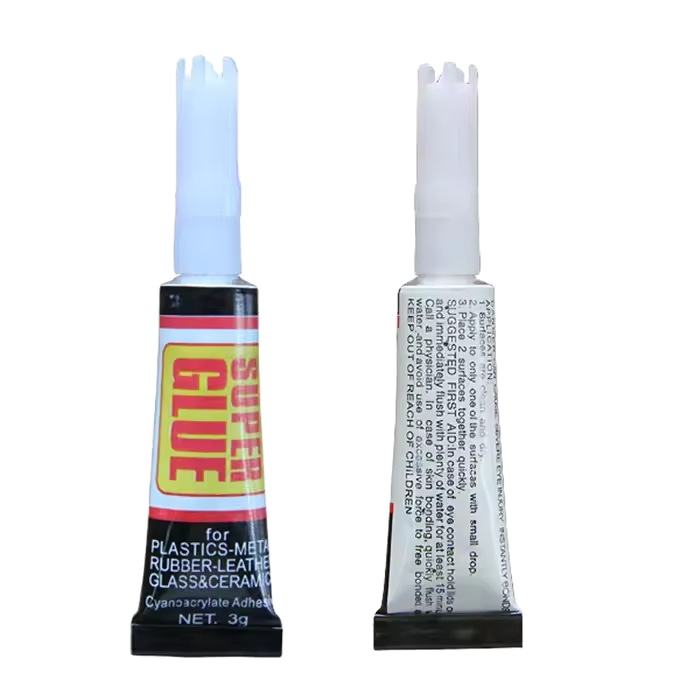
Contact / Acrylic
Acrylic contact-style adhesives on catalog. Confirm if your line needs neoprene contact cement instead.
Related GlueMFG Resources
- Product catalog (93 SKUs)
- Construction adhesive buying guide
- Pressure sensitive adhesive sourcing guide
- Epoxy cure time & shelf life
FAQ
What is the difference between contact cement and spray adhesive?
Contact cement is usually brushed or rolled on both surfaces, left to open time, then mated once for a permanent bond — common in laminating and veneer. Spray adhesive is misted for fast coverage and is often used for temporary hold, foam, or light covering. They are different processes, not two pack sizes of the same glue.
Can I substitute spray adhesive for contact cement on laminates?
Usually no. High-stress HPL or veneer laminating depends on contact cement open-time and two-sided coating. Many spray adhesives are built for temporary hold or light substrates. Substituting without a coupon test causes delamination and returns.
What specs should be on a contact cement or spray adhesive RFQ?
Name the process (contact cement or spray), substrate pair, open time or tack window, coverage target, pack format (can, pail, drum, aerosol), VOC/destination SDS language, and hazmat class if known. Attach substrate samples when possible.
Are contact cement and spray adhesive always hazardous for shipping?
Not always — it depends on solvent, propellant, and pack format. Solvent contact cement and aerosols often need flammable or pressurized shipping review. Waterborne grades may ship differently. Confirm SDS and UN/IMDG class before locking freight quotes.
Does GlueMFG currently list dedicated contact cement and spray adhesive SKUs?
The live catalog includes a Contact / Acrylic Adhesive category with acrylic-style contact adhesives. Dedicated industrial neoprene contact cement and spray-adhesive (aerosol or canister) lines should be confirmed by inquiry before assuming stock.