Pressure sensitive adhesive (PSA) bonds at room temperature with light pressure — no heat gun, water, or solvent activation required for the bond to form. Before you RFQ, lock three decisions: form (tape, transfer film, or foam tape), chemistry (acrylic, rubber, or silicone), and performance targets (peel, shear, tack, temperature). Do not send only “PSA tape, cheapest FOB.” That usually returns mismatched liner, coat weight, and channel claims.
PSA shows up in labels, nameplates, appliance panels, electronics assembly, automotive trim, medical disposables, and retail POS. The buying mistake is treating “PSA” as one SKU family. In production it is a stack of choices: adhesive coat, carrier, release liner, slit width, and how the roll will be applied on your customer’s line.
This guide is written for B2B sourcing — importers, distributors, OEM/ODM buyers — not consumer craft tape shopping.
Three PSA Forms Buyers Actually Order
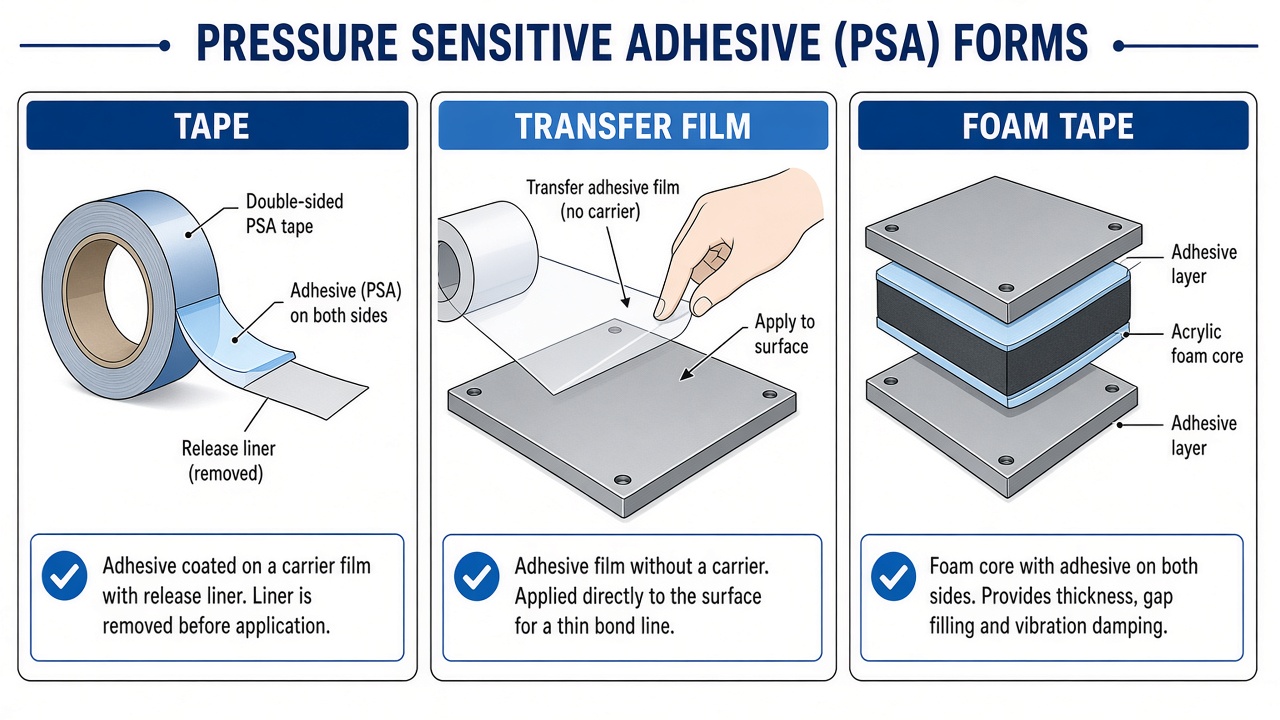
Double-sided PSA tape is adhesive coated on a carrier film (PET, PP, tissue, nonwoven) with a release liner. Buyers like it because slit rolls are easy to stock and apply.
Transfer film is adhesive without a permanent carrier. You apply the film to one substrate, then bond the second part. Bond lines stay thinner — useful when thickness tolerance is tight.
Acrylic foam tape uses a foam core with adhesive on both sides. It fills gaps, damps vibration, and often replaces mechanical fasteners on trim and panels. It is not a drop-in for thin label tape.
If your buyer brief says “foam tape for nameplates,” a thin PET double-sided tape quote will look cheap and fail in the field. Name the form in the SKU title and on the carton.
Peel, Shear, and Tack — Spec Language That Matters
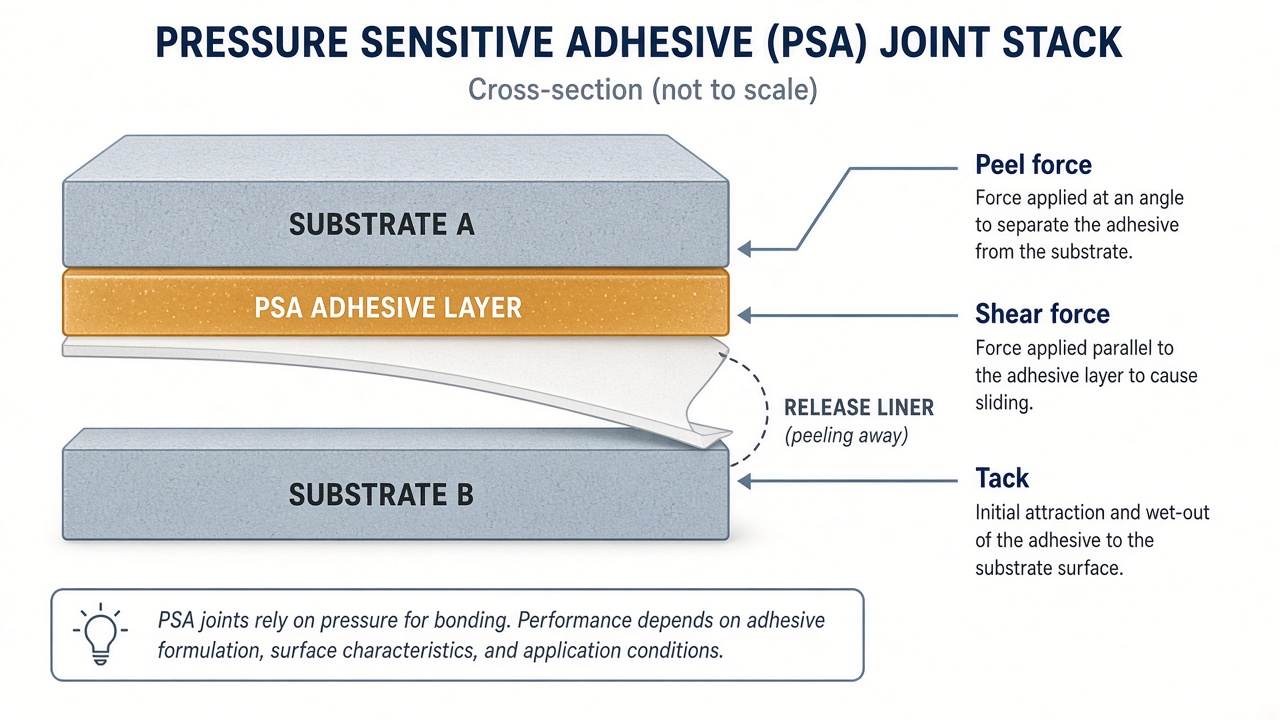
Catalog sheets often list one “adhesion” number. For sourcing, ask for at least:
- Tack — how fast the adhesive grabs on first contact
- Peel — force to peel at an angle (often 90° or 180° on steel or the real substrate)
- Shear / holding power — resistance to sliding under load over time
- Temperature band — application temperature and service temperature
High tack with weak shear is fine for a paper label. It is a liability for a hanging sign or vertical trim. Write the use case next to the number so the factory does not optimize the wrong test.
Acrylic vs Rubber vs Silicone Chemistry
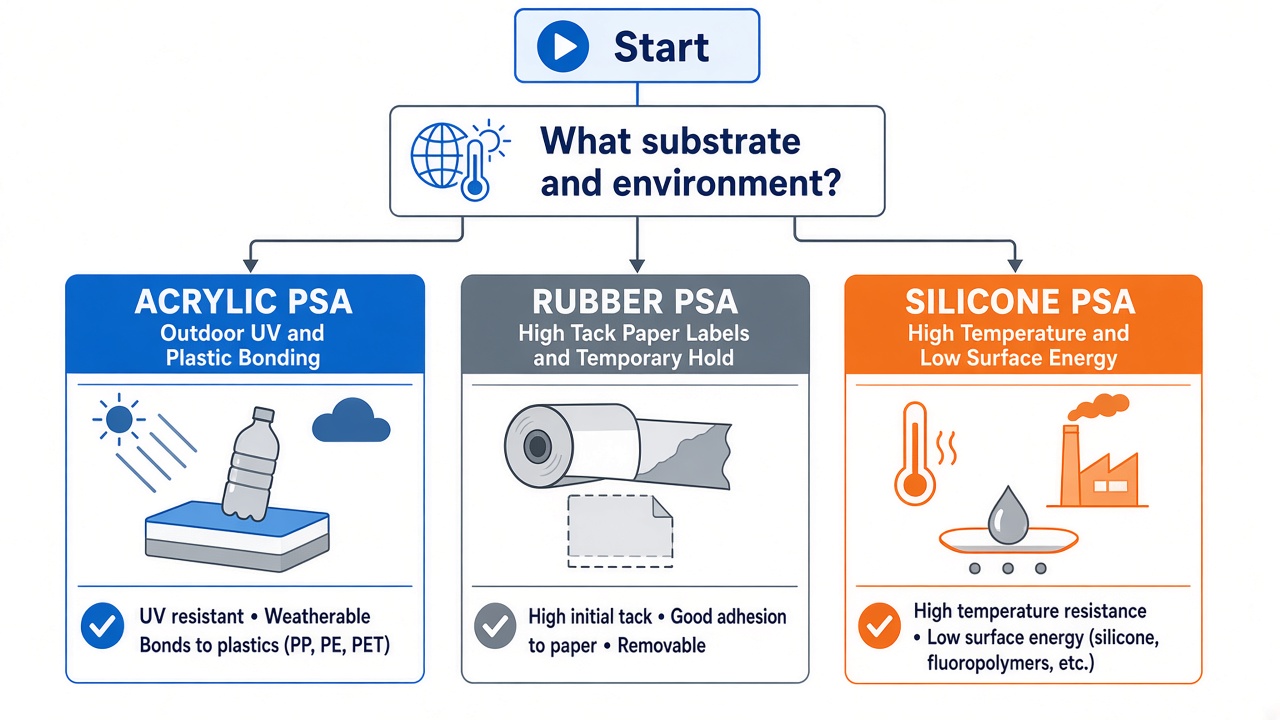
| Chemistry | Typical strengths | Watch-outs |
|---|---|---|
| Acrylic PSA | Aging, UV, many plastics, outdoor durability | May need dwell time; not always highest initial tack |
| Rubber PSA | High initial tack, paper labels, temporary bonds | Weaker aging/UV vs acrylic; check plasticizer migration |
| Silicone PSA | High temperature, silicone and other LSE surfaces | Higher cost; overkill for general labeling |
Do not default to silicone PSA for every “difficult plastic” brief. Many PP/PE bonds are solved with a primer, surface treatment, or a tuned acrylic — at lower cost. Ask for a substrate coupon test before locking chemistry.
PSA vs Contact Cement vs Hot Melt
Buyers sometimes paste “PSA / contact / hot melt” into one Alibaba message. They are different processes:
- PSA — pressure at ambient temperature
- Contact cement — coat both sides, wait open time, mate once
- Hot melt — heat to apply; solidifies on cool-down
If your channel is furniture or laminate shops, they may want contact cement, not PSA. If your channel is carton sealing or wood assembly with glue guns, they want hot melt. Mislabeling wastes sampling weeks.
RFQ Checklist Before You Ask for Price
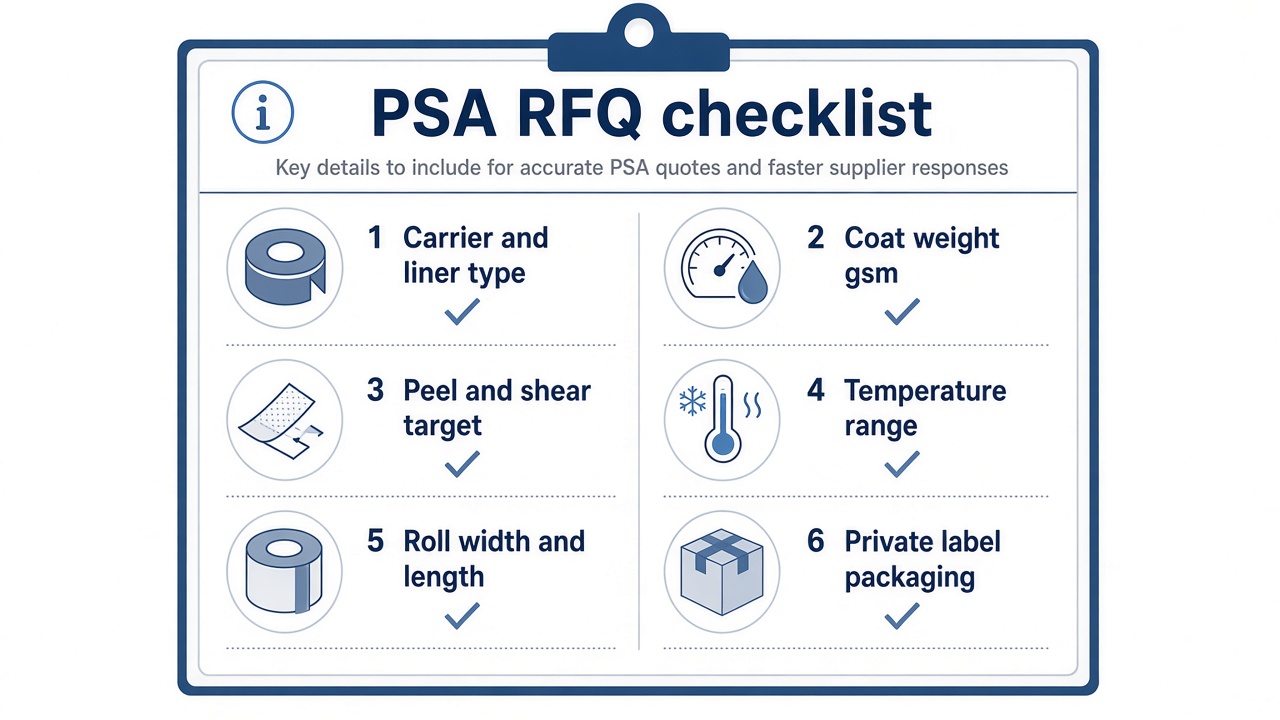
- Form: double-sided tape, transfer film, or foam tape.
- Carrier and liner: PET / tissue / foam; liner color and release force if known.
- Coat weight (gsm) and target thickness / foam density.
- Peel and shear targets on the real substrate — not only on steel panels.
- Temperature range: application and service; indoor vs outdoor UV.
- Roll width/length, core size, private-label packaging, and documents (TDS, SDS, COA route).
GlueMFG can provide MSDS/COA, packing list, and invoice for confirmed orders. Do not invent certification marks on cartons unless documents match the exact formula and destination market.
What GlueMFG Can Support Around This Topic
GlueMFG currently lists 93 SKUs across 13 categories, with OEM packaging available. The live public catalog focuses on liquid adhesives and sealants. Dedicated PSA tape or transfer-film SKUs should be confirmed by inquiry before you assume in-stock availability.
Closest related categories for bonding and sealing buyers today:
- Silicone / PU sealants — joint sealing cartridges for construction and industrial channels
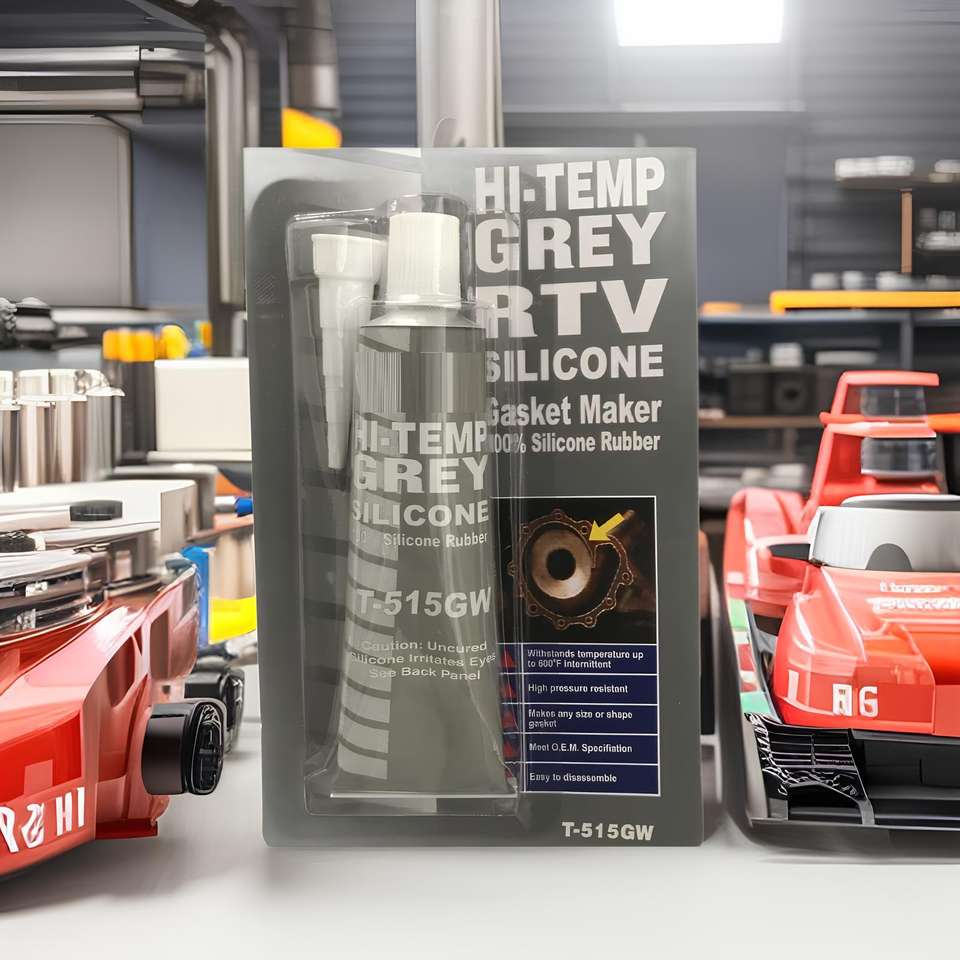
- Sealant / gasket maker — maintenance and flange sealing tubes
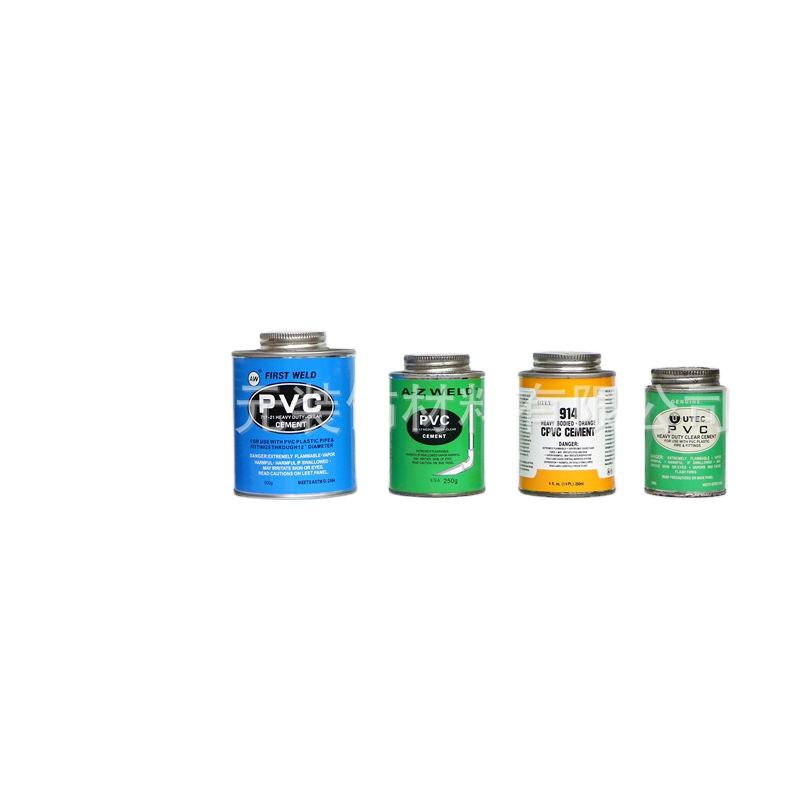
- PVC pipe glue — solvent-weld systems (different process from PSA)
If you need PSA as a private-label or export line, send the RFQ checklist above with substrate photos or coupons. The factory can confirm whether a matching form and chemistry can be sourced or developed — do not treat a liquid sealant SKU as a substitute for PSA tape.
PU / Construction Sealant
Construction sealing channels. For cure chemistry, see the neutral vs acetoxy guide.
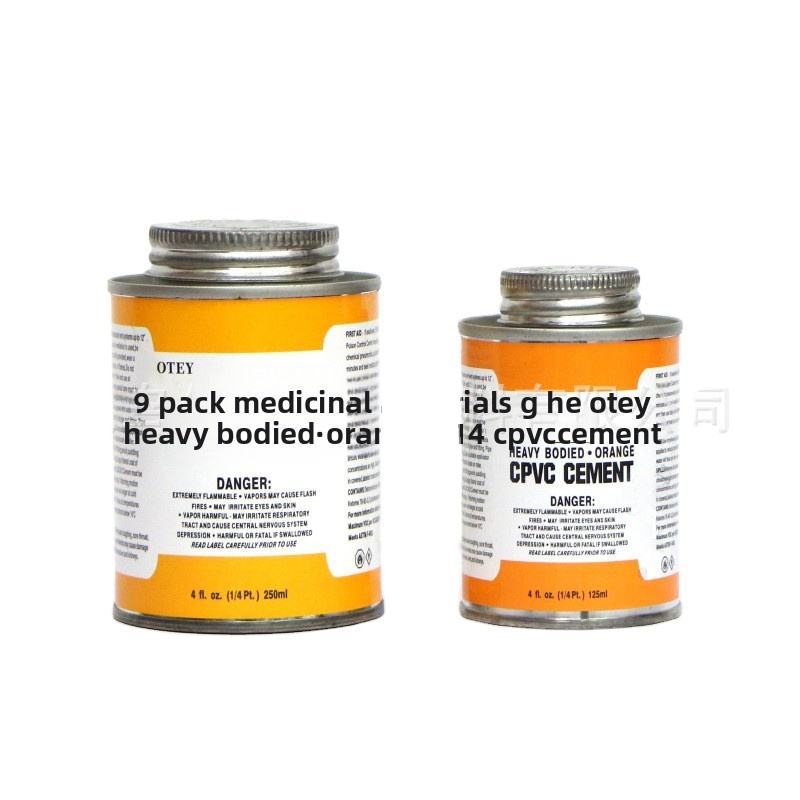
PVC Pipe Glue
Solvent-weld pipe systems — not a PSA substitute. Useful only when your buyer also stocks pipe adhesives.
Related GlueMFG Resources
- Product catalog (93 SKUs)
- Thread sealant vs pipe sealant selection guide
- Neutral-cure vs acetoxy silicone sourcing guide
- Silicone sealant cure time
FAQ
What is pressure sensitive adhesive (PSA)?
PSA is an adhesive that bonds at room temperature with light pressure. It does not need heat, water, or solvent activation for the bond to form. Common forms include double-sided tape, transfer film, and acrylic foam tape.
Acrylic vs rubber vs silicone PSA — which should I buy?
Acrylic PSA is the default for outdoor, UV, and many plastic bonds. Rubber PSA is often chosen for high initial tack on paper labels and temporary holds. Silicone PSA is for high temperature or very low-surface-energy substrates. Confirm substrate, service temperature, and removability before locking chemistry.
What specs should be on a PSA RFQ?
Include form (tape, transfer film, foam), carrier and liner, coat weight, peel and shear targets, temperature range, roll width/length, and private-label packaging needs. Attach substrate samples when possible.
Is PSA the same as contact cement or hot melt?
No. Contact cement usually needs open time and mating of two coated surfaces. Hot melt needs heat to apply. PSA sticks with pressure at ambient temperature. Mixing these terms in an RFQ causes wrong formula quotes.
Does GlueMFG currently list dedicated PSA tape SKUs?
The live public catalog focuses on liquid adhesives and sealants such as silicone, cyanoacrylate, and PVC pipe glue. Dedicated PSA tape or transfer-film lines should be confirmed by inquiry before assuming stock.