To read an adhesive SDS as an importer, first confirm it is the right document: the exact grade, your supplier, the current 16-section format for your market and a recent revision date. Then check four places that drive cost and risk: Section 2 (hazards and label), Section 3 (ingredients), Section 9 (flash point and other properties) and Section 14 (transport class). GlueMFG supplies MSDS/SDS, COA, packing list and invoice with export orders; format and language for your market are confirmed by inquiry.
Importers usually look at the SDS when a forwarder, customs broker or retail buyer asks for it, often the week the goods ship. That is too late to fix a label or a freight booking. This guide is a working checklist for reviewing a glue SDS at the quote stage. For a complete example document, see our 16-section super glue SDS.
First Check: Is This the SDS for What You Are Buying?
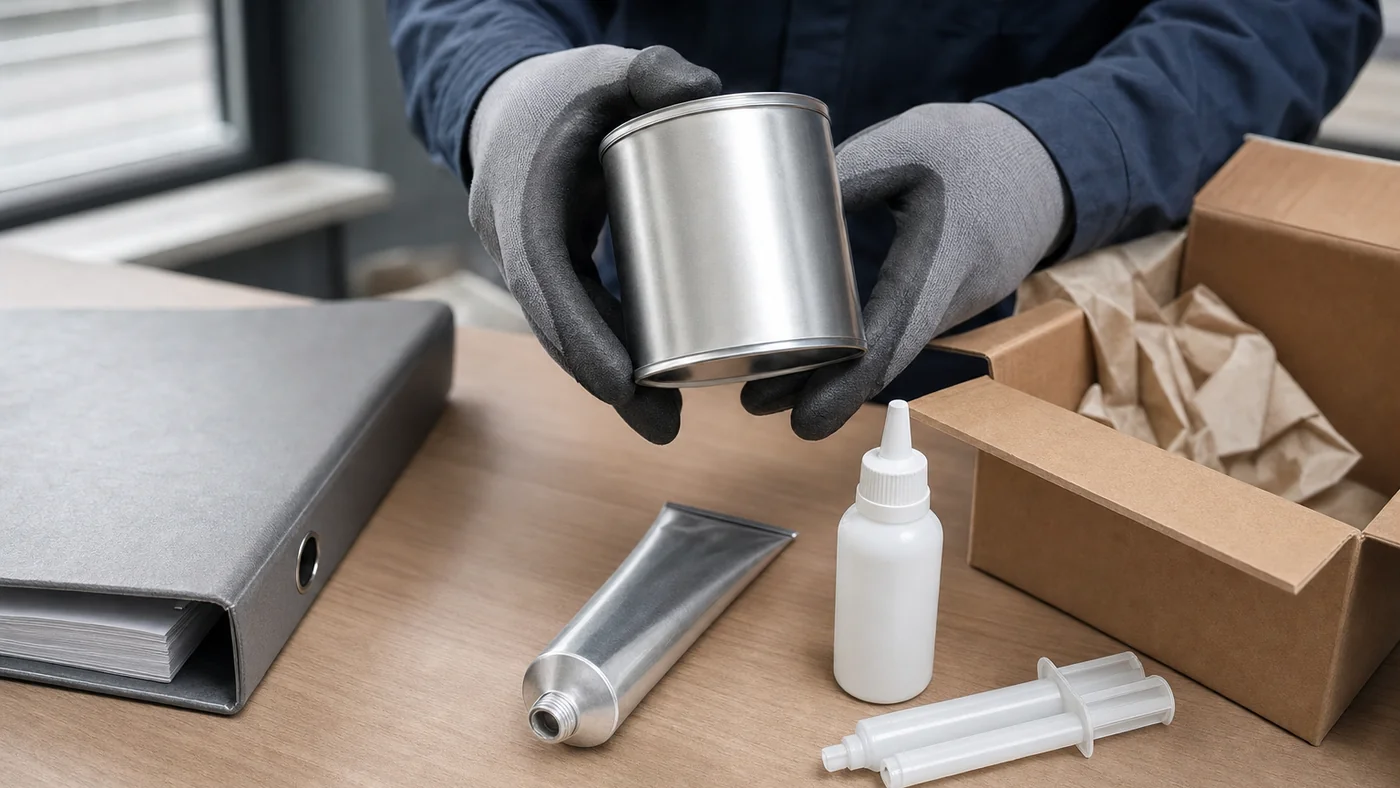
Most SDS problems are identity problems, not chemistry problems. Before reading hazards, check:
- Section 1 product name and code match the quote, the invoice and the label you plan to print.
- Supplier details are the company actually supplying you, with an emergency contact.
- Format: 16 sections in the GHS order. In the EU, REACH Annex II (as amended by Regulation (EU) 2020/878) and the language of the member state; in the US, OSHA HazCom.
- Revision date and version: a document older than the latest formula change is a red flag.
- One per component: two-part epoxy kits such as GLE-001 need an SDS for part A and part B.
Do not accept a "generic" glue MSDS, another brand's SDS, or a translation without a source version. If the document cannot be traced to the exact grade, it cannot support your labels or your freight booking.
Sections 2 and 3: Hazards and What Is Inside

Section 2 gives the hazard classification and the label elements (pictograms, signal word, hazard and precautionary statements) that your pack must carry. Section 3 lists the hazardous ingredients behind them. Read them together, by family:
| Adhesive family | What to look for in Sections 2 and 3 | Catalog examples |
|---|---|---|
| Cyanoacrylate | Skin and eye bonding, eye and respiratory irritation statements | GLE-050, GLE-068 |
| Solvent contact adhesive | Flammable liquid class, solvent identity, drowsiness or organ effects | GLE-008 |
| Water-based adhesive | Often lighter classification; check preservatives that can add a skin-allergy note, and that any "formaldehyde-free" claim matches Section 3 | GLE-011 |
| PVC pipe cement | Usually flammable solvent blends; eye and inhalation statements | GLE-014 to GLE-017 |
| Silicone sealant | Cure by-product (acetic acid for acetoxy, oxime for neutral oxime grades) | GLE-028 |
| Two-part epoxy | Skin sensitisation on the resin, corrosive or irritant amines on the hardener | GLE-001 |
The table shows what to look for, not the classification of these SKUs. The SDS of each grade decides it; ask for it by inquiry.
Sections 9 and 14: The Numbers Your Forwarder Will Ask About

Section 9 lists physical properties. For freight, the key one is the closed-cup flash point: liquids below 60 C generally fall into transport Class 3 (flammable liquids). Section 14 then states the result: UN number, proper shipping name, class, packing group and marine pollutant status.
- Solvent-based adhesives commonly ship as Class 3, often under UN 1133 Adhesives. That adds DG declarations, marking and cost.
- Cyanoacrylate can be non-restricted: GlueMFG's super glue SDS reports a flash point of 91.0 C, and a CNAS-accredited report classifies it as non-restricted cargo. See super glue sea freight hazard classification.
- Check consistency: if Section 9 shows a low flash point but Section 14 says "not regulated", stop and ask why before booking.
Sections 7, 8 and 15: Storage, Handling and Market Rules
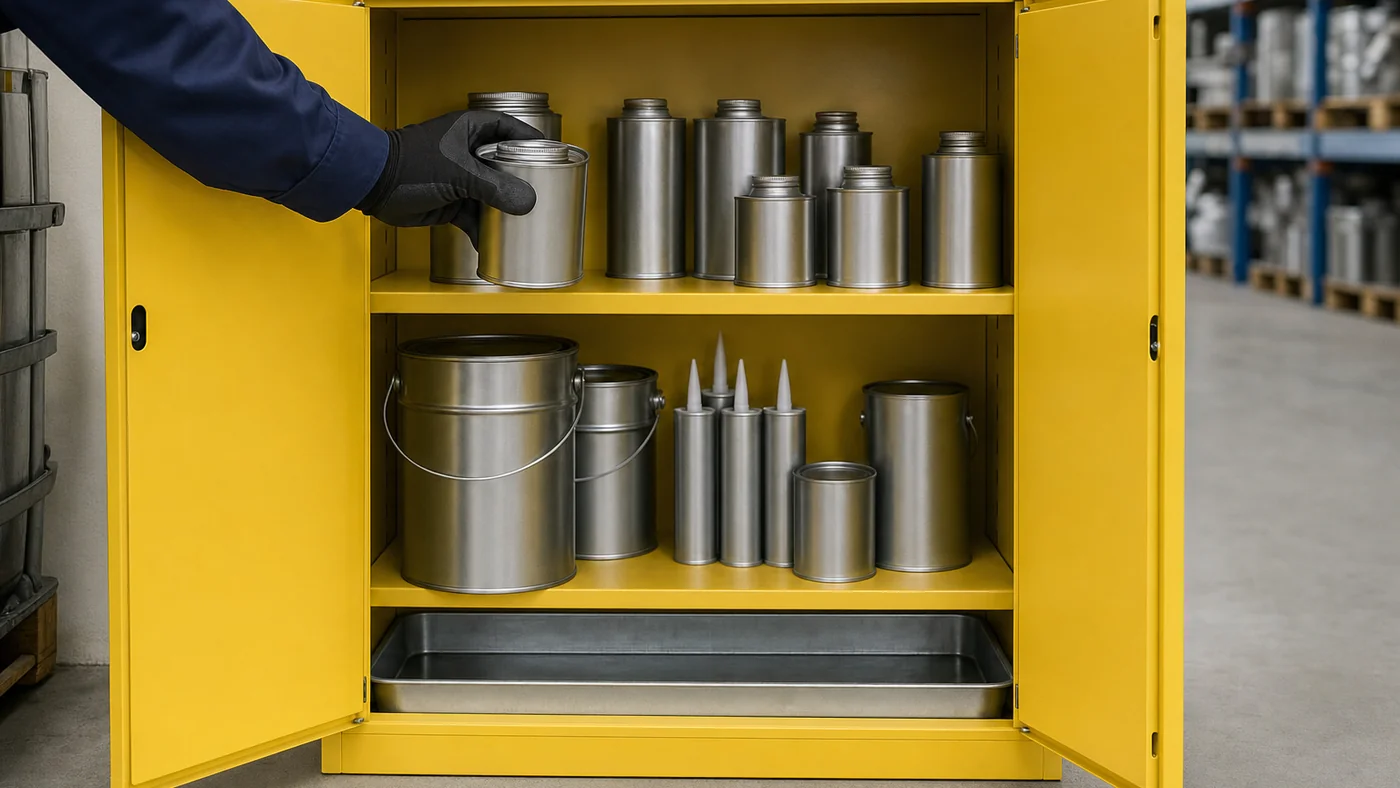
These sections affect your own warehouse and your customers:
- Section 7 (handling and storage): temperature limits, ventilation, incompatible materials. CA stays cool and dry; solvent grades stay away from ignition sources.
- Section 8 (exposure controls): gloves, eye protection and ventilation your distributors and end users should expect.
- Section 15 (regulatory information): market-specific listings. In the EU, many hazardous mixtures also need a UFI code on the label linked to poison-centre notification; ask how this is handled for your label.
- Section 16: revision history and abbreviations. Keep the version you shipped against with the batch COA.
The pictograms and statements on your printed pack must match Section 2 of the SDS for that grade. Fix this before artwork is approved; see OEM adhesive packaging options.
What GlueMFG Can Support Around This Topic
GlueMFG supplies MSDS/SDS, COA, packing list and invoice with export orders across the 93 SKUs in 13 categories on the public catalog, and the CNAS transport report for super glue. Tell us the destination market, the language you need and the SKUs on your PO, and we confirm the SDS format, revision and any transport report by inquiry before you book freight. For supplier vetting, see the industrial glue supplier shortlist.
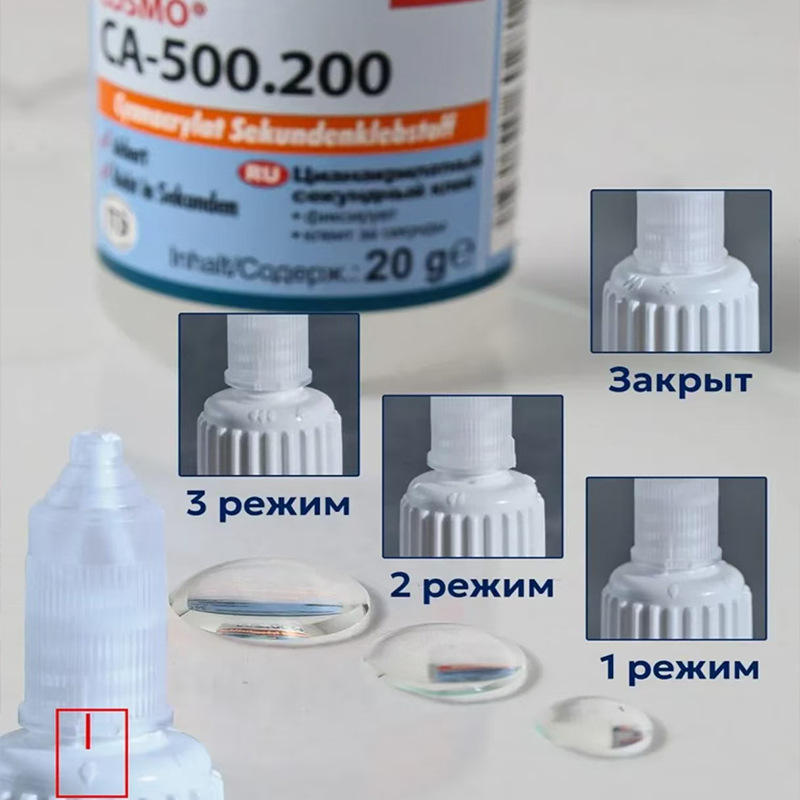
GLE-008 Oil-based acrylic
Solvent type. Check Sections 2, 9 and 14 before booking freight.
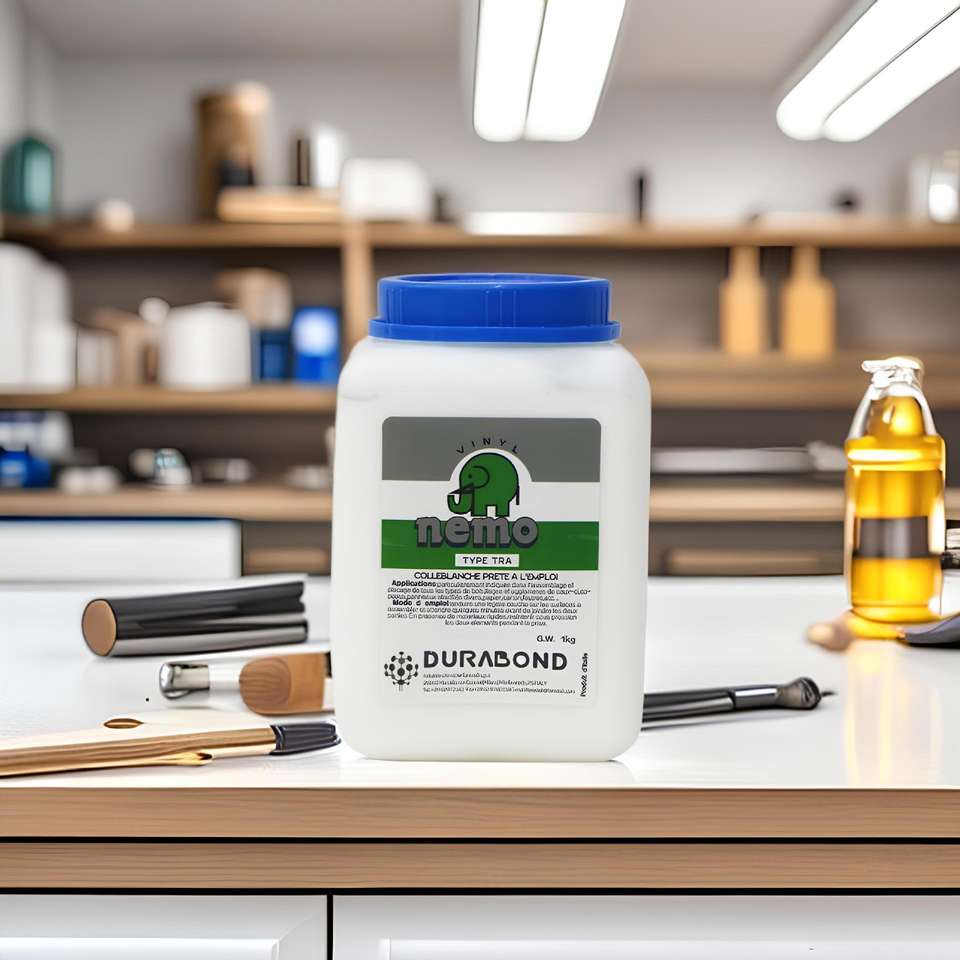
GLE-011 Water-based
Confirm the formaldehyde-free claim against Section 3 by inquiry.

GLE-050 Super Glue 502
SDS plus transport report available for super glue shipments.
Related GlueMFG Resources
- Super Glue SDS: Full 16-Section Safety Data Sheet
- Super Glue SDS (Chinese version)
- Super Glue Sea Freight: Hazard Classification Report
- Contact Adhesive: Solvent-Based vs Water-Based for OEM Buyers
- GlueMFG product catalog
FAQ
What is the difference between an MSDS and an SDS for glue?
They describe the same document. MSDS is the older name; SDS is the current GHS-based 16-section format used under EU REACH and US OSHA HazCom. Many buyers still ask for a "glue MSDS". What matters is that it is in the current 16-section format for your market and matches the exact grade you buy.
Which SDS sections should an adhesive importer check first?
Section 1 (product identity and supplier), Section 2 (hazard classification and label elements), Section 3 (ingredients), Section 9 (physical properties such as flash point), Section 14 (transport classification) and Section 16 (revision date). Those decide labels, storage and freight; mistakes there cost the most.
Does a two-part epoxy need one SDS or two?
Two. The resin (part A) and the hardener (part B) are different mixtures with different hazards, so each component has its own SDS. A kit sold as one SKU still ships with both documents.
Is adhesive dangerous goods for sea freight?
It depends on the exact grade. Many solvent-based adhesives are flammable liquids and ship under Class 3, often as UN 1133 Adhesives. Water-based adhesives and many cyanoacrylates are not regulated for transport; GlueMFG's super glue, for example, has a measured closed-cup flash point of 91.0 C and a transport report classifying it as non-restricted cargo. Section 14 of the grade's SDS, and a transport report where needed, decide it.
Can I use the SDS from another brand of the same glue type?
No. An SDS belongs to a specific formula from a specific supplier. Another brand's SDS, or an old version, may list different ingredients, hazards or flash point, and customs, forwarders or retailers can reject it. Ask for the SDS of the exact grade, in the format and language of your market.