Leather glue for leather goods and upholstery is usually a contact adhesive, solvent-based or water-based, applied thin to both surfaces and pressed once tacky. Latex and water-based glues suit folding and lining; instant glue is for small rigid fixes only. Buyers should check leather finish, flexibility, open time, heat resistance, solvent rules and peel tests. For GlueMFG products these details are confirmed by inquiry.
Leather goods makers, upholstery and furniture plants, automotive trim workshops and distributors all buy “leather glue”, but the jobs differ: edge folding on a wallet, bonding a bag strap, wrapping an armrest or retail repair bottles. A glue that works on raw vegetable-tanned leather may peel from a finished, coated hide. This guide matches glue types to leather jobs, explains how to apply contact adhesives on a production bench, and lists the tests and RFQ data to agree before ordering. For footwear repair ranges, see shoe glue for distributors; for colour repair kits, see home repair kits for private label.
Match the Glue to the Leather Job
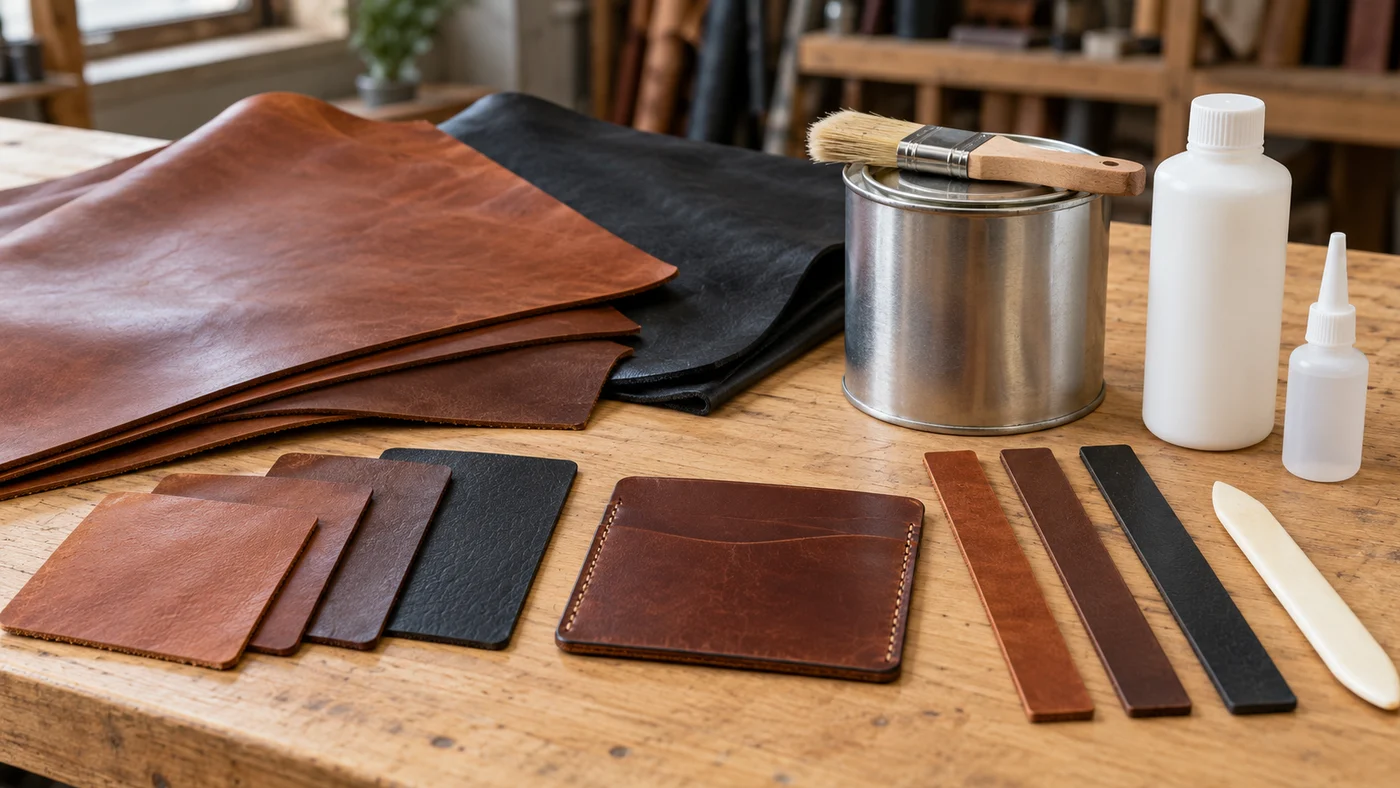
| Leather job | Usual glue type | Watch for |
|---|---|---|
| Bags, belts, straps, wallets | Contact cement (solvent or water-based) | Flexibility, edge finishing, stitching through the glue |
| Edge folding and turned edges | Water-based contact or latex glue | Open time, thin even coat, no show-through |
| Linings and backing | Water-based or latex glue, spray contact on large areas | Soak-through on thin leather, stiffness |
| Upholstery, panels, trim wrapping | Contact adhesive by brush, roller or spray | Heat in cars or near windows, foam compatibility |
| Small rigid fixes, retail repair | Instant glue, repair kits | Brittle on flexing parts, white staining |
Do not choose instant glue for straps, folds or large leather panels. It cures hard and can crack or stain when the leather flexes; use a flexible contact adhesive and test peel strength instead.
Contact Cement on Leather: Solvent vs Water-Based
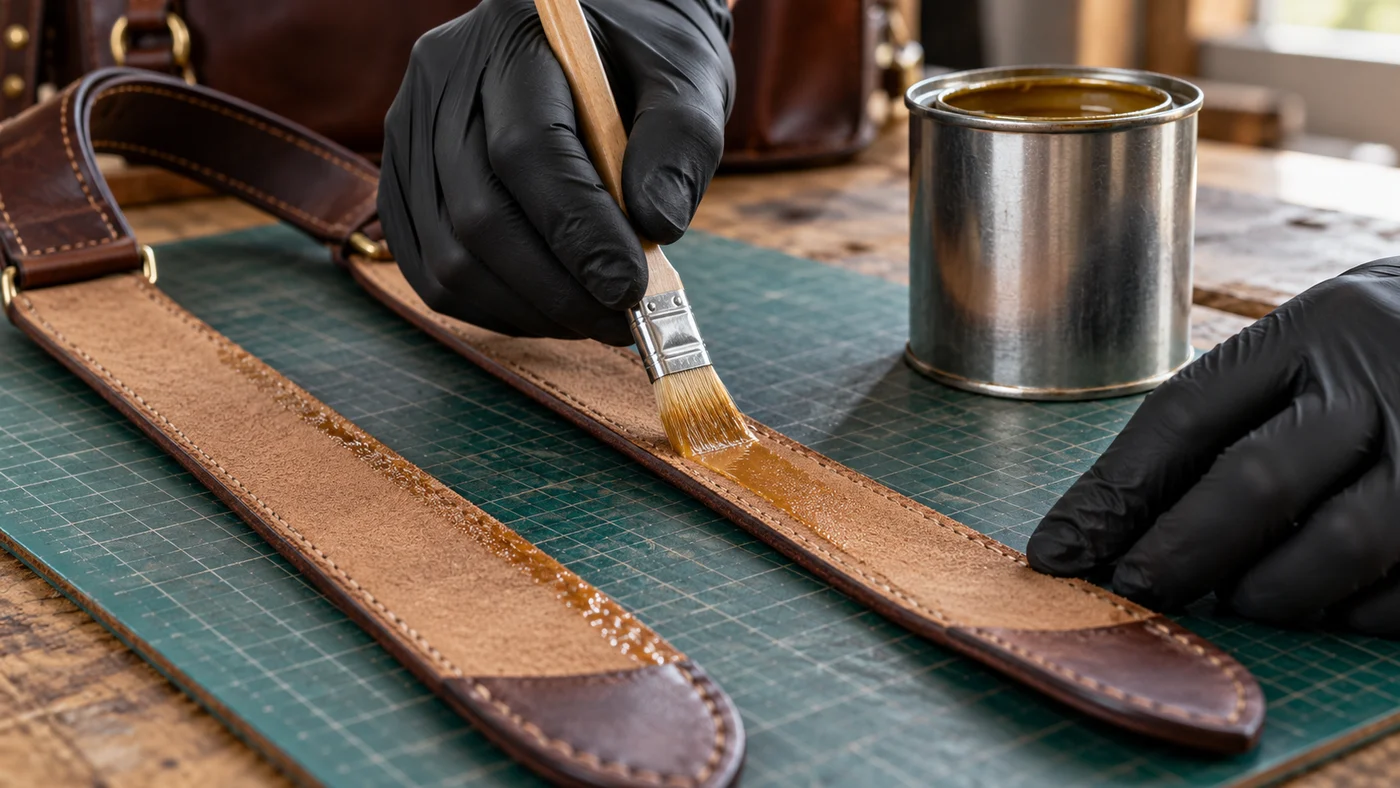
- How it works: both surfaces are coated, the solvent or water evaporates, and the tacky films bond on contact under pressure. Positioning after contact is difficult, so jigs and marks help.
- Solvent-based: fast tack and good wetting on many finishes, but odour, flammability and workplace solvent rules apply. Confirm the solvent system on the SDS for your market.
- Water-based: lower odour and easier for workshops with ventilation limits; drying is slower, especially in cold or humid rooms, and some grades need heat activation. See solvent-based vs water-based contact adhesive.
- Surface preparation: finished, waxed or oiled leather may need light roughing, a cleaner or a primer; raw flesh sides absorb glue and may need a second coat.
- Stitching: if seams are stitched after gluing, ask whether the cured film is easy to needle and does not gum the needle.
Upholstery, Trim and Panel Wrapping
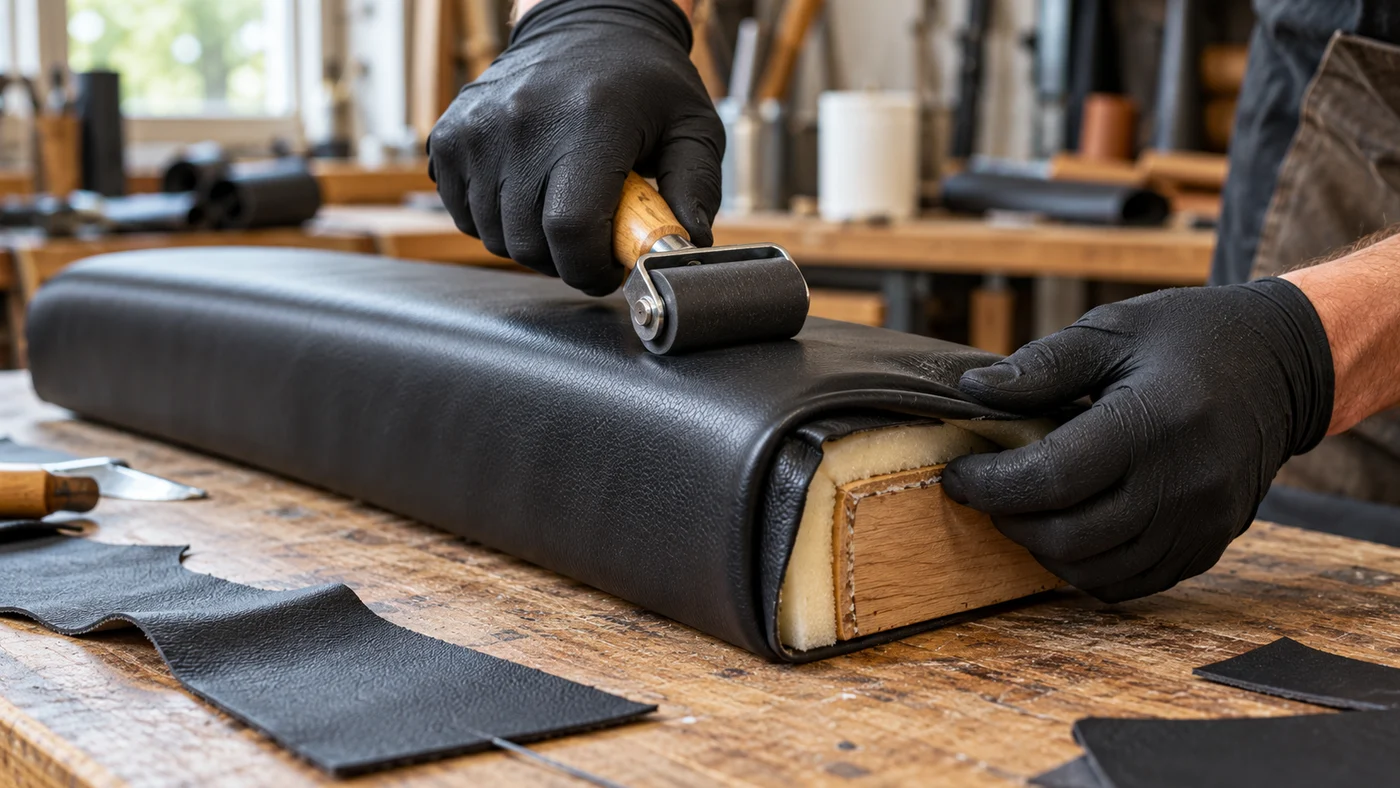
- Coverage: large panels are often sprayed; brushing and rolling suit small parts and edges. See spray adhesive for OEM and private label and contact cement vs spray adhesive.
- Foam and substrates: solvent grades can attack some foams and plastics; confirm compatibility with your foam, board or plastic before trials.
- Heat: car interiors and furniture near windows get hot, and tight wraps can lift at edges if the adhesive softens. Ask for heat resistance data, and test parts at your own temperature. See heat resistant glue selection.
- Emissions: furniture and car interior customers may ask for low-VOC or emissions data. See low-VOC adhesive compliance.
Peel Tests, Documents and Shipping
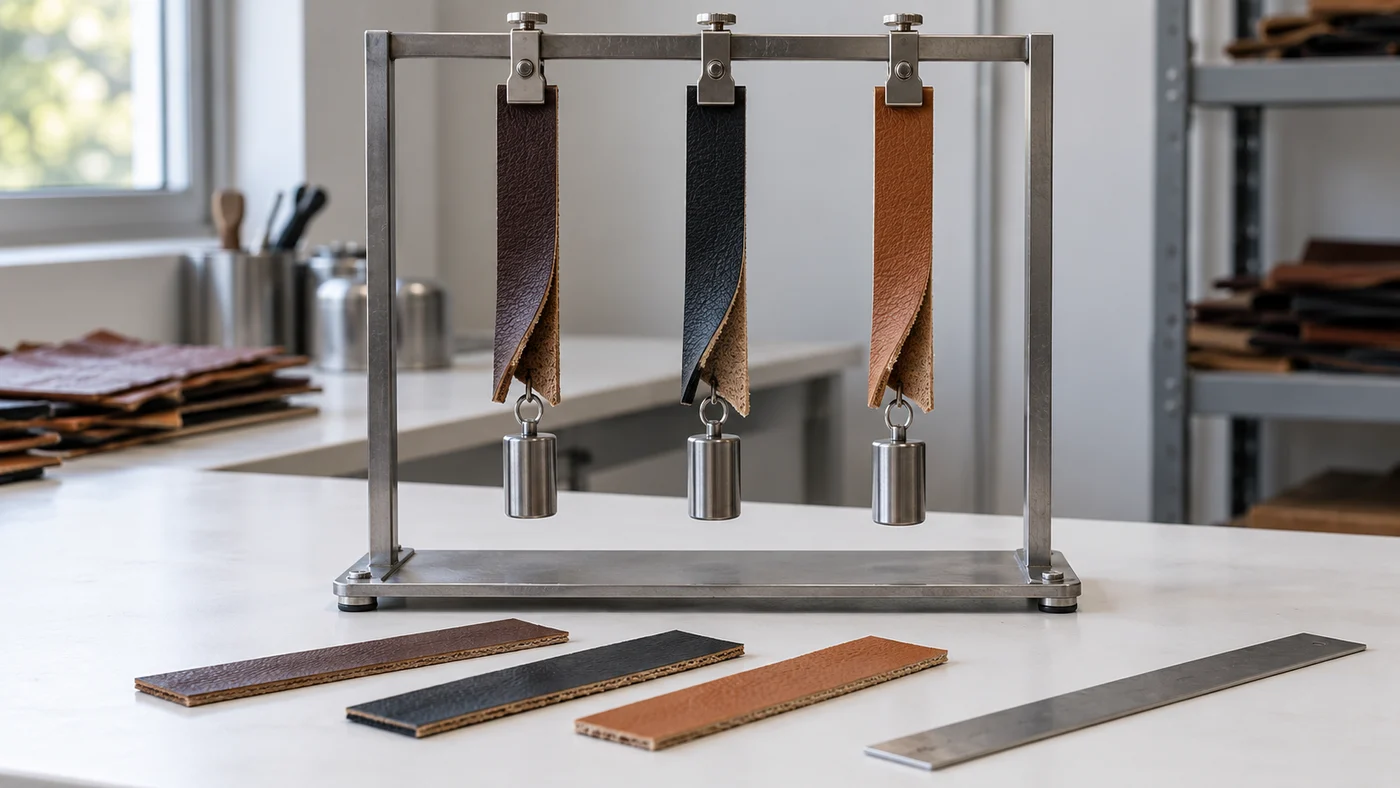
| Check | Why it matters | How buyers check |
|---|---|---|
| Peel strength | Leather bonds usually fail by peeling | Peel bonded strips of your leather after full cure |
| Creep under load | Straps and wraps carry constant pull | Hang a weight on a peeled strip and watch for movement |
| Heat and humidity | Bonds can lift in hot cars or humid stores | Repeat peel tests after warm or humid storage |
| Flex and appearance | Hard or stained glue lines show on goods | Bend samples; check for show-through and stiffness |
- Test method: agree the sample size, cure time and test conditions with the supplier. See adhesive strength testing for buyers.
- SDS and labels: solvent contact cements are often flammable; check SDS sections 2 and 14 and the label rules for your market. See how to read an adhesive SDS.
- Shelf life: water-based grades can be damaged by freezing in transit or storage; ask for storage limits. See adhesive storage and shelf life.
RFQ Checklist for Leather Glue
- Products and job: bags, belts, wallets, upholstery, trim or retail repair.
- Leather type and finish (vegetable-tanned, chrome-tanned, coated, PU or synthetic) and the second material.
- Application: brush, roller, spray or bottle tip; open time and pressing method.
- Solvent-based or water-based, odour and workplace or customer limits.
- Heat, humidity and flex the finished goods must survive.
- Pack size (bottle, tin, pail), label language and documents: TDS, SDS, any test report.
- Quantity per SKU, destination port and sample, trial and order plan.
What GlueMFG Can Support Around This Topic

GLE-007 Contact glue
Listed contact adhesive in cans. Suitability for your leather, solvent system and open time are confirmed by inquiry.
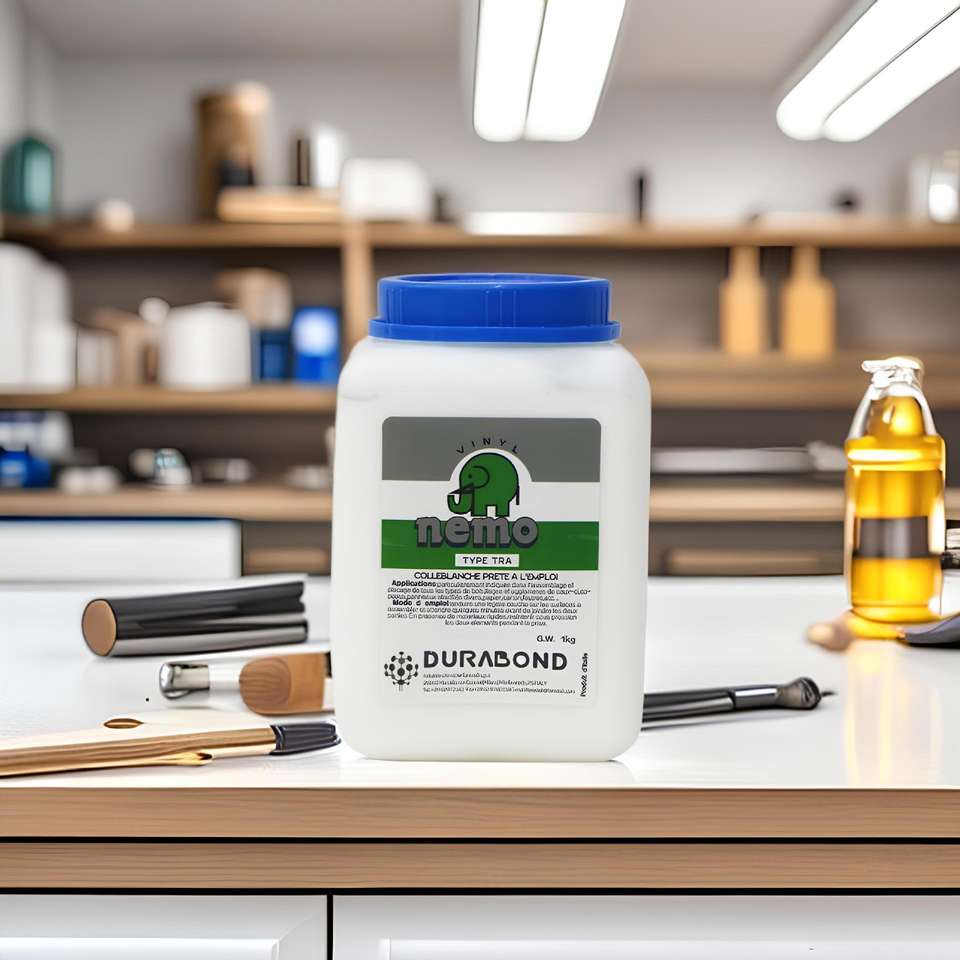
GLE-011 Water-based adhesive
Listed formaldehyde-free water-based acrylic adhesive. Leather use, drying time and pack options are confirmed by inquiry.
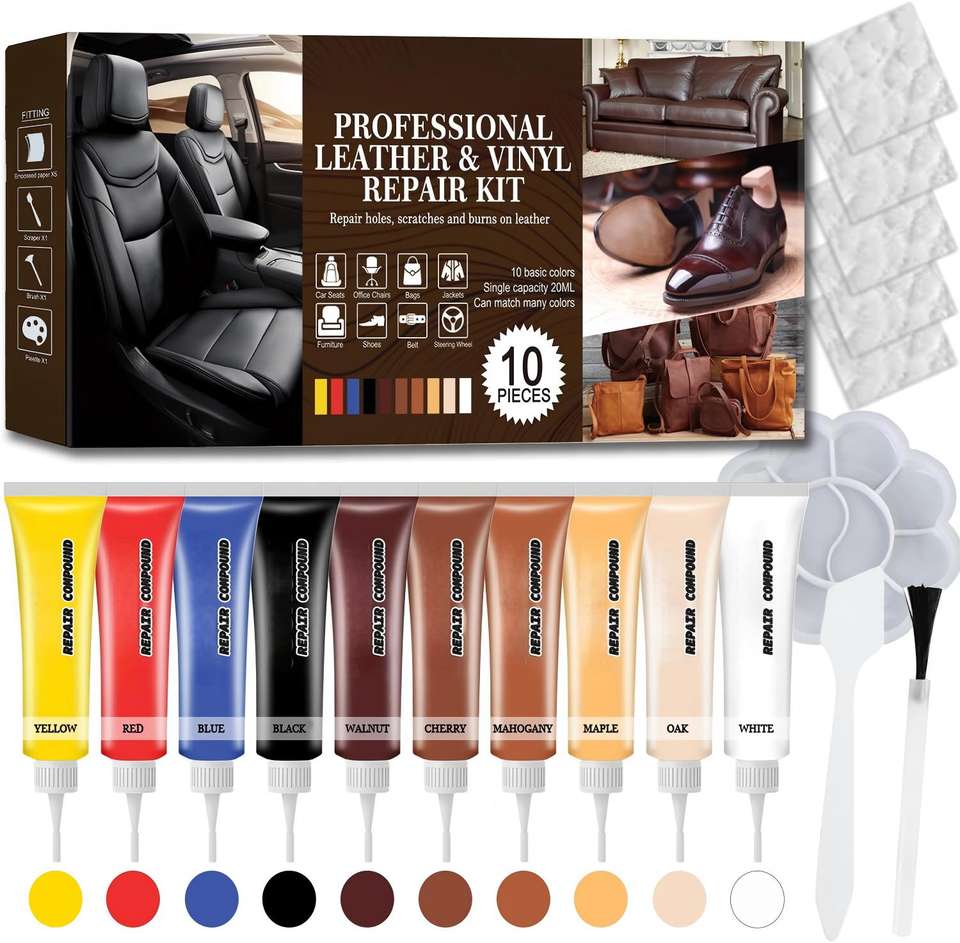
GLE-086 Leather repair kit
Listed leather repair kit for sofa and retail repair ranges. Kit contents, colours and MOQ are confirmed by inquiry.
Related GlueMFG Resources
- Shoe Glue for Distributors and Private Label
- Contact Adhesive: Solvent-Based vs Water-Based
- Contact Cement vs Spray Adhesive
- Fabric Glue and Textile Adhesive Sourcing
- GlueMFG product catalog
FAQ
What is the best glue for leather?
For most leather goods work, contact cement is the usual choice: a thin coat on both surfaces, a short drying time until tacky, then firm pressure. Water-based contact adhesives and latex glues suit edge folding, lining and lower-odour workshops, while instant glue is only for small, rigid fixes. The best choice depends on the leather finish, the second material, flexibility and the workshop's solvent rules.
Is contact cement good for leather?
Yes. Contact cement is widely used for bags, belts, wallets, upholstery and trim because it gives a flexible bond with immediate grab. Apply thin even coats to both sides, wait until the film is dry to the touch, then press or roll firmly. Finished, waxed or coated leather may need roughing or a primer; test on the actual leather.
Can super glue be used on leather?
Instant glue (cyanoacrylate) can hold small rigid repairs, such as a tab or a cut edge, but it cures hard and can crack or stain on flexing leather. For straps, folds and large panels, a flexible contact adhesive is the safer choice.
Is water-based leather glue as strong as solvent-based?
It can be suitable for many leather goods, linings and folds, and it helps with odour and solvent rules, but it usually needs longer drying and can be more sensitive to cold and humidity. Heat resistance and peel strength differ by grade, so compare peel test results on your own materials.
Which leather glue products does GlueMFG list?
GlueMFG's catalog includes contact and acrylic adhesives such as GLE-005, GLE-007 and the formaldehyde-free water-based GLE-011, the GLE-086 leather repair kit and instant glue such as GLE-036. Suitability for your leather, solvent content, pack size, SDS and MOQ are confirmed by inquiry: send the leather type, second material, process and quantity.