The best glue for metal depends on the metal, its surface and the load. Two-part epoxy is the usual general choice for structural and gap-filled metal joints; instant glue fits small, tight-fitting parts; anaerobic threadlockers fit threaded fasteners; flexible PU or MS products fit joints that move. Surface preparation decides most results. Ask for lap shear data on your metal; for GlueMFG products this is confirmed by inquiry.
Distributors, MRO buyers and OEM assemblers are asked for “metal glue” for brackets, signs, trims, enclosures, repair kits and hardware retail. A glue that holds on clean steel can fail on oily aluminium or a galvanised sheet. This guide explains how to identify the metal and its surface, how preparation changes the result, when epoxy, instant glue and other families fit, and how to test and write the RFQ. For epoxy grades in production lines, see metal and plastic epoxy for production; for plastic parts, see plastic bonding adhesives.
Identify the Metal and Its Surface First
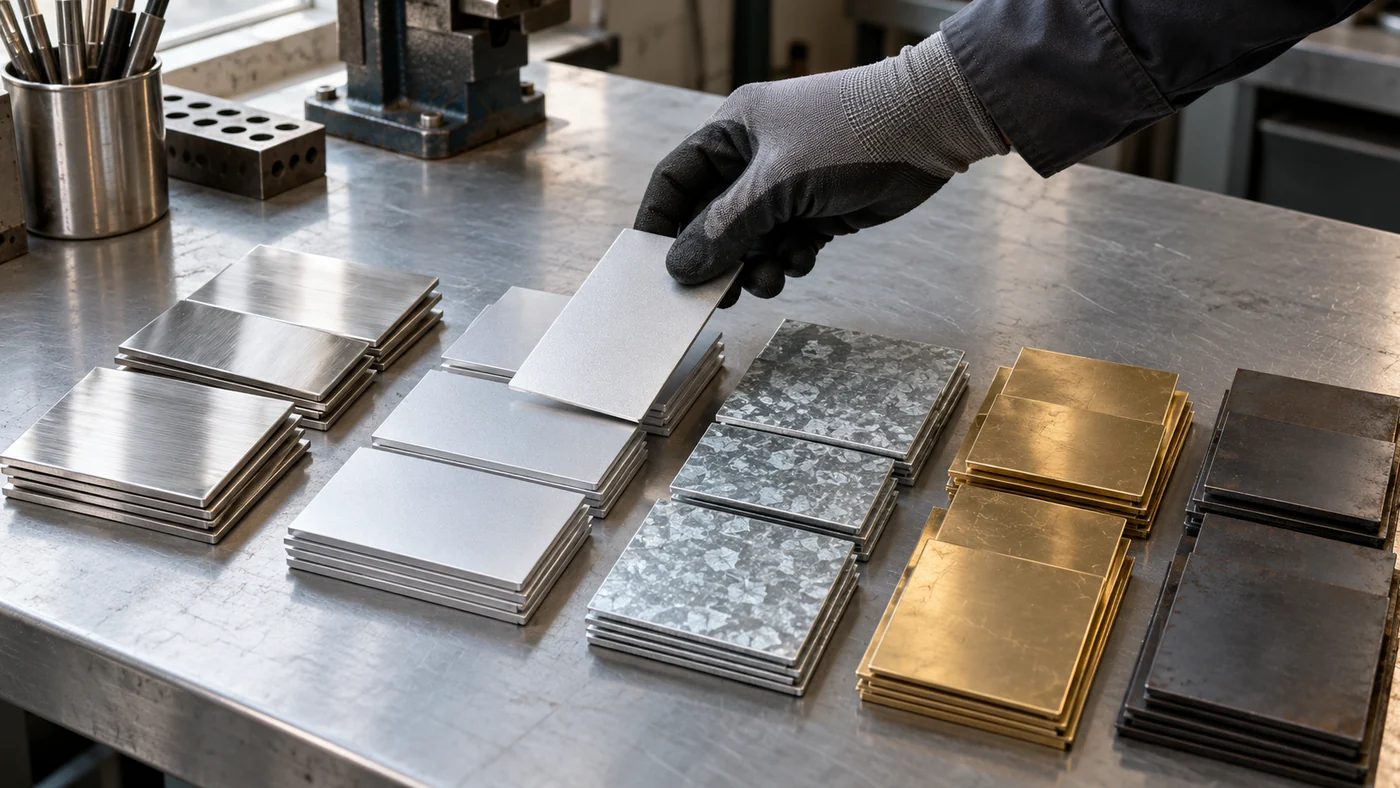
| Metal or finish | Typical parts | What affects bonding | Usual starting point |
|---|---|---|---|
| Mild steel | Brackets, frames, fabrications | Oil, rust and mill scale | Degrease, abrade, then epoxy |
| Stainless steel | Trims, kitchen and marine fittings | Smooth, hard surface | Abrade and clean; epoxy or tested instant glue |
| Aluminium | Profiles, panels, enclosures | Natural oxide layer, forming oils | Abrade and clean; bond soon after; primer if specified |
| Galvanised steel | Ducting, roofing, outdoor hardware | Zinc coating; bond is only as good as the coating | Test-led; ask for grades tested on zinc |
| Painted or powder-coated | Appliance and furniture parts | Paint adhesion becomes the weak link | Test on the coated part, not bare metal |
| Brass and copper | Fittings, decorative parts | Tarnish and oxide | Clean and test; some grades cure faster on these metals |
Do not approve a metal adhesive from a test on clean bare steel when the production part is oily aluminium, galvanised or powder-coated. Test on the surface the customer will actually bond.
Surface Preparation Decides Most Metal Bonds
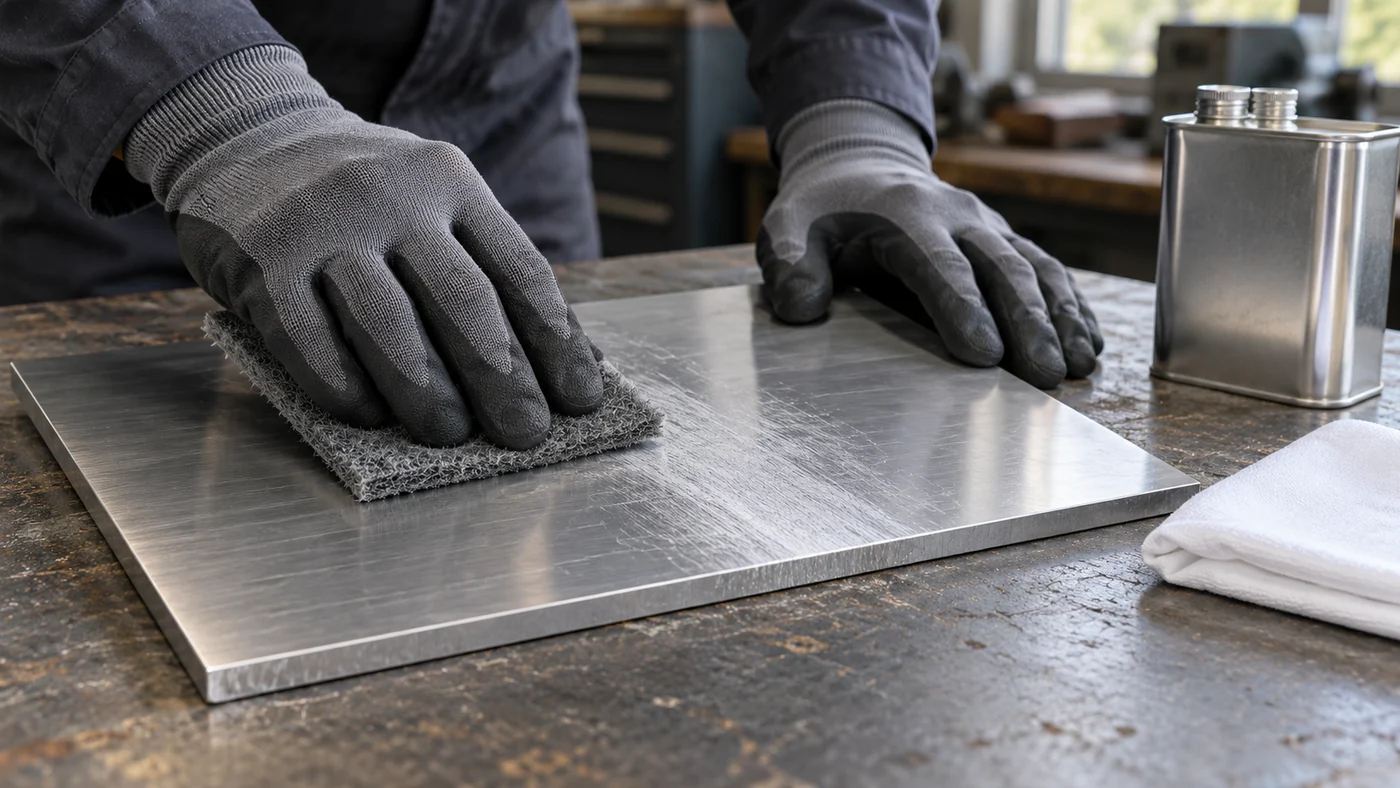
- Degrease first: remove forming oils, cutting fluids and fingerprints with a cleaner the supplier approves. Abrading an oily surface spreads the oil.
- Abrade: light abrasion with a pad, sandpaper or grit blasting removes loose oxide and mill scale and gives the adhesive a clean surface to wet.
- Clean again and bond on time: wipe off dust and bond within the window the supplier gives; aluminium re-forms oxide quickly.
- Primers and treatments: some aerospace, automotive and outdoor jobs use primers or chemical treatments. Ask whether the grade needs one and whether the supplier offers it.
- Oil-tolerant grades: some structural adhesives are sold as tolerant of light oil. Confirm the claim with a test on your oiled parts.
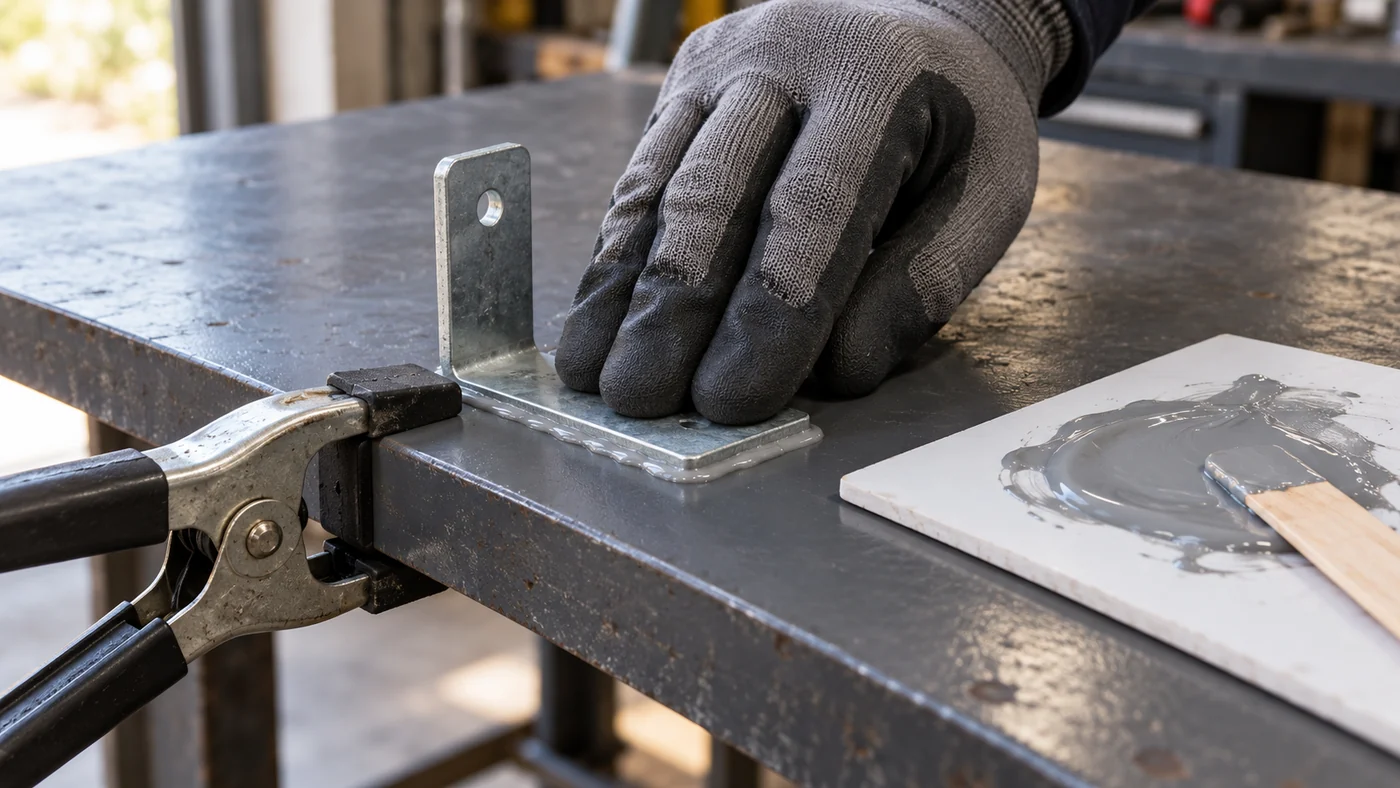
Epoxy, Instant Glue and Other Adhesives for Metal
| Adhesive family | Fits | Limits to check |
|---|---|---|
| Two-part epoxy | Brackets, studs, repair, gap filling, structural joints | Rigid; mix ratio, pot life, cure time, peel and impact |
| Structural acrylic (MMA) | Fast production bonding, some oily surfaces | Strong odour, mix ratio; confirm by inquiry |
| Instant glue (CA) | Small, close-fitting parts and quick repairs | Large gaps, peel, heat and long water exposure |
| Anaerobic threadlocker / retainer | Threads, bearings, cylindrical fits | Only cures between close metal surfaces |
| PU and MS adhesive-sealants | Panels and trims that move with heat | Lower strength; longer cure |
- Epoxy: the general choice for strength and gap filling. Check pot life and cure time against your line. See fast vs slow cure epoxy and high-temperature epoxy for hot service.
- Instant glue: fixes small metal parts in seconds on tight joints; toughened grades handle impact better. See cyanoacrylate grades for assembly.
- Threads: use threadlocker, not general glue. See threadlocker grades.
- Different metals and expansion: joints between metals, or metal to glass or plastic, move as temperature changes. Flexible or toughened grades often last longer; long overlaps spread the load.
Test on Your Own Metal Parts Before You Order
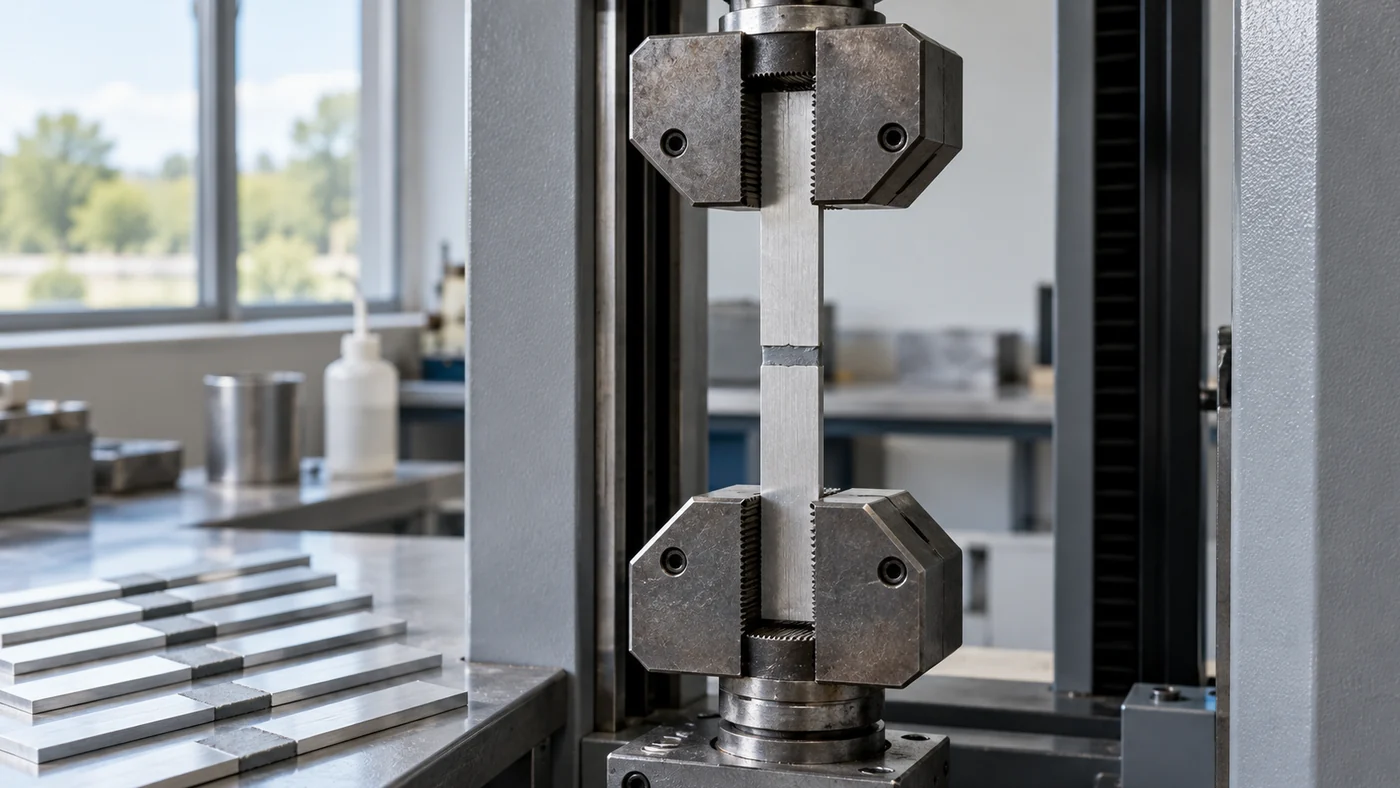
- Lap shear: the common strength test for metal bonds; standards such as ISO 4587 and ASTM D1002 describe the method. Ask the supplier for data on the metal and preparation you use.
- Look at the failure: if the adhesive peels cleanly off the metal, the surface preparation or the grade is wrong. Failure inside the adhesive layer is usually a better sign.
- Age the samples: repeat after heat, humidity, salt spray or water if the product will see them.
- Write it into the order: agree the test method and pass level with the supplier. See adhesive strength testing for buyers.
RFQ Checklist for Metal Bonding Adhesives
- Metals on each side of the joint, surface finish (bare, oiled, galvanised, anodised, painted, powder-coated).
- Joint design: overlap area, gap, and whether the joint sees shear, peel, impact or vibration.
- Process: mixing by hand or cartridge, pot life and fixture time needed, clamping, and whether primers are acceptable.
- Environment: temperature range, water, salt, fuels or cleaning chemicals.
- Required test data (for example lap shear on your metal) and the documents needed: TDS, SDS, test report.
- Pack format for line, MRO or retail, label language and claims you plan to print.
- Quantity and destination for sample, trial and container orders.
What GlueMFG Can Support Around This Topic
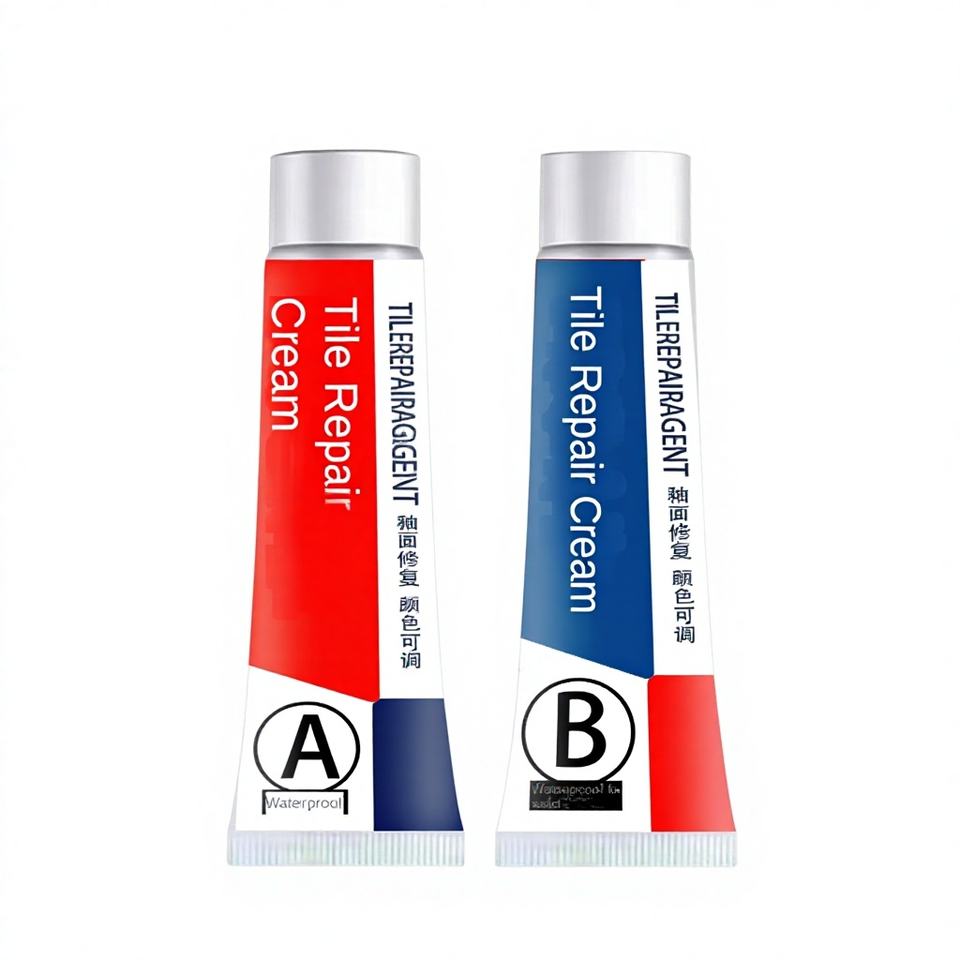
GLE-001 Epoxy resin adhesive
Listed two-part epoxy in sets. Metal compatibility, cure time and lap shear data are confirmed by inquiry.
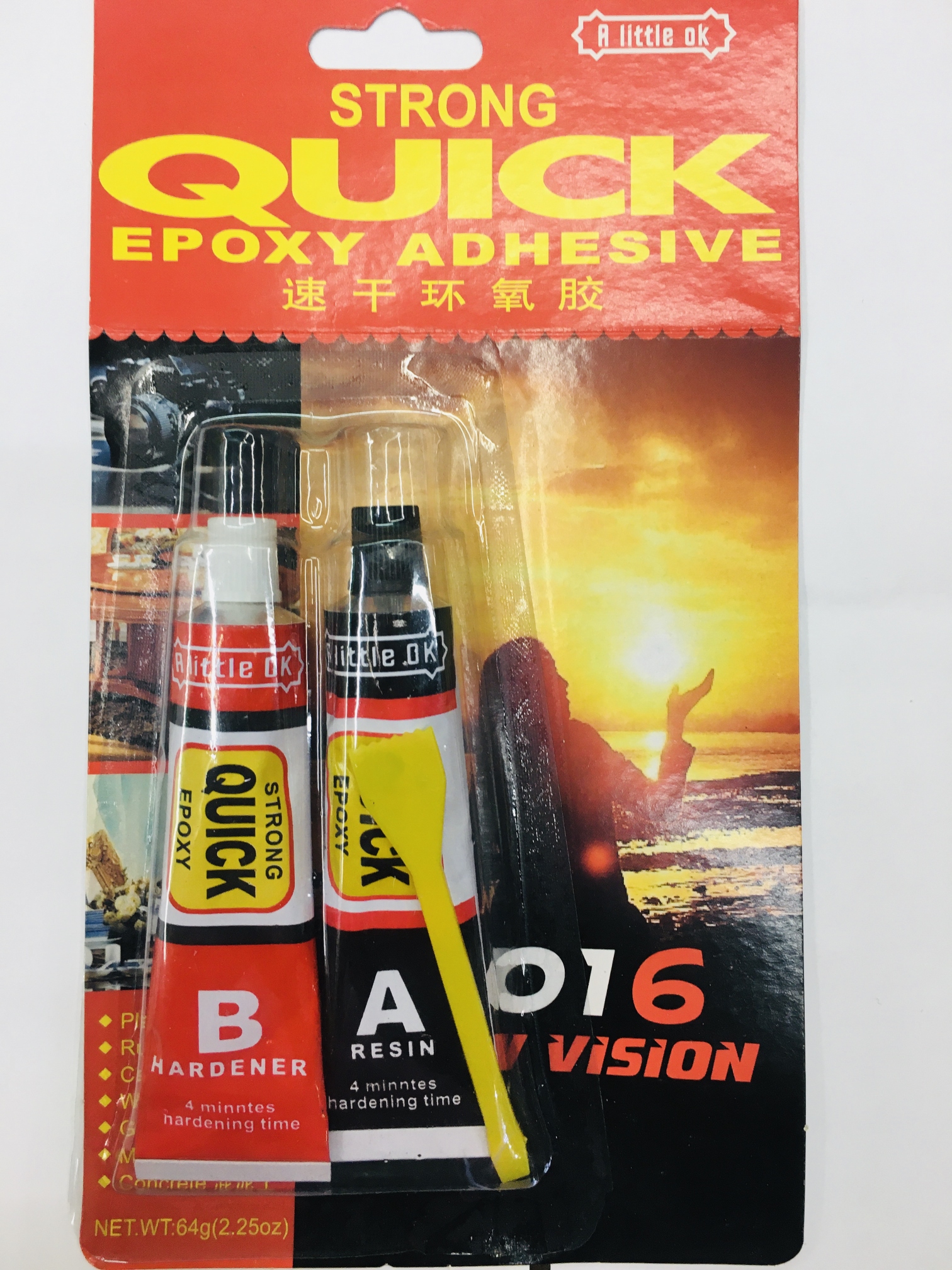
GLE-004 Quick epoxy adhesive
Listed fast two-part epoxy set. Working time, strength on your metal and MOQ are confirmed by inquiry.
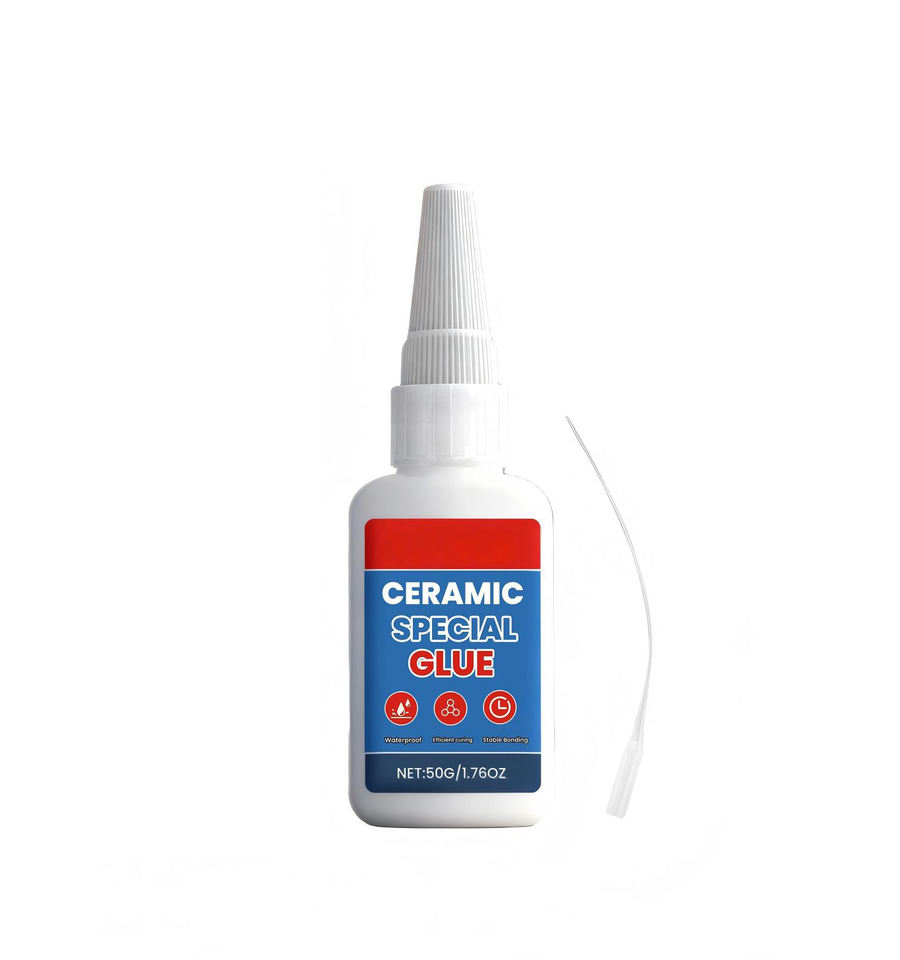
GLE-036 Instant glue
Listed instant glue for bonding between materials. Suitability on your metal parts is confirmed by inquiry.
Related GlueMFG Resources
- Metal & Plastic Epoxy for Production
- Plastic Bonding Adhesives for B2B Buyers
- Threadlocker Grades Sourcing Guide
- Adhesive Strength Testing for Buyers
- GlueMFG product catalog
FAQ
What is the best glue for metal?
For load-bearing metal joints, two-part epoxy is the most common general choice because it fills gaps and bonds steel, aluminium and many other metals after proper surface preparation. Instant glue suits small, close-fitting metal parts; anaerobic threadlockers suit threaded fasteners; flexible polyurethane or MS products suit joints that move. The metal, its surface and the load decide the grade, so test on your own parts.
Does super glue work on metal?
Instant glue (cyanoacrylate) bonds clean metal quickly on small, tight-fitting parts. It is weaker under peel, impact, heat and long water exposure, and it does not fill large gaps. Toughened grades perform better on metal; for structural or outdoor joints compare it against two-part epoxy on your own parts.
What is the strongest glue for metal?
There is no single strongest glue. Structural two-part epoxies and structural acrylics are typically used where high strength is needed, but the result depends on surface preparation, joint design, bond-line thickness and service conditions. Ask for lap shear data on the metal you use and repeat the test on production parts.
How should metal be prepared before bonding?
Remove oil and dirt with a suitable cleaner, abrade the surface to remove loose oxide or mill scale, then clean again and bond within the time the supplier recommends. Aluminium, stainless steel and galvanised or coated steel can need specific steps or primers. Most metal bond failures happen at the surface, not inside the adhesive.
Which metal adhesives does GlueMFG list?
GlueMFG lists two-part epoxy adhesives (for example GLE-001 and GLE-004) and instant glue (for example GLE-036). Suitability for a specific metal, surface preparation, lap shear data, SDS and MOQ are confirmed by inquiry: send the metals, surface finish, joint size, load and environment.