Choose OEM adhesive packaging by channel first, chemistry second, and unit price last. Retail hook channels usually want blister cards or small bottles; trade and contractor channels want tubes, cartridges or cans; production lines want bulk. The GlueMFG catalog already lists card, bottle, tube, can and two-part set routes, so start from a format that is already filled and confirm sizes, materials and MOQ by inquiry.
Private-label brands, importers and distributors lose the most time on packaging, not on formula. Artwork gets approved before the pack is tested, or a pack that suits a hardware store hook is shipped to contractors who need refill volume. This guide sorts the formats by where they sell and what they protect against.
Start With the Channel, Not the Pack
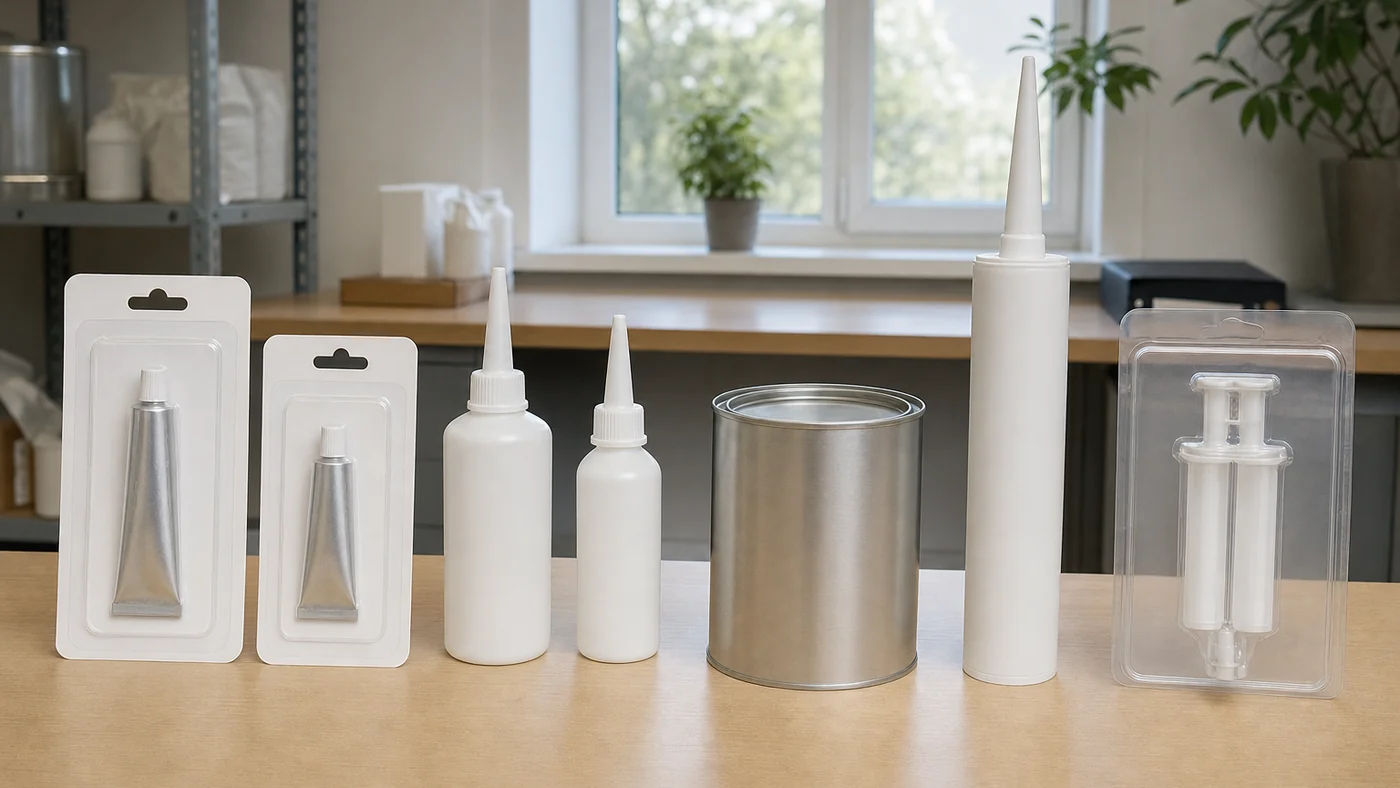
The same adhesive can sell in three very different packs. Decide the channel first:
| Channel | Typical pack | What the buyer cares about |
|---|---|---|
| Retail hook / convenience | Blister card, small bottle, clamshell kit | Shelf impact, theft resistance, small unit price |
| Hardware and MRO | Tube, bottle, two-part set, small can | Reclosable cap, nozzle control, clear use instructions |
| Contractor / trade | Cartridge, sausage, large can | Volume per unit, gun compatibility, low waste |
| Production line | Pail, drum, bulk container | Batch consistency, dispensing equipment fit, cost per kg |
In the public catalog, the split by sales unit is 40 card, 24 bottle, 13 tube, 11 can and 4 set listings across 93 SKUs. That tells you where existing filling routes are; it does not fix your pack size or material, which are confirmed by inquiry.
Do not put a contractor product in a retail blister just because the card looks premium, and do not ship a retail card SKU to a trade distributor who reorders by the carton. The wrong channel pack slows sell-through more than a few cents of unit price.
Blister Cards and Small Bottles for Instant Glue

Super glue / 502 is the clearest case of packaging deciding the product. Most CA listings in the catalog are sold per card (for example GLE-050 Super Glue 502, card, MOQ listed at 1,000), with bottle versions such as GLE-068 for buyers who want a refillable or workshop format.
- Card count: 1, 3, 4 or 12 tubes per card change unit price and hook presence. Confirm available counts by inquiry.
- Moisture barrier: cyanoacrylate cures on contact with moisture, so the tube, cap and seal design matter for shelf life in humid markets.
- Language and warnings: skin-bonding and eye warnings must match the target market rules and the SDS of the grade.
For bulk CA instead of retail packs, see bulk super glue packaging (20 kg to 1000 kg).
Tubes, Cans and Two-Part Sets for Trade Buyers

Trade channels buy for volume and control:
- Tubes: silicone, gasket makers and universal glue (for example GLE-028 Direct 709 and GLE-023 are listed per tube). Ask about tube material, nozzle type and whether a carton insert is needed.
- Cans: contact and PVC adhesives such as GLE-008 (oil-based acrylic) and GLE-011 (water-based acrylic) are listed per can. Solvent grades in cans may be dangerous goods for freight; the SDS decides.
- Two-part sets: AB epoxy such as GLE-001 is listed per set. Mix ratio and dispensing method (dual syringe vs two tubes) should match how your end users work.

GLE-050 Super Glue 502
Card format for retail hooks. Confirm tube count and languages by inquiry.
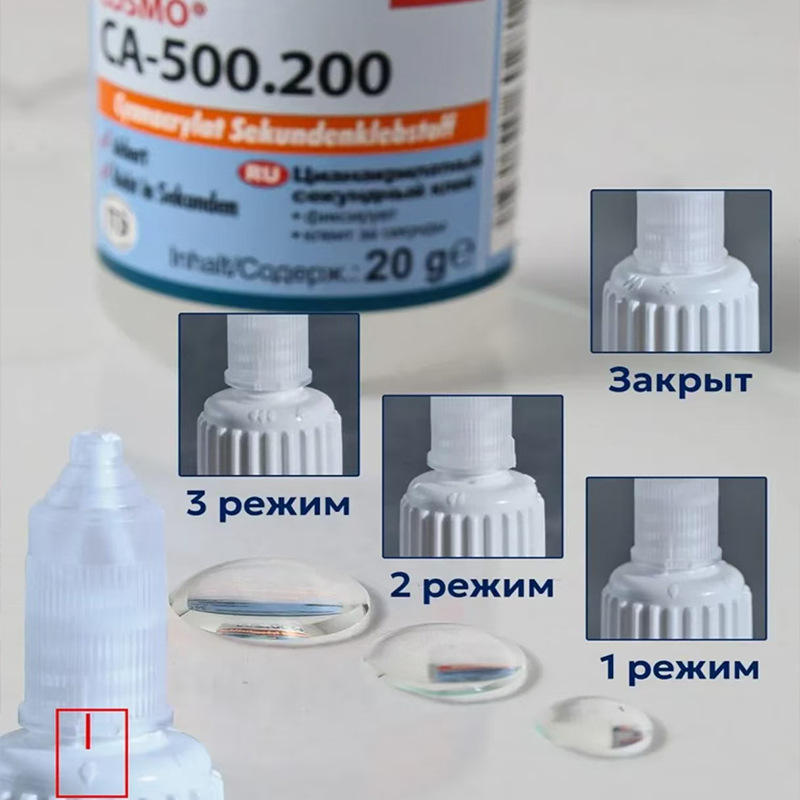
GLE-008 Oil-based acrylic
Can format for trade buyers. Freight class follows the SDS.
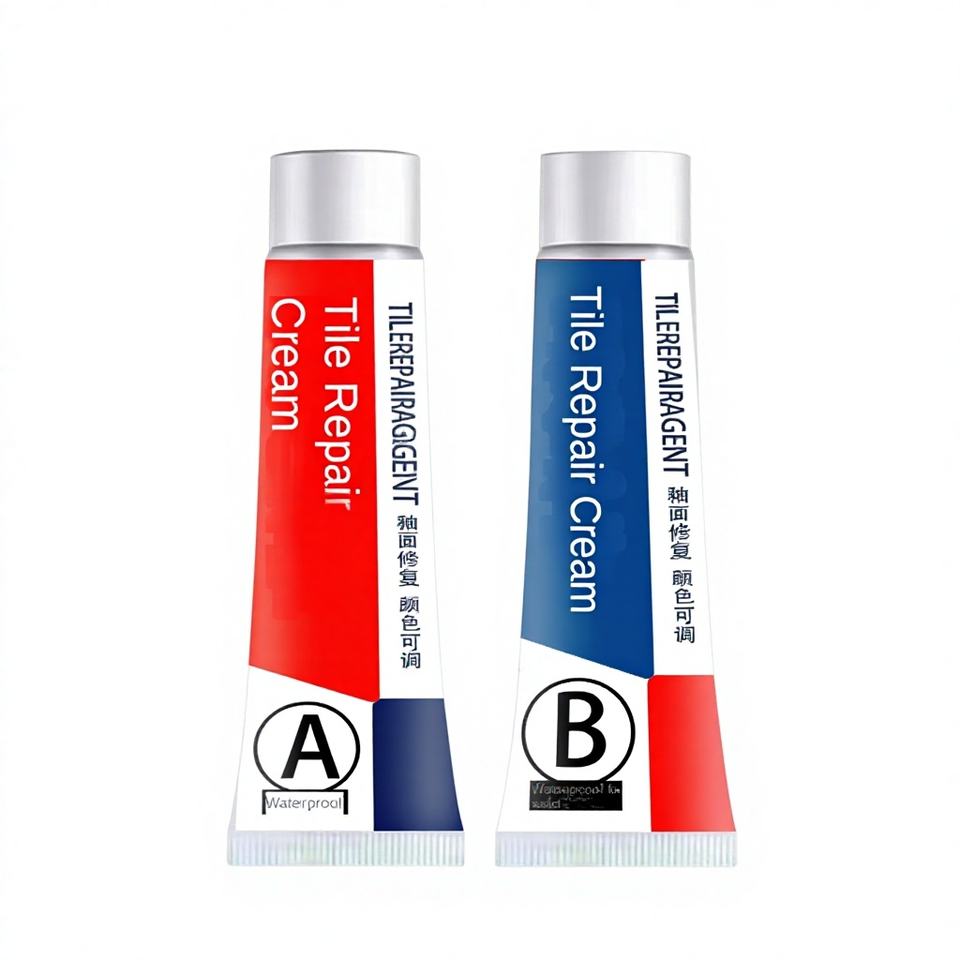
GLE-001 Direct Epoxy
Two-part set. Confirm dispenser style and net content by inquiry.
Artwork, Cartons and Export Packing

Packaging does not stop at the unit. Put these into the same spec sheet:
- Unit: format, net content, material, cap or nozzle, colour.
- Print: label languages, claims you will print (each one backed by the TDS), barcode needs, warning text.
- Inner box and master carton: units per inner, inners per carton, carton strength for humid containers.
- Pallet and container: pallet pattern, shrink wrap, whether dangerous-goods marking applies.
- Documents: SDS and TDS of the exact grade, COA, packing list and invoice. See the SDS guide and sea freight hazard notes.
Do not print cure times, temperature ranges or "waterproof" claims that are not in the grade's TDS. If a number is not documented, leave it off or ask GlueMFG to confirm it by inquiry before the print file is released.
What GlueMFG Can Support Around This Topic
GlueMFG supports OEM packaging and export documents (MSDS/SDS, COA, packing list, invoice) for the 93 SKUs across 13 categories on the public catalog. Start from the format your channel needs, then send pack size, languages, carton needs and quantity. Pack materials, sizes, MOQ and lead time are confirmed by inquiry, not taken from catalog card titles. For supplier vetting, see the industrial glue supplier shortlist.
Related GlueMFG Resources
- Bulk Super Glue Packaging: 20 kg to 1000 kg
- Industrial Glue Supplier Shortlist Criteria for B2B Buyers
- Contact Adhesive: Solvent-Based vs Water-Based for OEM Buyers
- Weatherproof / Waterproof Silicone Procurement Guide
- GlueMFG product catalog
FAQ
What packaging options exist for OEM and private-label adhesives?
The common formats are blister cards with small tubes (typical for super glue / 502), plastic squeeze bottles (CA, wood glue, PVA), aluminium or laminate tubes (silicone, gasket makers, universal glue), metal tin cans (contact and solvent adhesives, PVC cement), two-part syringe or dual-tube sets (AB epoxy), cartridges and sausages (sealants), and pails or drums for bulk. The right format depends on the sales channel, the chemistry, and the shipping class, not only on unit cost.
Which pack formats does the GlueMFG catalog already list?
The public GlueMFG catalog lists 93 SKUs. By sales unit, 40 are listed per card, 24 per bottle, 13 per tube, 11 per can and 4 per set (two-part epoxy). Treat these as existing filling routes to start from; exact pack sizes, materials and MOQ for a private-label order are confirmed by inquiry.
What should be fixed before private-label artwork starts?
Lock the grade, the pack format and net content, the label languages, and every technical claim you plan to print (cure time, temperature range, substrates). Then match the claims to the TDS and SDS of the exact grade. Changing the formula after printing usually means reprinting cards, sleeves or cans.
Is the cheapest pack always the right choice for importers?
No. A cheap pack that leaks, skins over in the nozzle, or fails a drop test in a humid container costs more than the saving. For cyanoacrylate in particular, barrier and cap design affect shelf life. Ask for a trial carton in the exact pack and check it after transit before approving container volume.
Does packaging affect shipping and documents?
Yes. Solvent-based contact adhesive in cans and some CA products can fall under dangerous-goods rules for sea or air freight, which affects carton marking, packing instructions and cost. The SDS of the exact grade decides the classification; confirm it by inquiry before booking freight.