There is no single best glue for rubber. Identify the rubber compound first, then match the job: instant glue for small parts and O-ring splices, contact adhesive for sheet and large areas, and a primer or silicone adhesive for EPDM and silicone rubber. Approve the choice with a peel test on real parts. GlueMFG lists instant glue, contact adhesive and a silicone rubber product; rubber compatibility is confirmed by inquiry.
Rubber bonding questions reach suppliers from gasket and seal distributors, MRO buyers, equipment makers and repair-product brands. Most failures come from the same few causes: the wrong adhesive family for the compound, mould release or oils on the surface, a stiff bond line on a part that flexes, or approval on a clean lab coupon instead of the real part. This guide covers how to identify the rubber, when instant glue or contact adhesive fits, how to test, and what to put in the RFQ. For footwear, see shoe glue for distributors.
Identify the Rubber Before You Choose the Glue
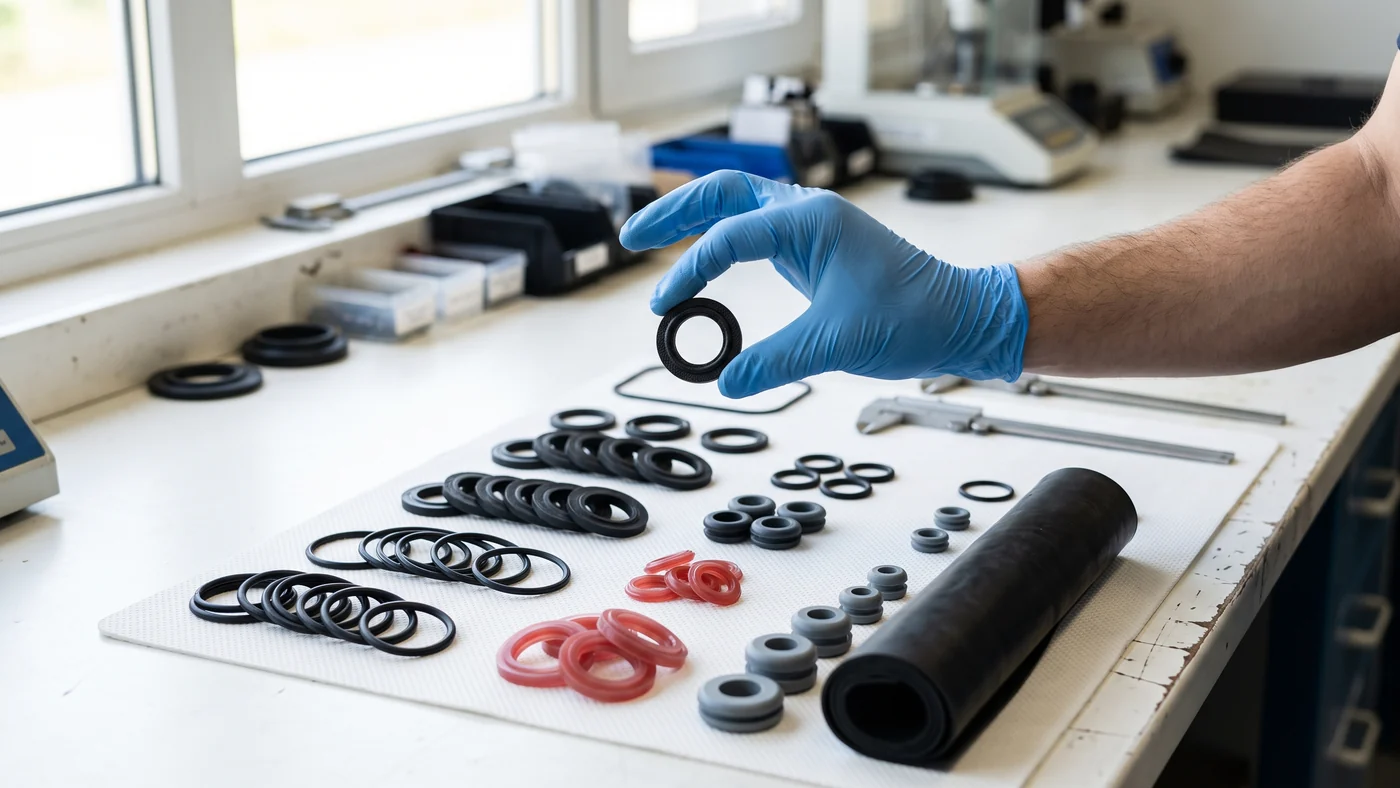
| Rubber | Typical parts | Adhesive often considered | Watch out for |
|---|---|---|---|
| Natural rubber / SBR | Mats, rollers, grommets, general parts | Instant glue, contact adhesive | Surface bloom and oils; clean and test |
| Neoprene (CR) | Gaskets, sheet, pads, wetsuit material | Contact adhesive, instant glue | Open time and press pressure for sheet |
| Nitrile (NBR) | Oil seals, O-rings, hoses | Instant glue for splices and small parts | Plasticiser and oil on the surface; oil ageing |
| EPDM | Weatherstrip, roofing membrane, outdoor seals | Instant glue with primer, dedicated EPDM adhesives | Low surface energy; poor wetting without primer |
| Silicone rubber | High-temperature seals, keypads, food and appliance parts | Silicone adhesive or sealant; primed instant glue | Very hard to bond with general glues |
| TPE / TPR | Grips, soles, soft-touch parts | Instant glue (often primed), tested contact adhesive | Results vary widely by compound |
Do not sell one “rubber glue” SKU as the answer for every rubber. If a customer cannot name the compound, ask for a sample part and test, or position the product for the rubbers it was actually tested on.
Instant Glue for Small Rubber Parts and O-Ring Splicing
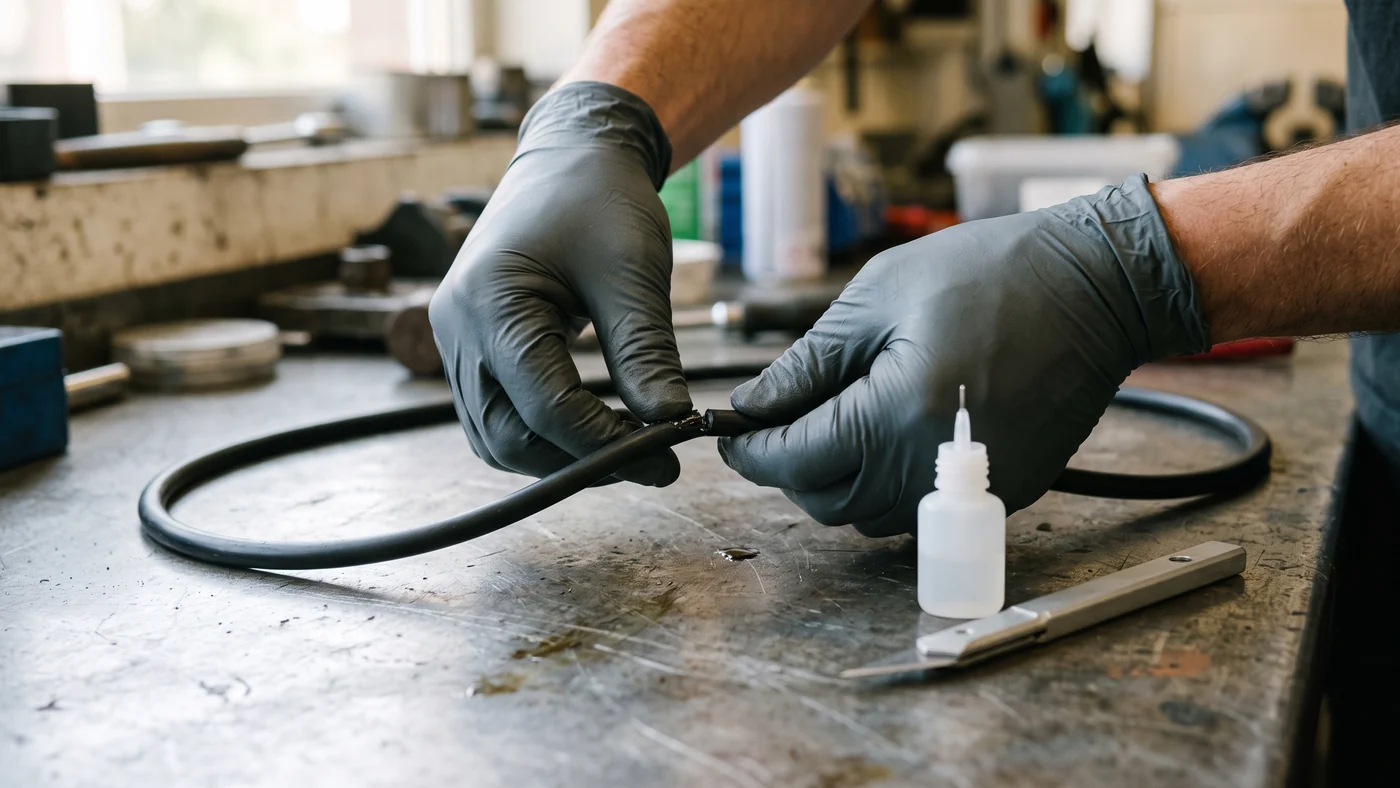
- Where it fits: O-ring and cord splicing, small gaskets, rubber feet and bumpers, repairs where seconds matter. Bond only small gaps; instant glue is not a gap filler.
- Flexibility: standard grades can leave a stiff bond line that cracks on parts that bend. Ask for flexible or rubber-toughened grades where the joint flexes.
- Viscosity: thin grades wick into tight splices; gel grades stay put on vertical or porous faces. See cyanoacrylate viscosity grades.
- Primers and accelerators: EPDM, silicone and some TPEs often need a primer; accelerators speed up fixture but can weaken some bonds. See CA glue accelerator and activator.
- White haze: blooming can mark visible parts. Low-odour, low-bloom grades exist; confirm by sample.
Contact Adhesive for Rubber Sheet and Rubber-to-Metal
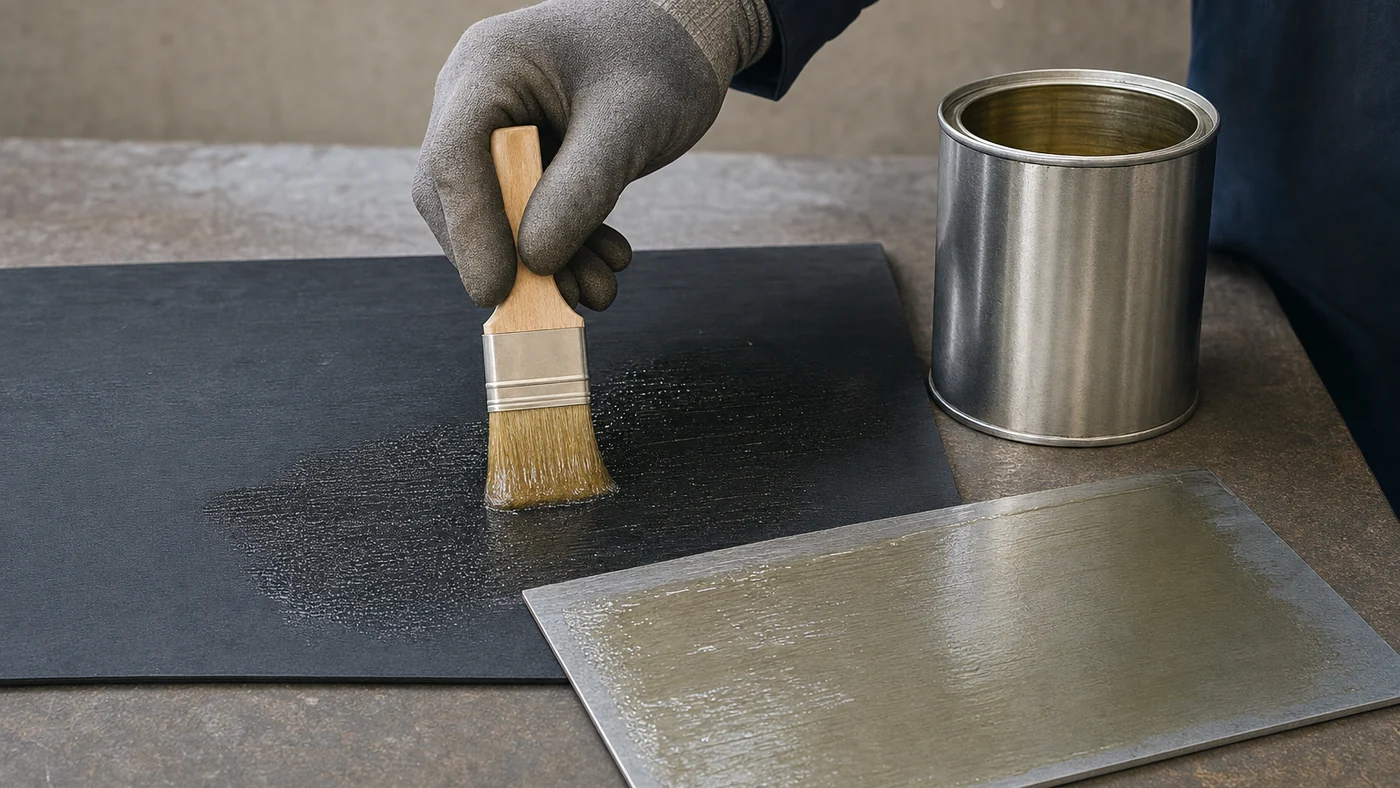
- Where it fits: rubber sheet linings, pads, flooring strips, anti-vibration pads and rubber-to-metal or rubber-to-wood jobs with larger areas.
- Process: both surfaces are coated, left to reach tack, then pressed once with firm, even pressure. Open time and coverage per square metre belong on the TDS.
- Solvent or water-based: solvent grades usually grab faster on rubber; water-based grades help with VOC limits and transport. See contact adhesive: solvent vs water-based.
- Service conditions: heat, oil, fuel and outdoor exposure separate grades quickly. Ask for the supplier’s resistance data, not a general “strong” claim.
- Moulded-in bonding: production rubber-to-metal parts are often bonded during vulcanisation with dedicated bonding agents. That is a different process from glueing finished parts; confirm with the rubber moulder.
Test the Bond on Real Parts Before You Approve
- Surface first: wipe off mould release and oils with a cleaner the rubber tolerates; light abrasion helps on some compounds. Record the prep step so customers repeat it.
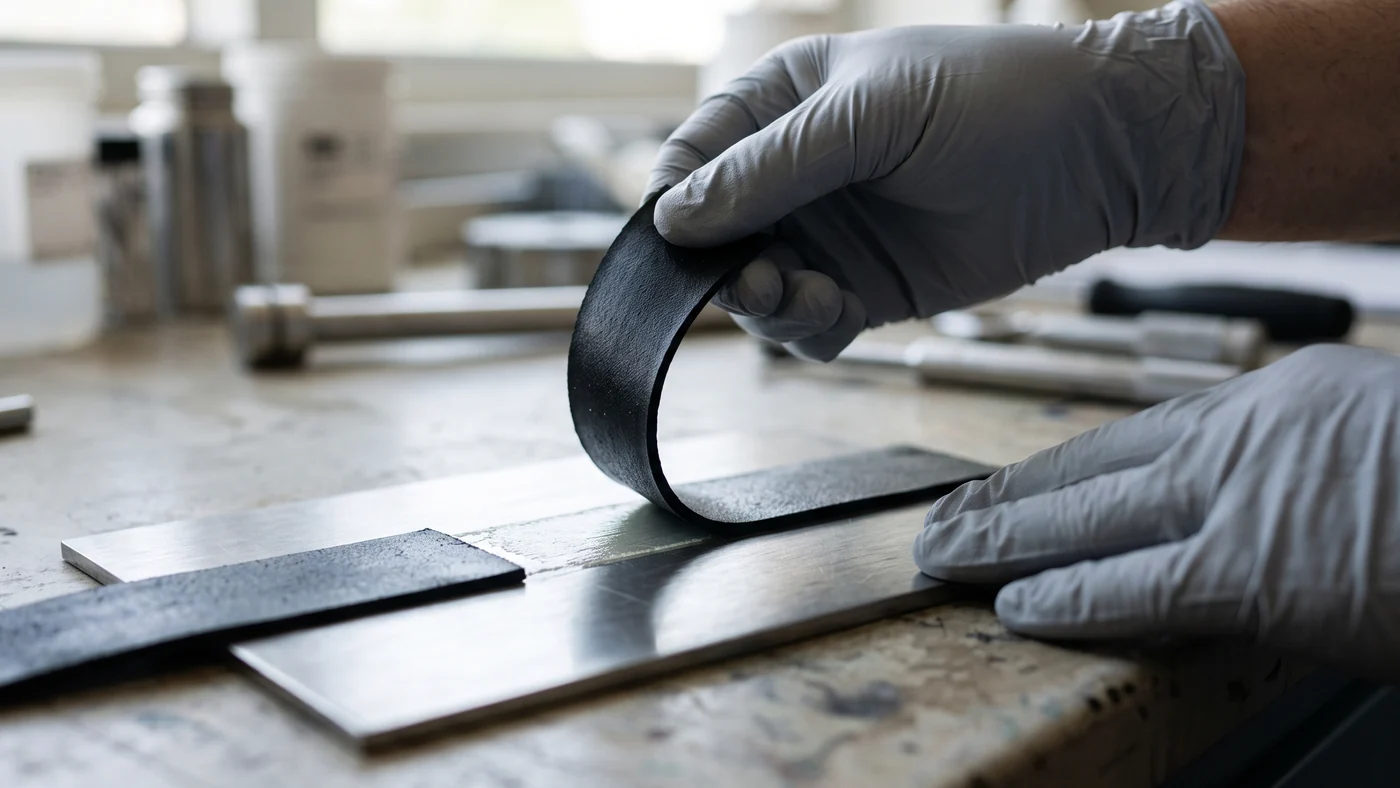
- Peel, not just pull: rubber joints usually fail in peel. Peel a bonded strip by hand or on a tester and look at where it fails: in the rubber, in the adhesive, or cleanly off the surface.
- Age the sample: repeat the test after water, oil or heat exposure that matches the service. See adhesive strength testing for buyers.
- Keep retained parts: a bonded sample from the approved batch makes later complaints easier to judge.
RFQ Checklist for Rubber Bonding Adhesive
- Rubber compound (natural, SBR, neoprene, nitrile, EPDM, silicone, TPE) and hardness if known; sample parts if not.
- Second substrate (same rubber, metal, plastic, wood, fabric) and its surface finish.
- Joint type and size: splice, small part, sheet lamination, pad on metal.
- Service conditions: flexing, temperature range, oil, fuel, water, outdoor UV.
- Process: hand application or line, required fixture time, primer acceptable or not.
- Documents: TDS with rubber substrates tested, SDS in market format, transport classification.
- Pack, labels, quantity, destination and target price for sample, trial and container orders.
What GlueMFG Can Support Around This Topic
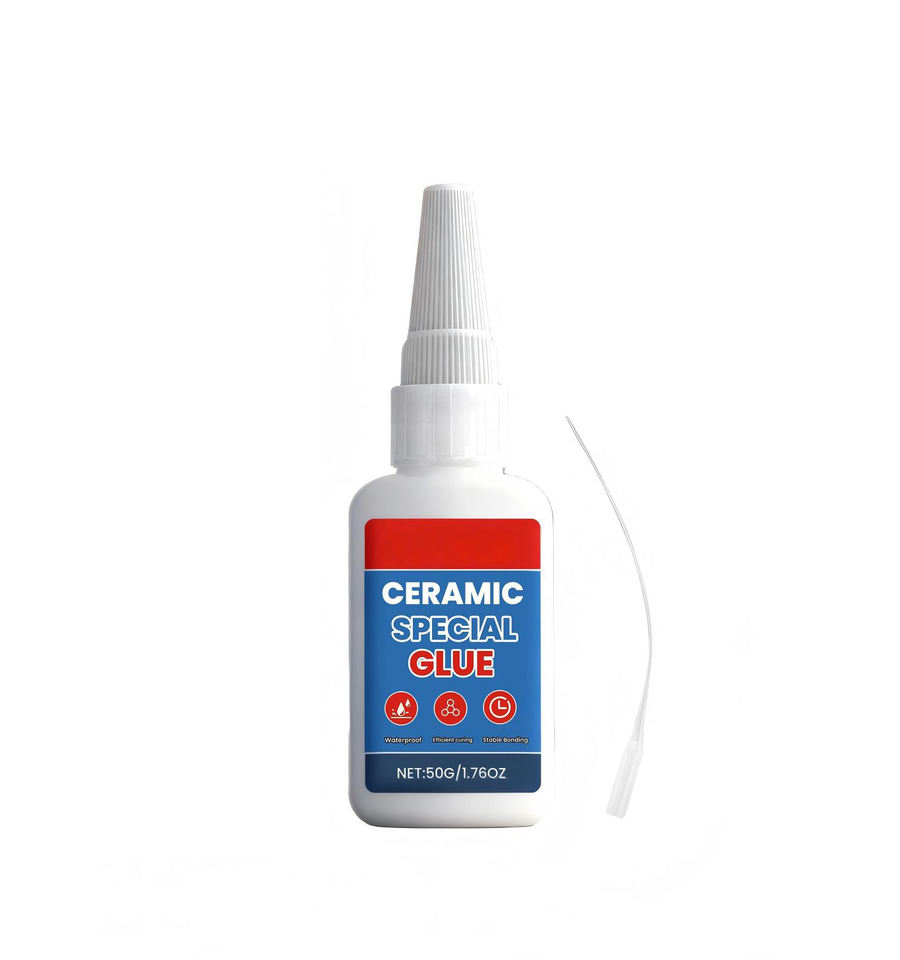
GLE-036 Instant glue
Listed instant glue in small packs. Rubber compounds tested, flexible grades and primer needs are confirmed by inquiry.

GLE-007 Contact glue
Listed contact adhesive in cans. Suitability for your rubber sheet, resistance data and DG class are confirmed by inquiry.
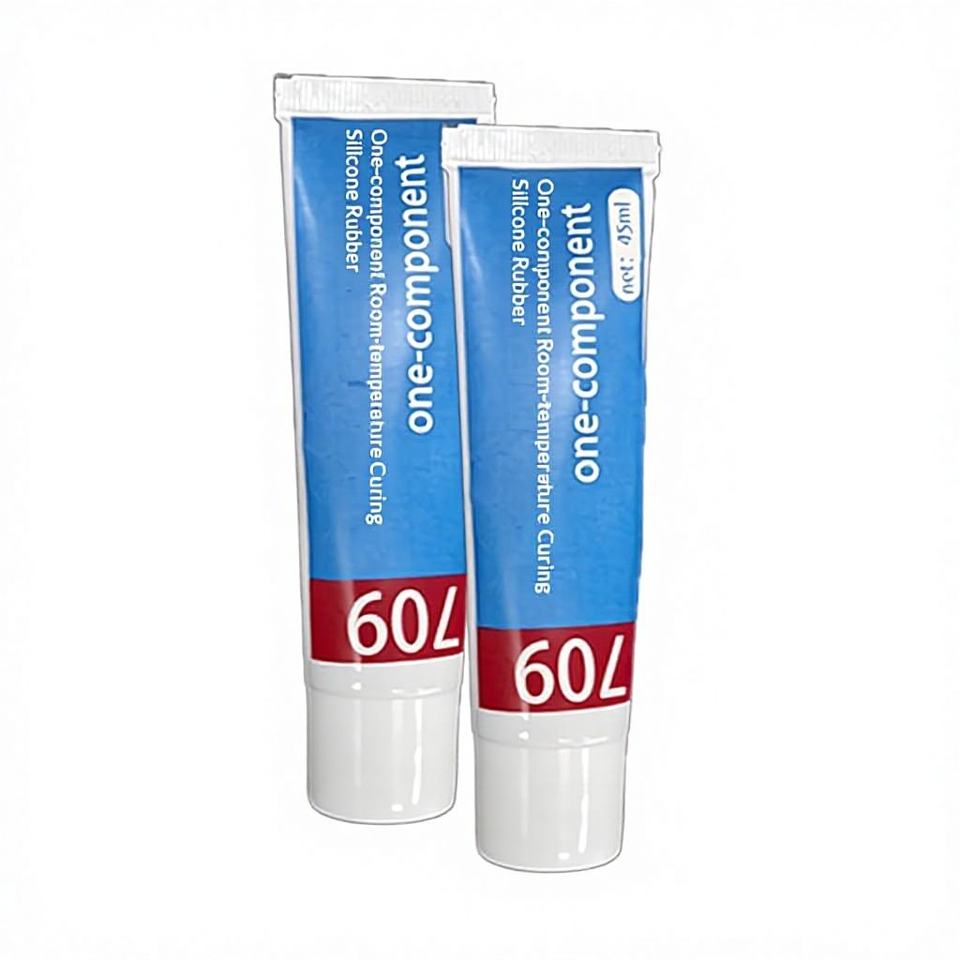
GLE-028 709 Silicone rubber
Listed silicone rubber in tubes. Whether it suits bonding your silicone rubber parts is confirmed by sample and inquiry.
Related GlueMFG Resources
- Shoe Glue for Distributors and Private Label
- Cyanoacrylate Glue Grades for Assembly Lines
- Contact Cement vs Spray Adhesive
- Silicone Adhesive for OEM Bonding
- GlueMFG product catalog
FAQ
What is the best glue for rubber?
It depends on the rubber and the job. Instant glue (cyanoacrylate) is common for small rubber parts and O-ring splicing, contact adhesive is common for rubber sheet and larger areas, and silicone rubber usually needs a silicone adhesive or a primer. Identify the rubber compound first, then test the chosen adhesive on the real parts.
Does super glue work on rubber?
Cyanoacrylate bonds many rubbers quickly, including natural rubber, neoprene and many nitrile compounds, and is widely used for small parts and O-ring splices. Standard grades can leave a stiff bond line, so flexible or rubber-toughened grades are often preferred where the part bends. Low-energy rubbers such as EPDM and silicone usually need a primer, and results vary by compound.
Why will nothing stick to my EPDM or silicone rubber?
EPDM and silicone rubber have low surface energy, and many rubber parts also carry mould release, oils or plasticisers on the surface. General-purpose glues often wet them poorly. Suppliers typically recommend cleaning, sometimes light abrasion, and a polyolefin primer before cyanoacrylate, or a dedicated silicone adhesive for silicone rubber. Confirm with a peel test on your parts.
Is contact cement good for rubber to metal?
Contact adhesive is a common choice for bonding rubber sheet or pads to metal, wood and other rigid parts because it stays flexible and covers large areas. Both surfaces are coated, left to reach tack, then pressed. Heat, oil and water resistance vary by grade, so ask for the data and run an ageing test if the part sees oil or heat.
Does GlueMFG supply adhesives for rubber bonding?
GlueMFG lists instant glue products (for example GLE-036 and the 502 series), contact adhesives such as GLE-007 and a silicone rubber product, GLE-028. Which rubber compounds each grade was tested on, primer needs, flexible grades and MOQ are confirmed by inquiry: send the rubber type, the second substrate, the part and the service conditions.