UV curing adhesive is the right choice when at least one part lets light through (glass, clear acrylic, some clear plastics) and the line needs a fast cure on demand. Specify it together with the lamp: wavelength, intensity and exposure time decide whether the bond cures. For hidden or opaque joints, ask for a dual-cure grade or use an epoxy or cyanoacrylate instead. GlueMFG does not list a UV adhesive SKU today; grades, data sheets and pack sizes are confirmed by inquiry.
UV adhesive, also sold as UV glue or light-cure adhesive, solves a real production problem: parts can be aligned for as long as needed and then fixed in seconds. It also fails in ways other adhesives do not, because the light, not just the chemistry, controls the cure. This guide is for importers, distributors and OEM buyers deciding whether a UV grade fits their parts and what to ask before ordering.
When UV Curing Adhesive Fits, and When It Does Not
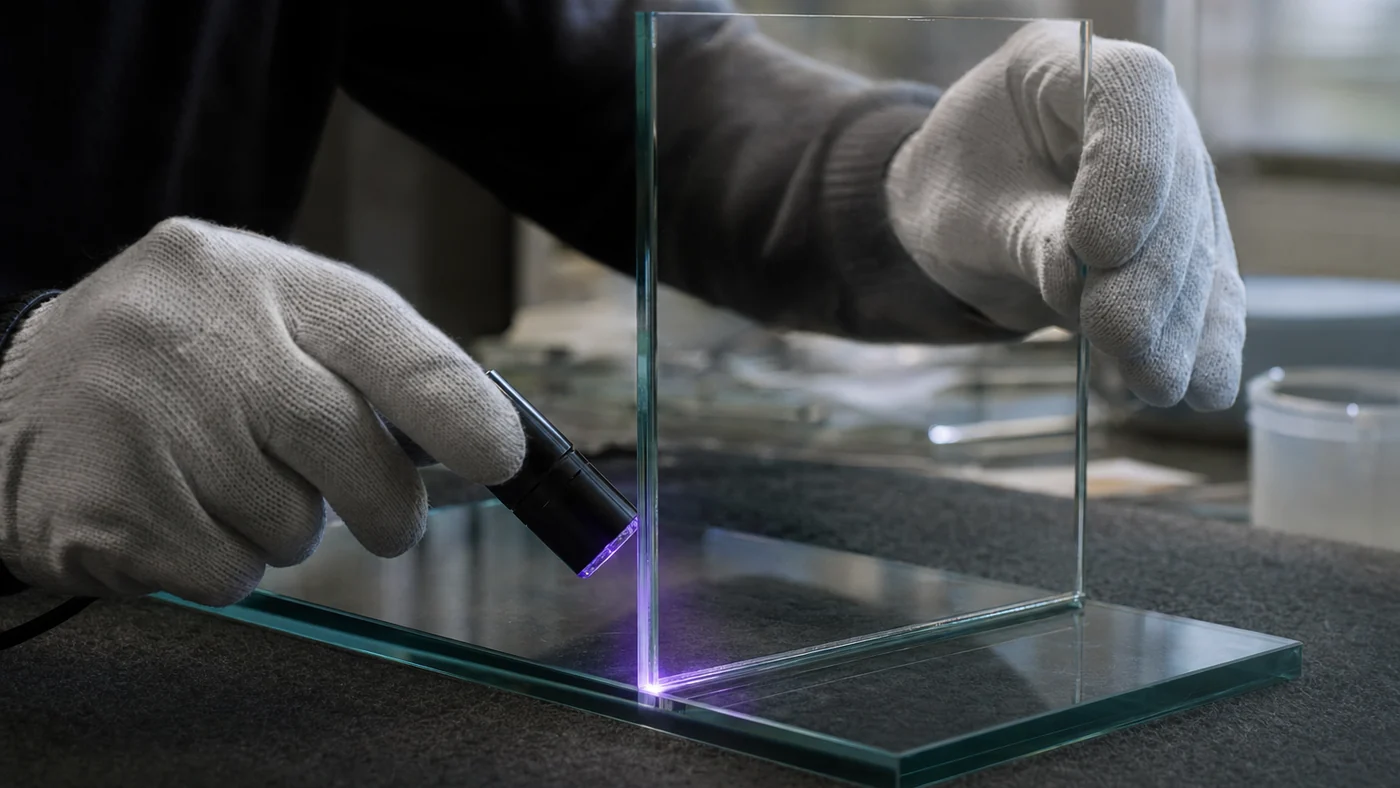
| Joint | UV adhesive fit | Usually better choice |
|---|---|---|
| Glass to glass, glass to clear acrylic | Strong fit: light reaches the bond line, clear joint | - |
| Glass or clear plastic to metal | Good fit if curing through the clear part | Check expansion and peel loads in a trial |
| Opaque plastic or metal, hidden joint | Only with a dual-cure grade | Two-part epoxy or cyanoacrylate |
| Large gaps or thick sections | Limited by light depth | Epoxy or a gap-filling grade |
| Retail repair kits | Possible with a small lamp in the kit | Instant glue if no lamp is supplied |
Do not buy a UV adhesive for opaque, fully hidden joints because a sample cured well on an open bench. Without light at the bond line the adhesive stays liquid inside the joint. Use a dual-cure grade with a tested secondary cure, or choose a fast or slow cure epoxy instead.
On the Line: Lamp, Dispensing and Cure Settings
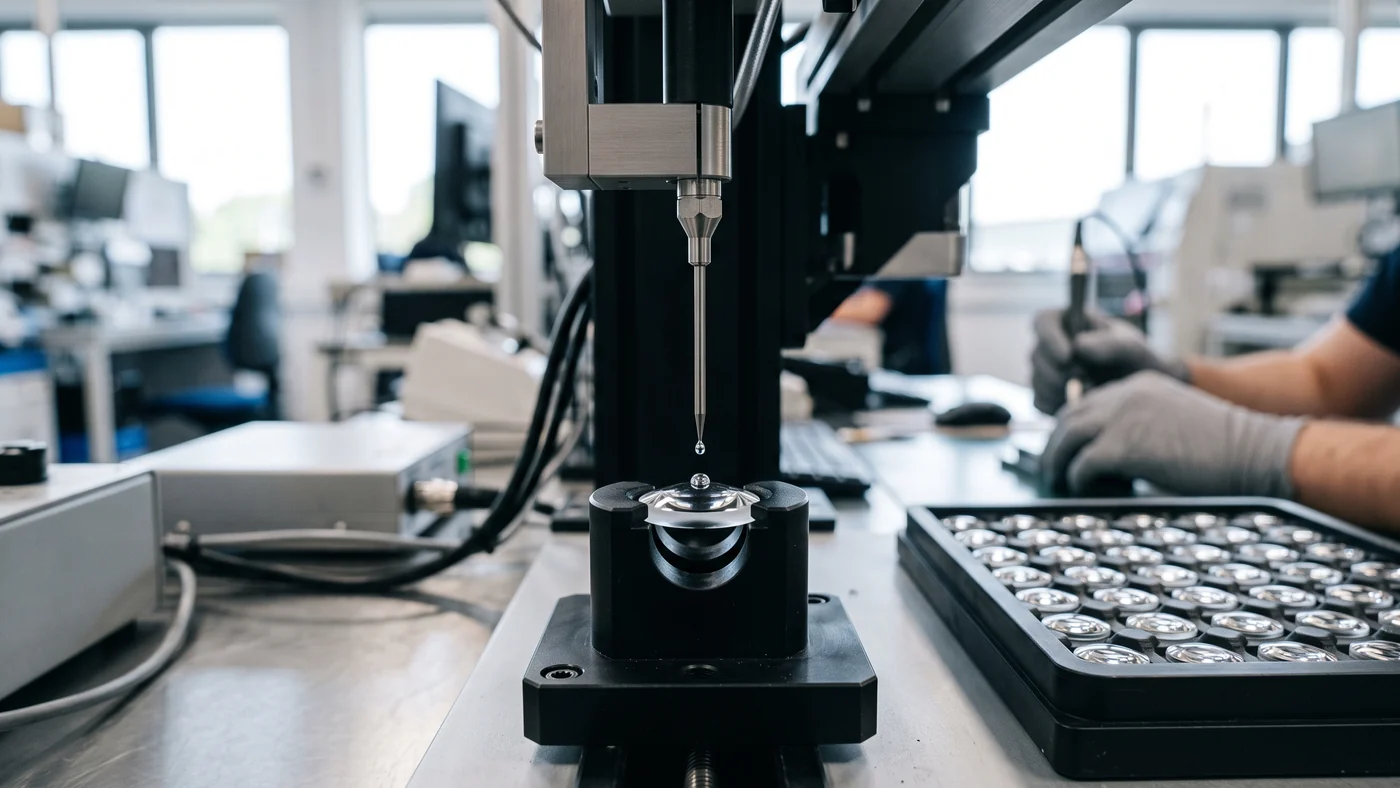
UV grades are sold with a matching cure window. Before approving one, ask the supplier for:
- Wavelength: the band the grade was designed for, commonly around 365 nm (mercury or LED) or 395 to 405 nm LED. Older mercury-lamp grades may cure poorly under a 405 nm LED.
- Intensity and dose: the light intensity and exposure time used in their tests. Measure your own lamp at the part, not at the bulb.
- Viscosity: thin grades wick into tight fits; thicker and thixotropic grades stay on vertical or domed parts. Match it to your dispensing needle and valve.
- Surface tack: whether the cured surface is tack-free with your lamp, or needs a higher dose.
- Secondary cure: for shadowed areas, which mechanism the dual-cure grade uses (moisture, heat or activator) and how long it takes.
Check the Bond Before Volume: Clarity, Yellowing and Strength
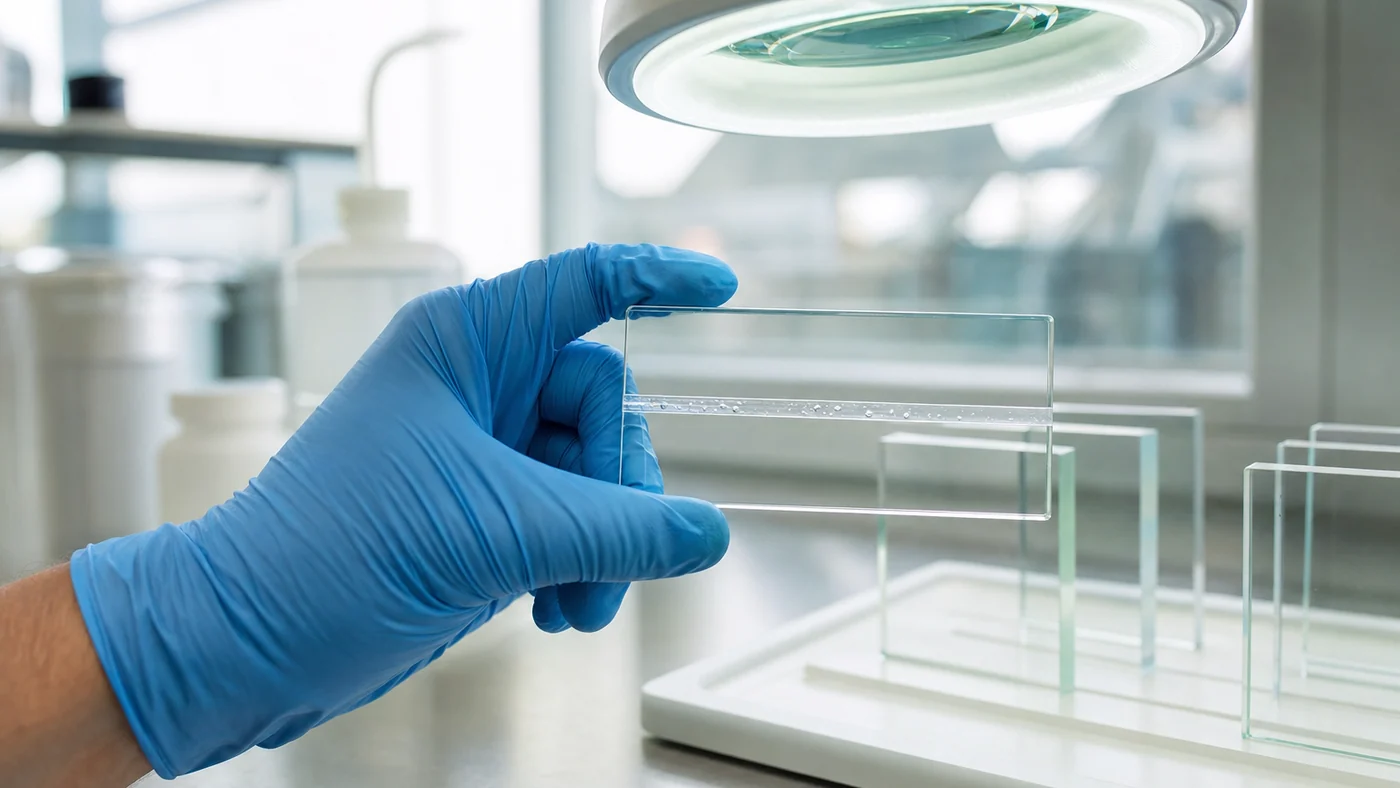
- Bubbles and voids: check trial joints under magnification; dispensing method and viscosity matter as much as the adhesive.
- Clarity and yellowing: visible glass and display joints need a grade with stated yellowing behaviour after light and heat ageing. Ask what ageing test the supplier ran.
- Strength and failure mode: request lap shear or tensile data on your substrates and look at how samples fail. See adhesive strength testing for buyers.
- Humidity and temperature cycling if the product will be outdoors, in bathrooms, or in vehicles.
- Plastics: some clear plastics block part of the UV band or can stress-crack. Test the exact grade of acrylic or polycarbonate you use.
Packaging, Storage and Documents
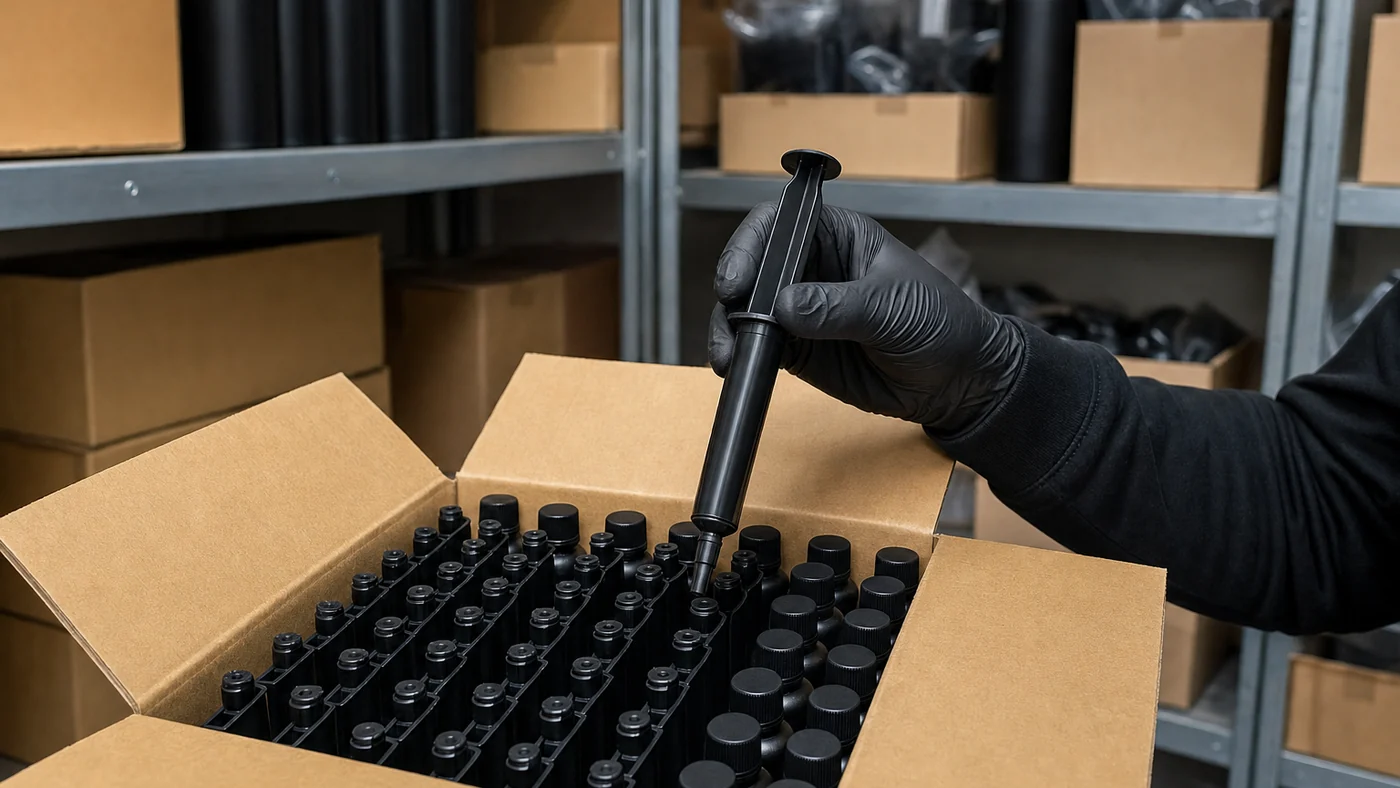
- Opaque packs: UV adhesives must be packed in light-blocking bottles, syringes or cartridges. Clear retail packaging is a common cause of hardened stock.
- Storage and shelf life: ask for the stated shelf life and storage temperature; many grades need cool storage. Rotate stock by lot date.
- Hazard labels: acrylate-based UV adhesives often carry skin and eye irritation or sensitisation statements. Check SDS Section 2 and label in the market language. See how to read an adhesive SDS.
- Transport: many UV adhesives are not regulated as dangerous goods for transport, but confirm from SDS Section 14 for each grade.
- Pack sizes: syringes and small bottles for assembly and repair, larger bottles or cartridges for automated lines. See OEM adhesive packaging options.
RFQ Checklist for UV Curing Adhesive
- Substrates on both sides and which one lets light through.
- Joint design: gap, bond area, any shadowed or hidden areas.
- Lamp: type, wavelength, measured intensity at the part, exposure time available on the line.
- Viscosity range and dispensing method.
- Requirements: clarity, yellowing, flexibility, temperature and humidity exposure.
- Requested data: TDS with cure conditions, strength on your substrates, ageing results, SDS in your market format.
- Pack: syringe, bottle or cartridge size, opaque packaging, label languages, carton count, shelf life.
- Quantity, destination, shipping mode and target price for sample and trial orders.
What GlueMFG Can Support Around This Topic
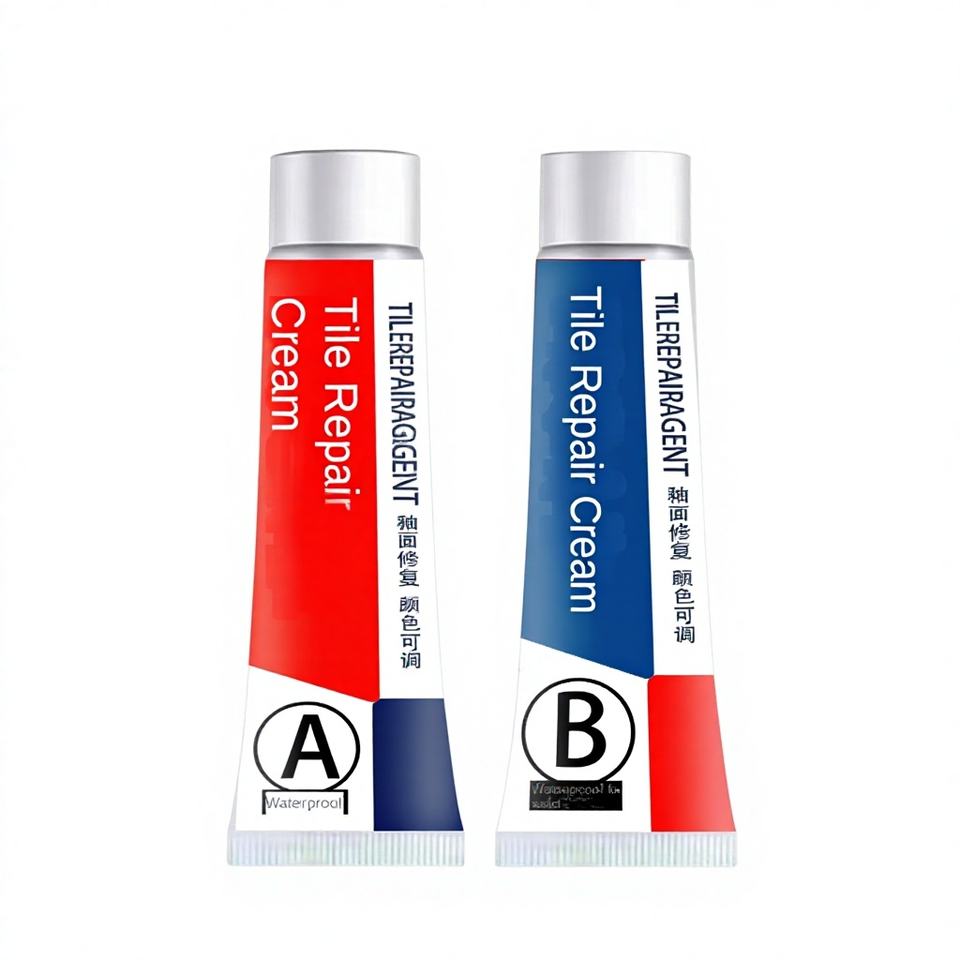
GLE-001 Two-part epoxy
For opaque or hidden joints where light cannot reach. Cure time and pack sizes confirmed by inquiry.
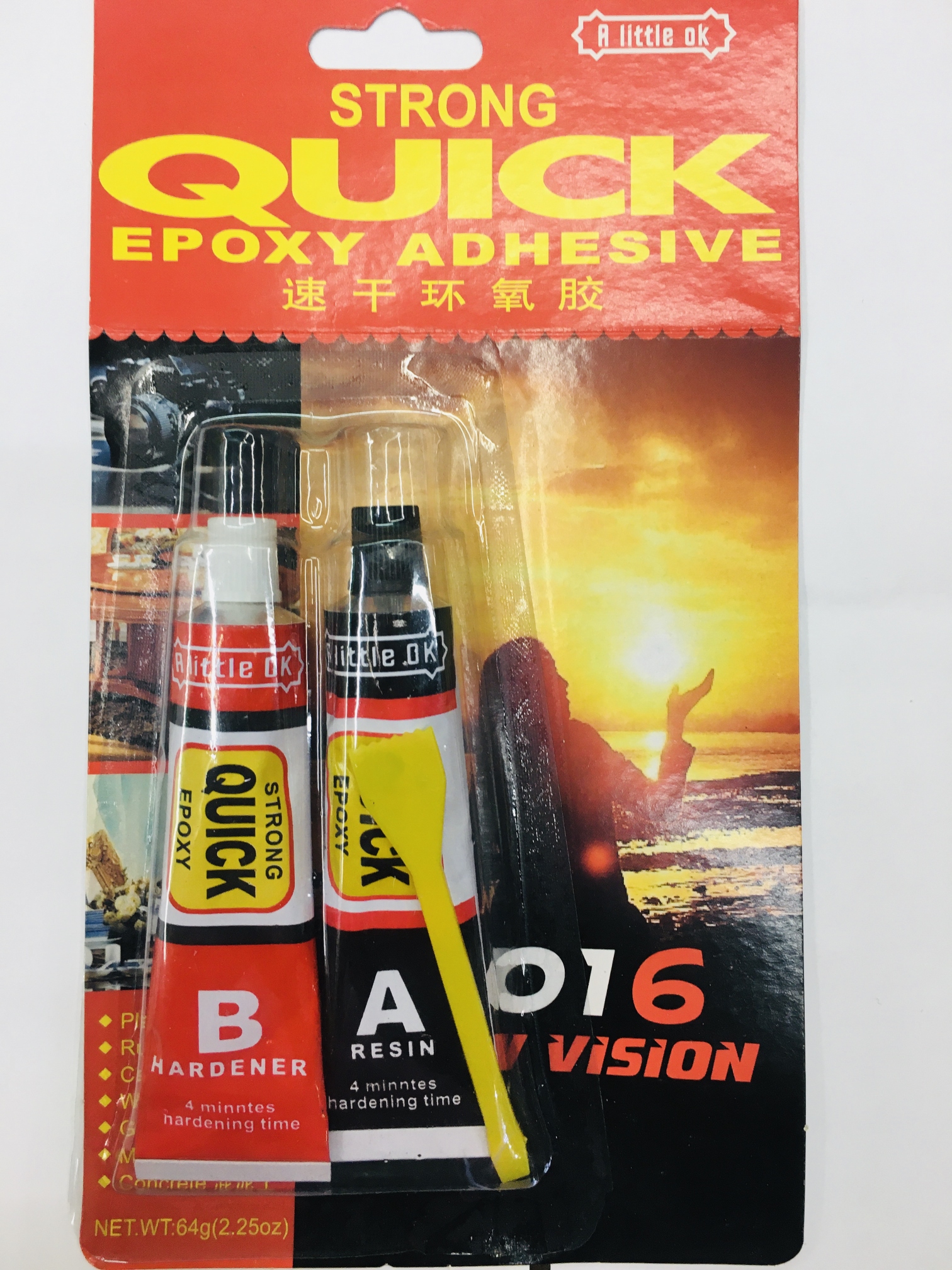
GLE-004 Quick epoxy
Fast-setting two-part epoxy for repair and assembly ranges. Substrate data confirmed by inquiry.
UV adhesive grades by inquiry
Not a listed SKU. Send substrates, lamp, viscosity and pack size; availability, TDS, SDS and MOQ confirmed by inquiry.
Related GlueMFG Resources
- Cyanoacrylate Glue Grades for Assembly Lines
- Fast vs Slow Cure Epoxy for Production Lines
- Metal and Plastic Epoxy for Production
- Adhesive Strength Testing for B2B Buyers
- GlueMFG product catalog
FAQ
How does UV curing adhesive work?
UV curing adhesive stays liquid until it is exposed to light of the right wavelength and intensity, then cures in seconds to minutes. The light has to reach the adhesive, so at least one part must let the light through, or the joint must be open to the lamp. That is why lamp and adhesive should be specified together.
Can UV glue bond metal to metal?
Not on its own when the joint is fully hidden, because light cannot reach the adhesive between two opaque parts. Dual-cure grades add a second cure mechanism, such as moisture, heat or an activator, for shadowed areas. For opaque metal joints, a two-part epoxy or a cyanoacrylate is often the simpler choice.
What lamp do I need for UV adhesive?
Ask the supplier which wavelength the grade was designed for, often around 365 nm or a 395 to 405 nm LED band, and the light intensity and exposure time they tested. A lamp outside that range can leave the adhesive tacky or under-cured. Buy samples and test with the lamp your line or your customers actually use.
Why is the surface of UV glue still sticky after curing?
Many acrylate UV adhesives suffer from oxygen inhibition, which leaves a thin tacky layer on the surface exposed to air. Higher intensity, a different wavelength, or a grade formulated for a tack-free surface usually solves it. Ask the supplier how the grade behaves with your lamp.
Does GlueMFG supply UV curing adhesive?
UV curing adhesive is not a listed catalog SKU today. GlueMFG lists two-part epoxies (GLE-001, GLE-004) and cyanoacrylate instant glues that cover many opaque joints. For a UV grade, send substrates, joint design, lamp, viscosity and pack size, and availability, data sheets and MOQ will be confirmed by inquiry.