AB glue is a two-part adhesive: part A and part B cure only after mixing. In most catalogues it means two-part epoxy; some AB glues are two-part acrylic. For importers and distributors the main checks are chemistry, mix ratio, working and cure time, colour, pack format and the SDS for both parts. For GlueMFG products these details are confirmed by inquiry.
Importers, hardware distributors and private-label brands often see “AB glue”, “AB adhesive” or “two-part epoxy glue” on supplier price lists with very little detail. Two AB glues at a similar price can differ in chemistry, ratio, cure speed, colour and the way the pack mixes the parts. This guide explains what AB glue means, the pack formats on offer, how mixing and ratio affect quality, and what to check before a container order. For cure speed choices in production, see fast vs slow cure epoxy; for metal and plastic production jobs, see metal and plastic epoxy for production.
What AB Glue Means on a Supplier Price List
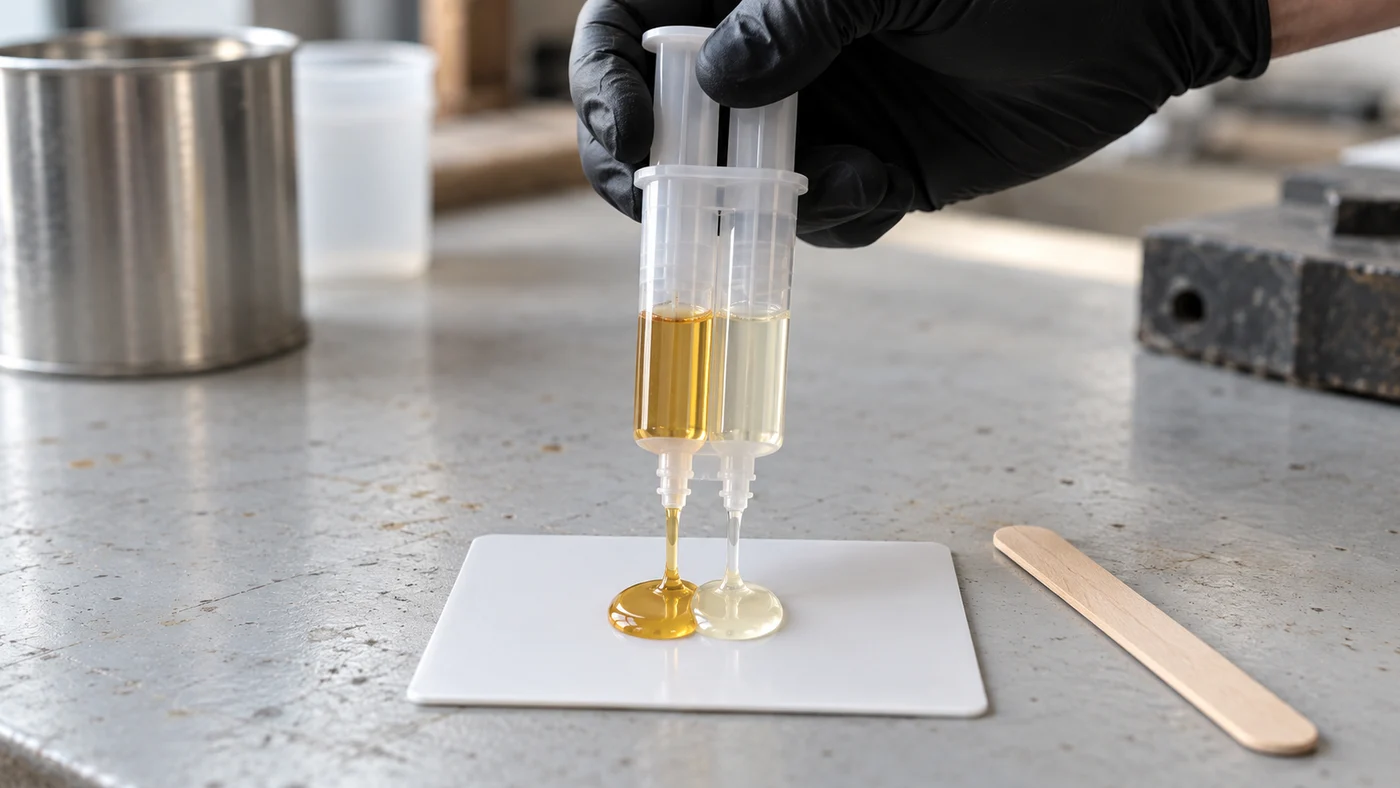
| Name you may see | Usually means | What to ask |
|---|---|---|
| AB glue / AB adhesive | Any two-part adhesive, most often epoxy | Chemistry of part A and part B |
| Two-part epoxy glue | Epoxy resin (A) plus hardener (B) | Mix ratio, working time, full cure, colour |
| AB epoxy, clear or grey | Epoxy sold by appearance | Clarity, yellowing over time, gap filling |
| Two-part acrylic / structural acrylic | Methacrylate (MMA) adhesive with activator or hardener | Odour, flammability, cure speed, storage |
| Quick / 5-minute epoxy | Fast-setting epoxy grade | Working time at your temperature, final strength |
Do not compare AB glue offers on price per set alone. Ask what chemistry each part is, the mix ratio and the cure times on the TDS; without these, two quotes are not comparable.
Pack Formats for Retail, MRO and Production
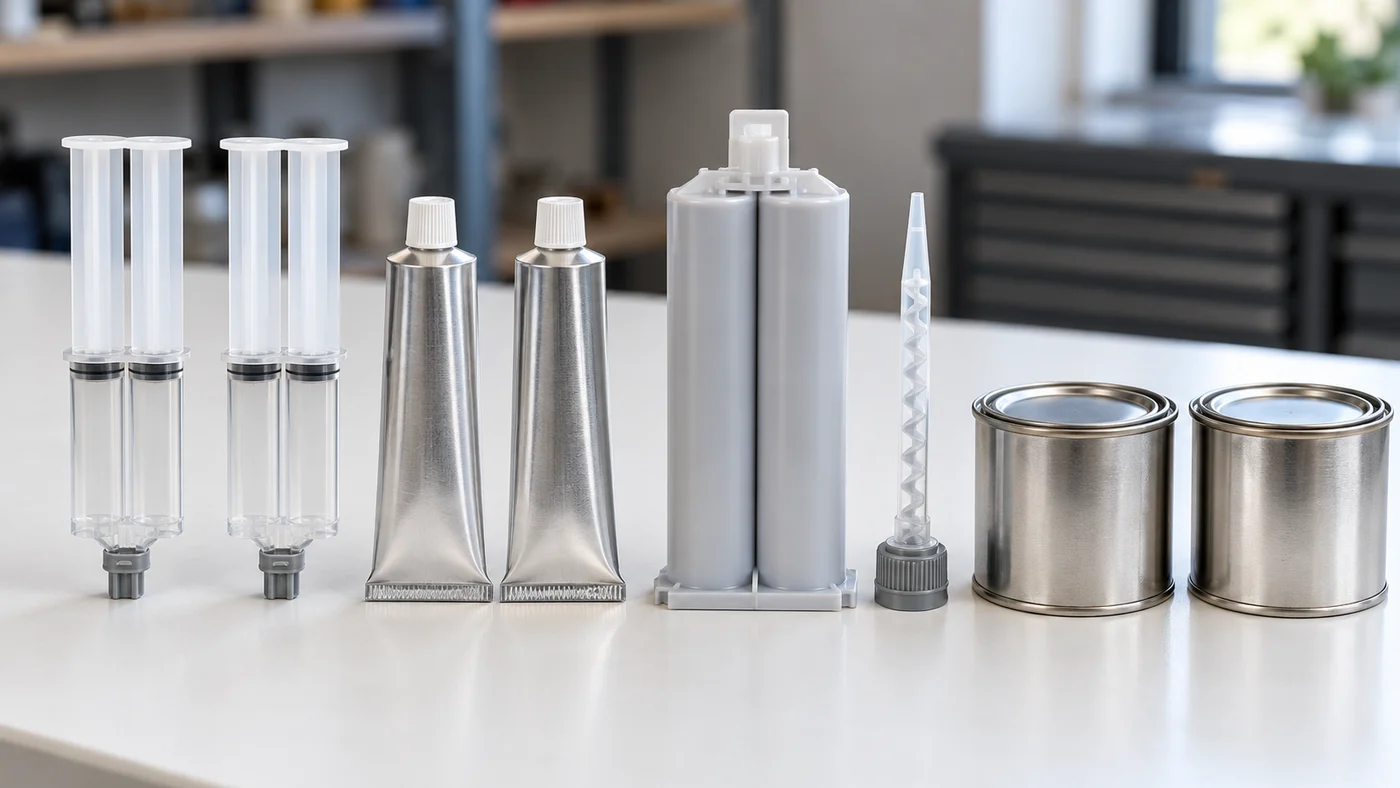
- Double-barrel syringes: common for retail and repair ranges; one plunger pushes both parts out together, which helps keep a 1:1 ratio.
- Twin tubes: two separate tubes on a blister card; low cost, but the user judges the ratio by eye.
- Dual cartridges with static mixers: used with a manual or pneumatic gun on MRO and assembly lines; the nozzle mixes the parts as they flow. Confirm the cartridge size, ratio and nozzle with the supplier.
- A/B cans, pails and drums: for workshops and lines that weigh or meter the parts. Bulk ratio control moves to the buyer’s process.
- Labels and artwork: both parts need correct hazard labels for the destination market. See OEM adhesive packaging options.
Mixing, Ratio and Cure: Where Quality Problems Start
| Item on the TDS | Why it matters | Check in trials |
|---|---|---|
| Mix ratio (by volume or weight) | Off-ratio mixes may stay soft or turn brittle | Pack or equipment delivers the stated ratio |
| Working time / pot life | How long the mixed glue can be used | Measure at your workshop temperature |
| Fixture or handling time | When parts can be moved | Time on your parts and clamps |
| Full cure | When the joint reaches its rated strength | Test strength only after full cure |
| Colour and clarity | Visible joints and repair ranges | Check yellowing after light exposure |
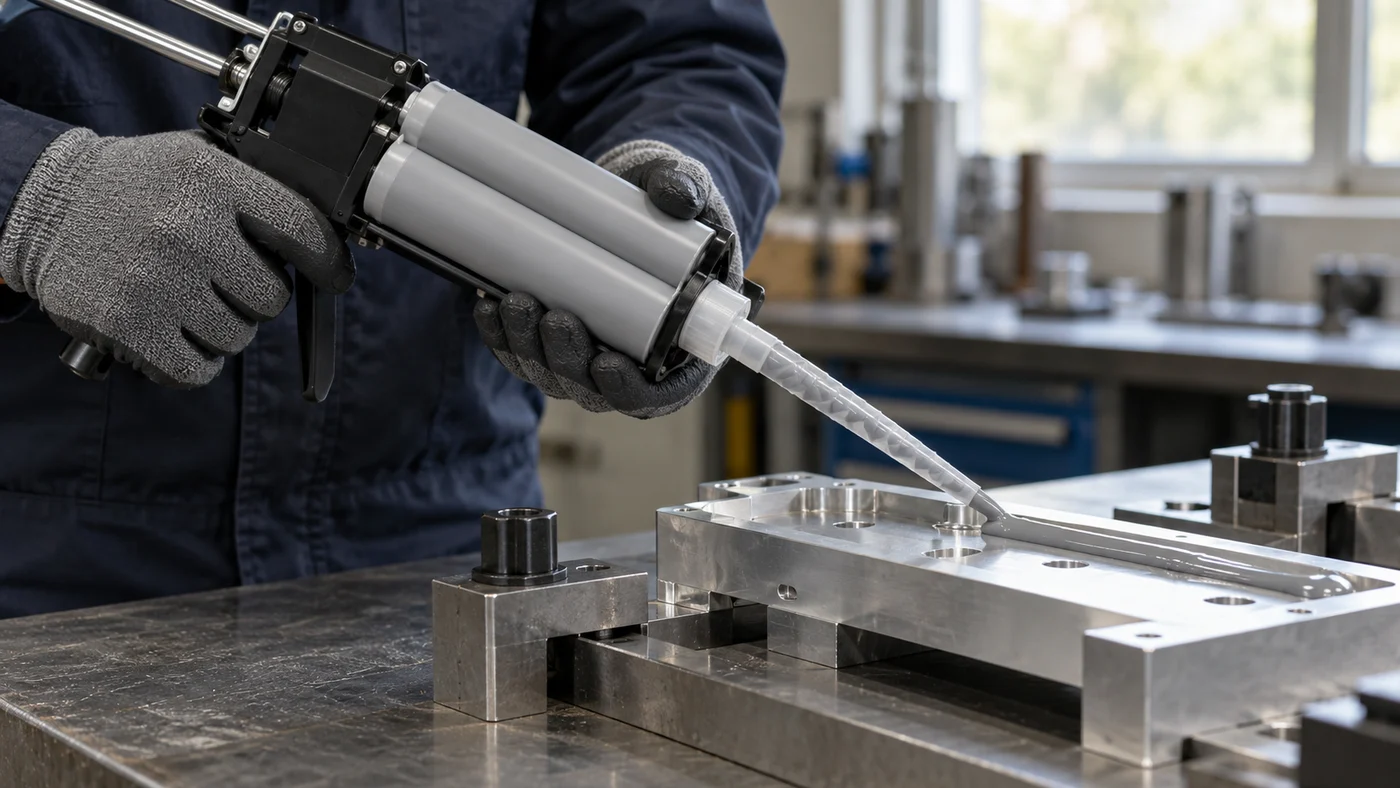
- Mix fully: hand-mixed glue needs scraping of the sides and bottom; unmixed streaks stay soft.
- Temperature: cold slows the cure and thickens the parts; large mixed batches can heat up and cure faster than expected.
- Strength: ask for data on the materials you bond. See metal bonding adhesives and plastic bonding adhesives, and epoxy cure time and shelf life.
Batch QC, Documents and Shipping for Two-Part Glue
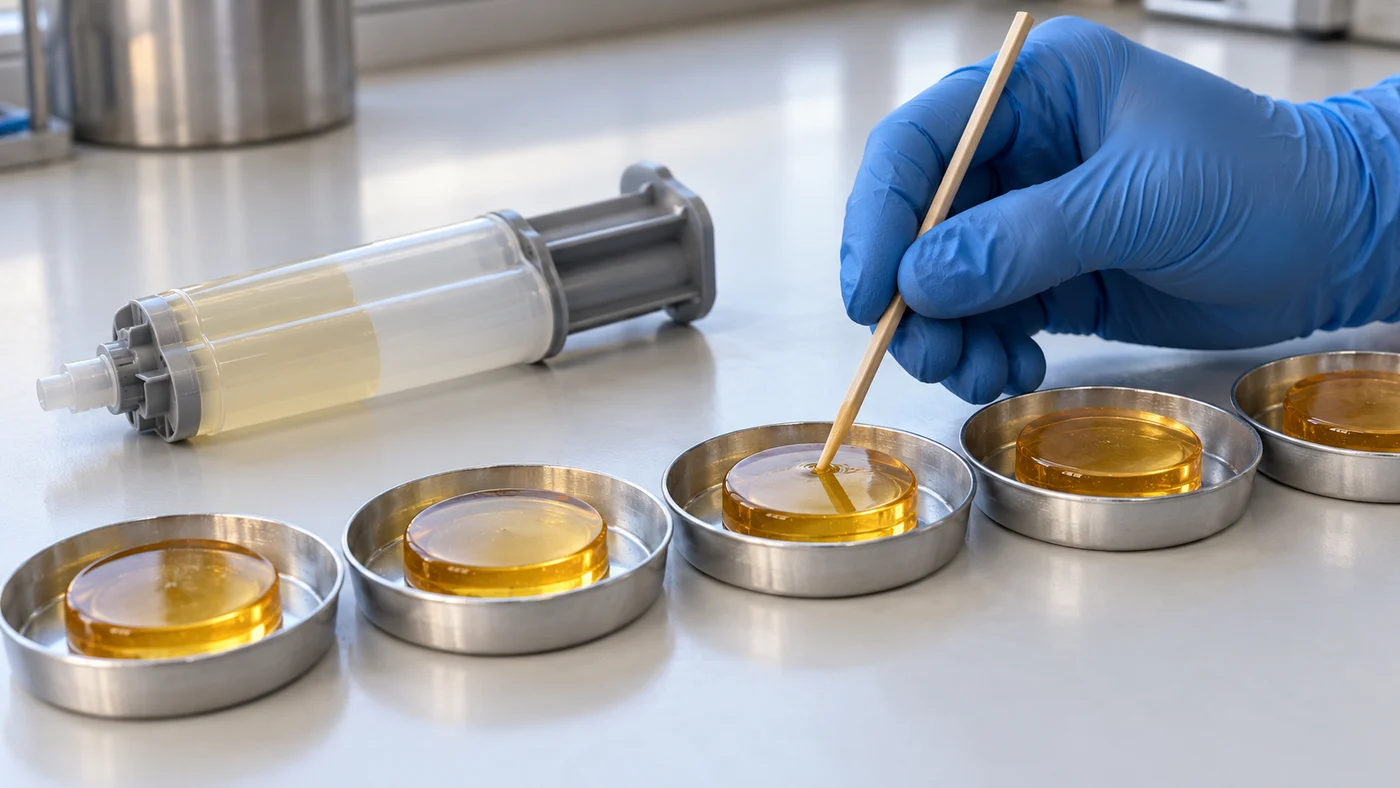
- Retained samples: agree that each batch is mixed, cured and checked for hardness, colour and cure time against the approved sample; keep samples from each lot.
- COA per batch: ask which values the certificate of analysis will show, for example appearance, viscosity of each part and gel time.
- SDS for both parts: part A and part B can have different hazard classes; epoxy hardeners are often corrosive or sensitising. Check section 14 of each SDS for transport.
- Shelf life and storage: ask for shelf life by pack and storage temperature. See adhesive storage and shelf life.
- Sea freight: confirm whether the goods ship as dangerous goods before booking. See sea freight hazard classification.
RFQ Checklist for AB Glue and Two-Part Epoxy
- Use: materials bonded, joint size, gap, and whether the joint is visible.
- Chemistry: epoxy or acrylic, colour (clear, white, grey, black), fast or standard cure.
- Mix ratio and method: syringe, twin tube, cartridge and gun, or bulk metering.
- Working time, fixture time and full cure needed at your temperature.
- Pack size, card or box, label language, warnings and claims you plan to print.
- Documents: TDS, SDS for both parts, COA per batch, any test report the customer requires.
- Quantity per SKU, destination port and sample, trial and container plan.
What GlueMFG Can Support Around This Topic
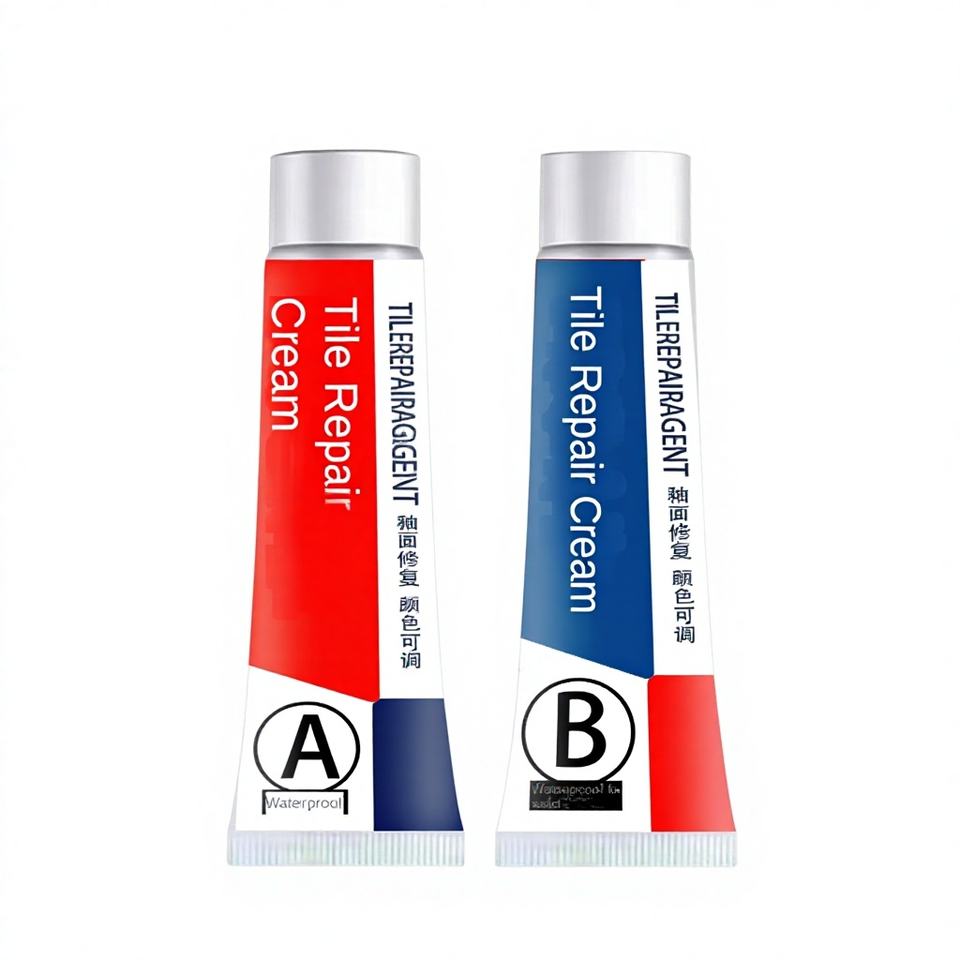
GLE-001 Epoxy resin adhesive
Listed two-part epoxy in sets. Mix ratio, cure times, colour and pack options are confirmed by inquiry.
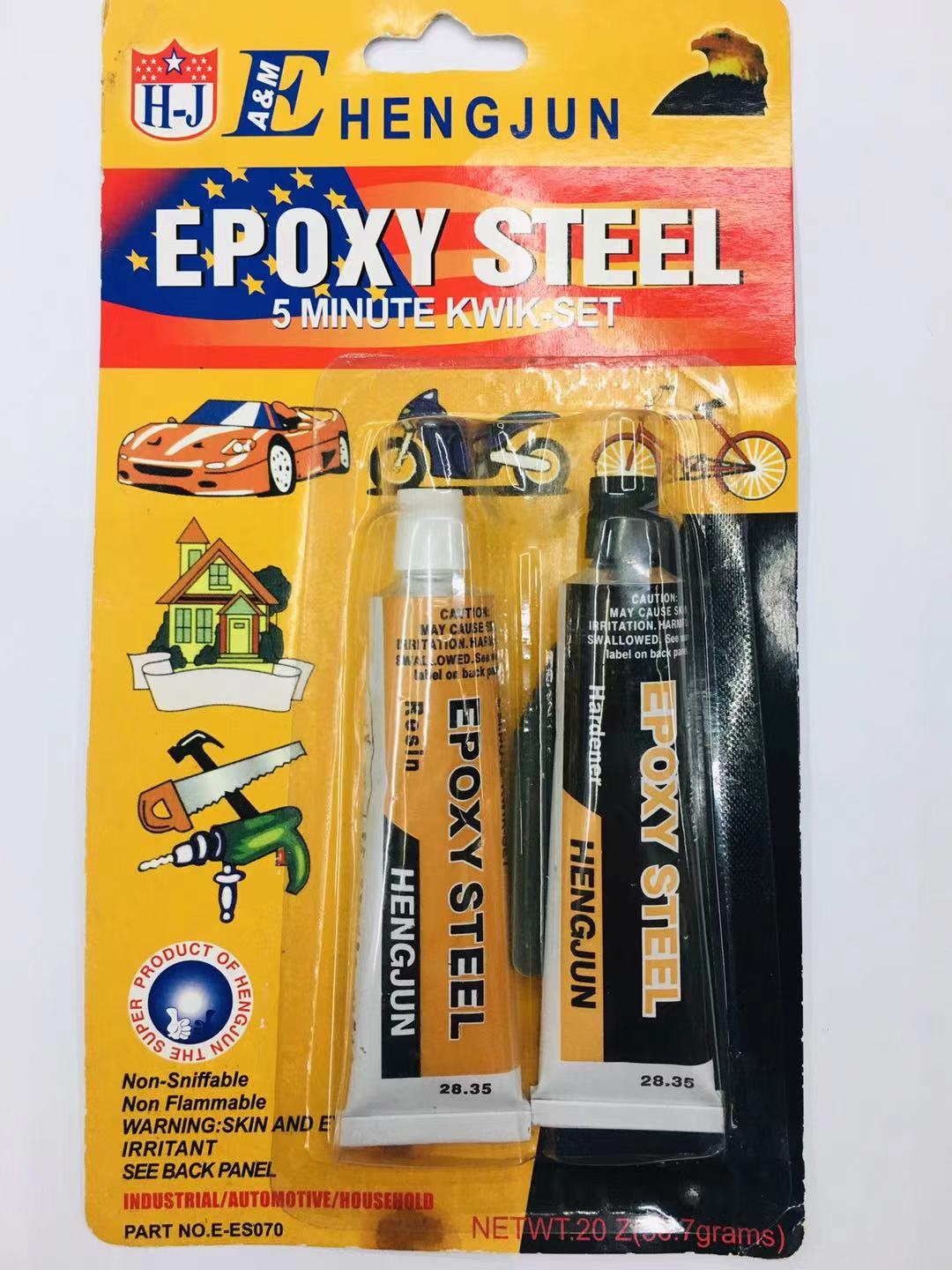
GLE-002 AB epoxy set
Listed AB / epoxy adhesive set for trade buyers. Chemistry, pack contents and MOQ are confirmed by inquiry.
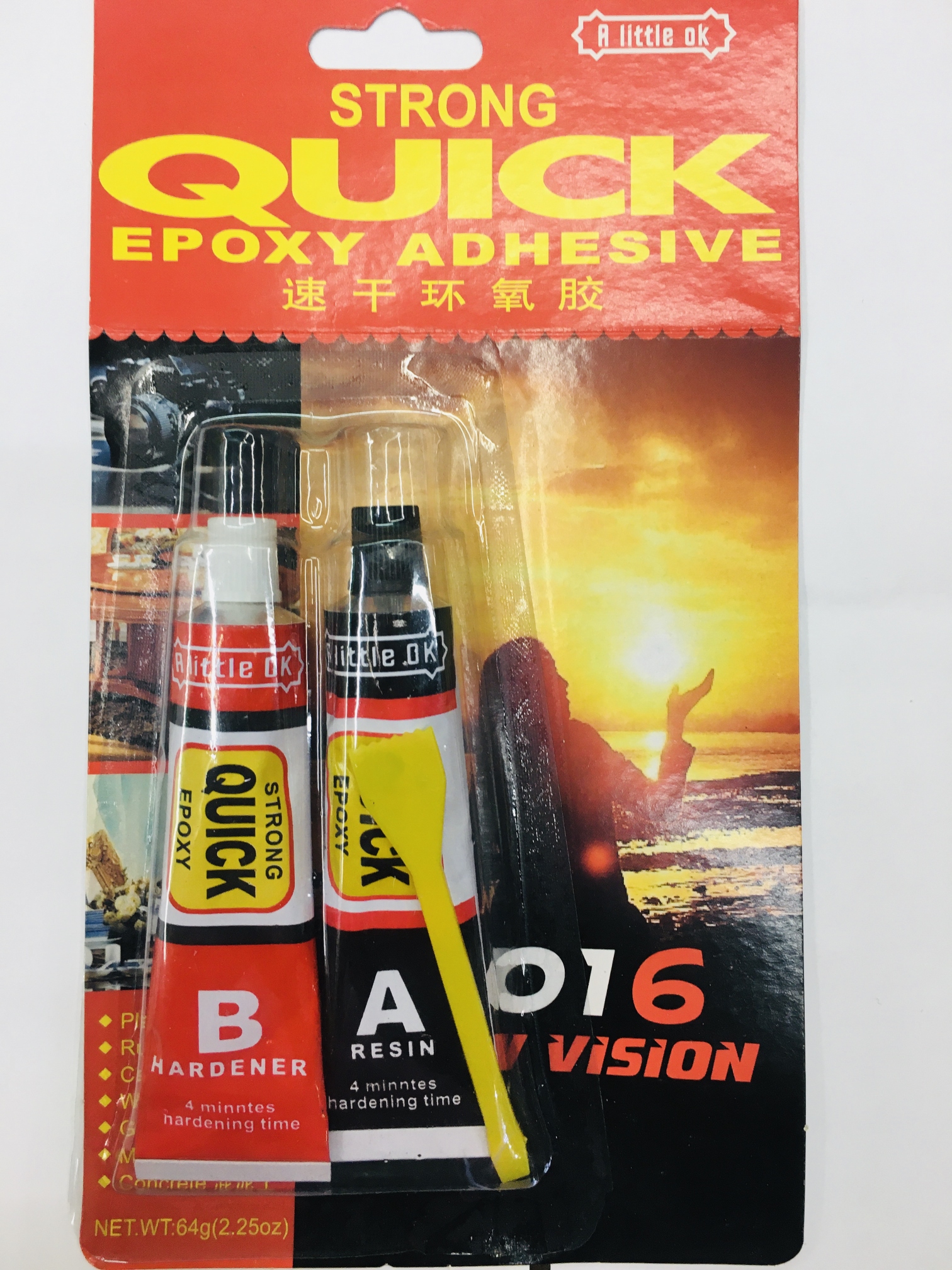
GLE-004 Quick epoxy adhesive
Listed fast two-part epoxy set. Working time at your temperature, strength and documents are confirmed by inquiry.
Related GlueMFG Resources
- Fast vs Slow Cure Epoxy for Production Lines
- Epoxy Cure Time and Shelf Life
- Metal Bonding Adhesives for B2B Buyers
- OEM Adhesive Packaging Options
- GlueMFG product catalog
FAQ
What is AB glue?
AB glue is the trade name, common in China and in import catalogues, for a two-part adhesive supplied as part A and part B. In most catalogues it means two-part epoxy (resin plus hardener); some suppliers also sell two-part structural acrylic as AB glue. The two parts only cure after they are mixed, so the mix ratio and mixing method matter.
Is AB glue the same as two-part epoxy?
Often, but not always. Many AB glues are two-part epoxies, while others are two-part acrylic (MMA) adhesives with a different smell, cure speed and storage needs. Ask the supplier for the chemistry of each part, the TDS and the SDS before you compare prices.
What mix ratio do two-part epoxy glues use?
Small retail syringes and twin tubes are often 1:1 by volume, but industrial grades can be 2:1, 4:1, 10:1 or other ratios, by volume or by weight. Use the ratio on the TDS, check that the dispensing pack or equipment delivers it, and do not change the ratio to speed up or slow down the cure.
How long does AB glue take to cure?
It depends on the grade and temperature. Fast grades can be handled after minutes, while standard and slow grades take longer; full strength usually needs many hours or longer, and cold workshops slow the cure. Ask for working time, fixture time and full cure time on the TDS and check them at your own temperature.
Which AB glue products does GlueMFG list?
GlueMFG's catalog has an AB / Epoxy Adhesive category, for example GLE-001 epoxy resin adhesive, GLE-002 AB epoxy set and GLE-004 quick epoxy adhesive. Mix ratio, cure times, colour, pack format, SDS and MOQ are confirmed by inquiry: send the materials, use, pack format and quantity.