Choose a cyanoacrylate glue grade for an assembly line by joint gap first, part orientation second, and set speed third. Water-thin and thin grades wick into tight, pre-fitted joints; medium grades cover most part-to-part bonds; thick and gel grades fill small gaps and stay put on vertical surfaces. Specialty needs (no white haze, impact, hard-to-bond plastics) come after that. GlueMFG makes ethyl cyanoacrylate with viscosity set per batch; exact values for a SKU are confirmed by inquiry.
OEM buyers and distributors often order "super glue" as if it were one product. On the line it is not. A grade that wicks perfectly into a pressed pin will run off a vertical rubber seal, and a gel that holds a gap will never travel into a tight seam. This guide sorts CA grades by the job they do, so the PO names a grade instead of a brand habit.
Viscosity Is the First Grade Decision
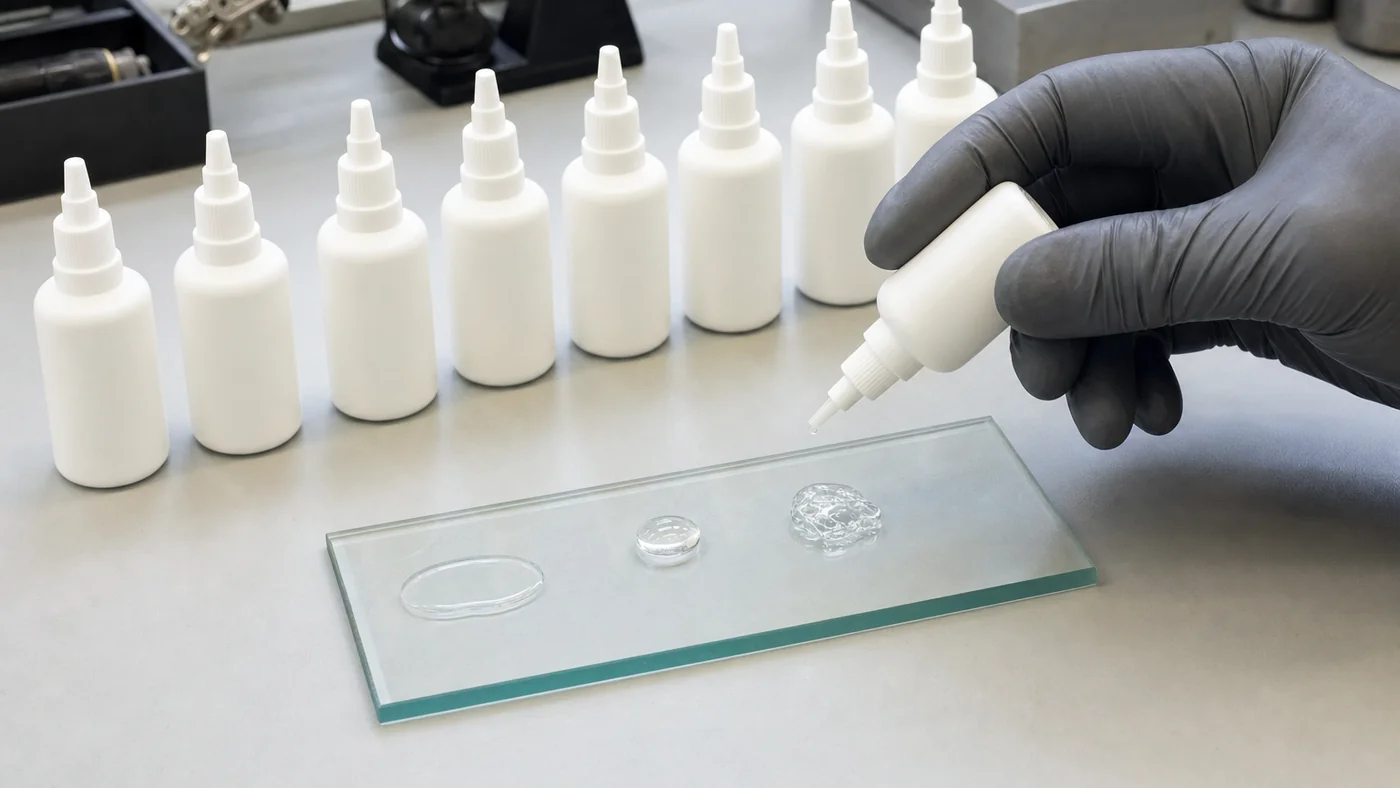
Viscosity decides where the glue goes and how much gap it can fill. The ranges below are general industry orientation, not GlueMFG specifications:
| Grade family | Typical behaviour | Good fit | Poor fit |
|---|---|---|---|
| Water-thin / wicking | Flows like water, pulled into seams by capillary action | Pre-assembled pins, wire tacking, tight press fits | Any visible gap, vertical faces, porous parts |
| Thin to medium | Spreads in a thin film, sets quickly on close-fitting parts | General plastic, rubber and metal part-to-part bonds | Rough or uneven surfaces |
| Thick | Slow to run, fills small gaps, a little more open time | Slightly loose fits, porous wood, leather, ceramics | Pre-assembled joints it cannot enter |
| Gel | Non-sag, stays where it is dispensed | Vertical and overhead bonds, small gaps, hand repair packs | Fast automatic wicking, very tight seams |
Our bulk super glue page describes the line side: viscosity is set and checked per batch, from a wicking grade around 3 mPa-s to gels above 1500 mPa-s. Ask for the measured viscosity and the method used on the TDS of the grade you are offered.
Thin Grades for Wicking and Tight Fits
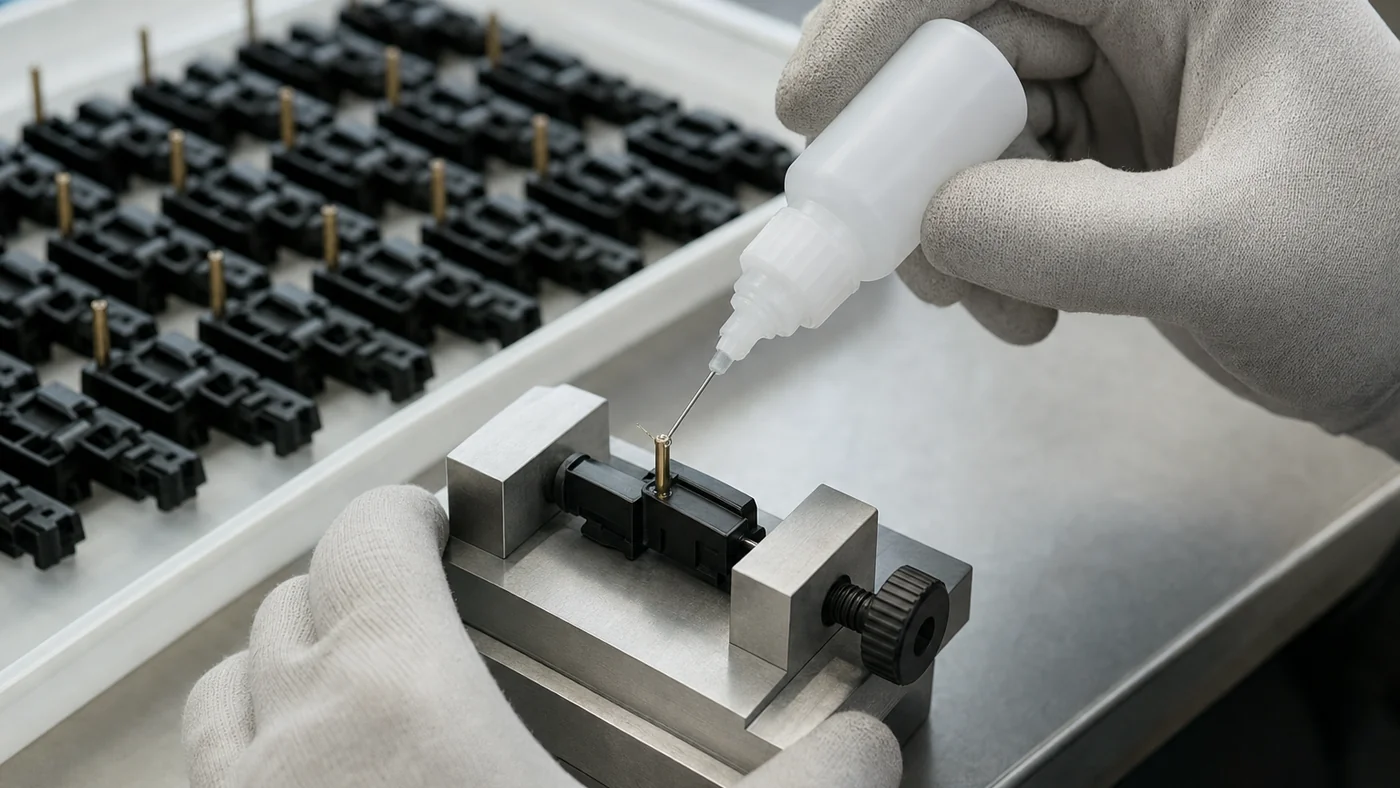
Thin grades are applied after assembly. The operator places a drop at the edge and the joint pulls it in. That makes them fast and clean, but only when the fit is tight.
- Gap: thin grades fill very little. If light shows through the joint, move up to a medium or thick grade.
- Dispensing: needle tips or fine nozzles control drop size; too much glue causes run-off and haze.
- Speed: thin films on close parts set fastest. Measure fixture time at your own room humidity, which changes it noticeably.
Do not choose the thinnest grade just because it sets fastest. On loose or porous parts it soaks in or runs away, leaving a starved joint that passes the first pull test and fails in the field.
Thick and Gel Grades for Gaps and Vertical Parts
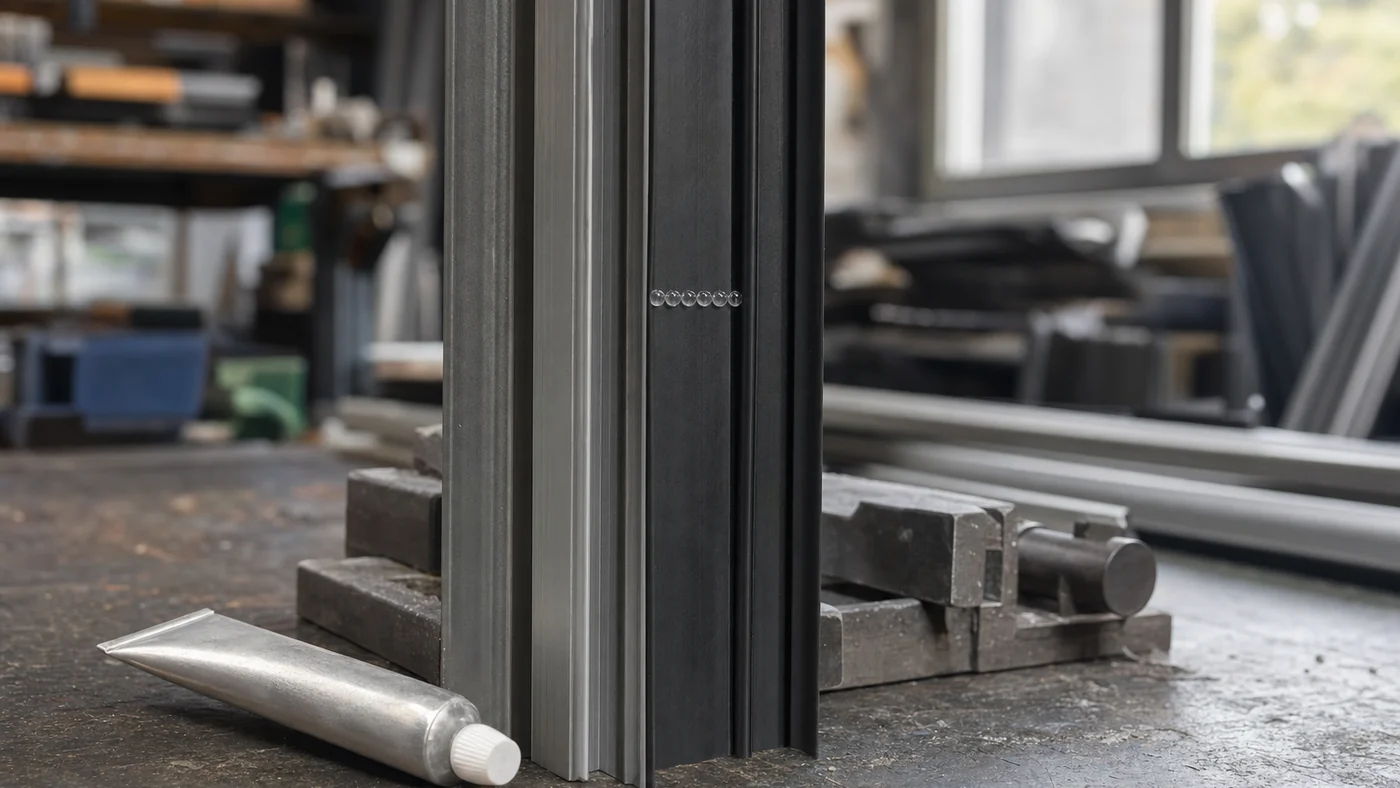
Thick and gel grades trade some speed for control. They are the usual choice for rubber profiles, small gaps, porous materials and hand-repair channels where the user cannot hold the part flat.
- Set time: thicker grades usually take longer to fixture. Check whether your takt time allows it before switching.
- Accelerators: a spray or brush activator speeds cure in gaps, but overuse can make the bond brittle or cause haze. Trial the activator and the glue together.
- Pack: gels are often sold in tubes; thin grades in bottles with fine nozzles. Match the pack to the grade, not the other way round. See OEM adhesive packaging options.
Specialty Grades: Low-Bloom, Toughened and Hard Plastics
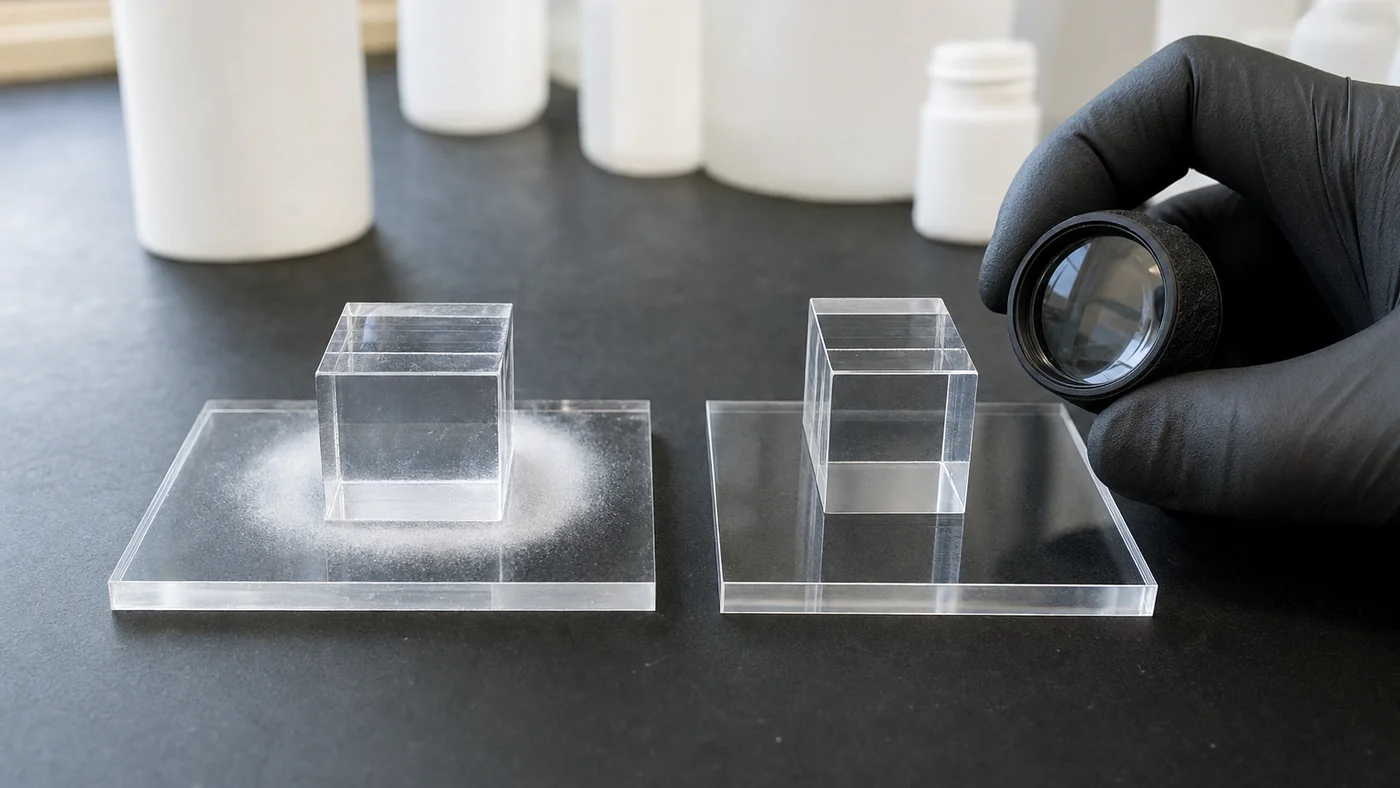
After viscosity, ask whether the job needs a specialty chemistry. These are common requests; whether a given type is available, and in which pack, is confirmed by inquiry:
| Problem on the line | What buyers usually ask for | Check in the trial |
|---|---|---|
| White haze on visible parts | Low-odour, low-bloom grade; less glue; better airflow | Cosmetic result on the real part after 24 h |
| Brittle joints under impact | Rubber-toughened grade | Drop or impact test, not only a pull test |
| PP, PE, PTFE or silicone rubber | Polyolefin primer plus CA, or a different adhesive | Bond with the primer on real parts |
| Wood, leather, acidic surfaces | Surface-insensitive or thicker grade | Set time on the actual material |
GlueMFG's base chemistry is ethyl cyanoacrylate (stated on the bulk page). If a supplier offers a specialty grade, ask what changes on the SDS and TDS, not just the name on the bottle.
Run a Short Line Trial Before Volume
A one-day trial avoids most CA disputes. Keep it simple and record it:
- Real parts, real prep: bond production parts with your normal cleaning, not lab coupons only.
- Room conditions: note temperature and humidity; repeat on a dry and a humid day if your plant swings.
- Fixture time and haze: time when the part can be handled, and check visible faces after 24 hours.
- Strength and failure mode: pull or peel a few parts and note whether the glue or the part fails. See adhesive strength testing for buyers.
- Retain samples: keep a sealed bottle from the approved batch to compare reorders.
If the joint is large, flexible, wet or hot in service, CA is probably the wrong family. Compare fast vs slow cure epoxy for production or metal and plastic epoxy selection.
What GlueMFG Can Support Around This Topic
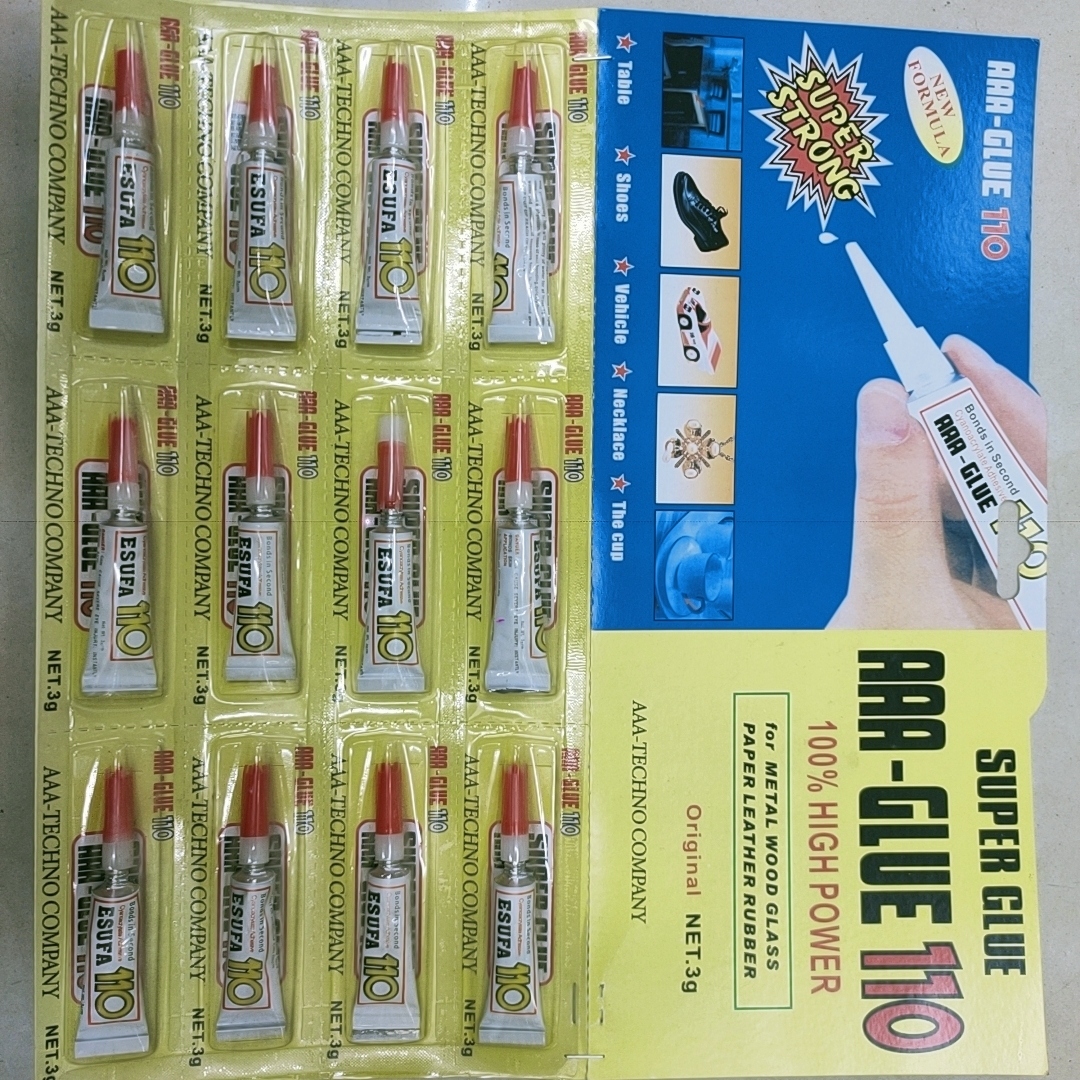
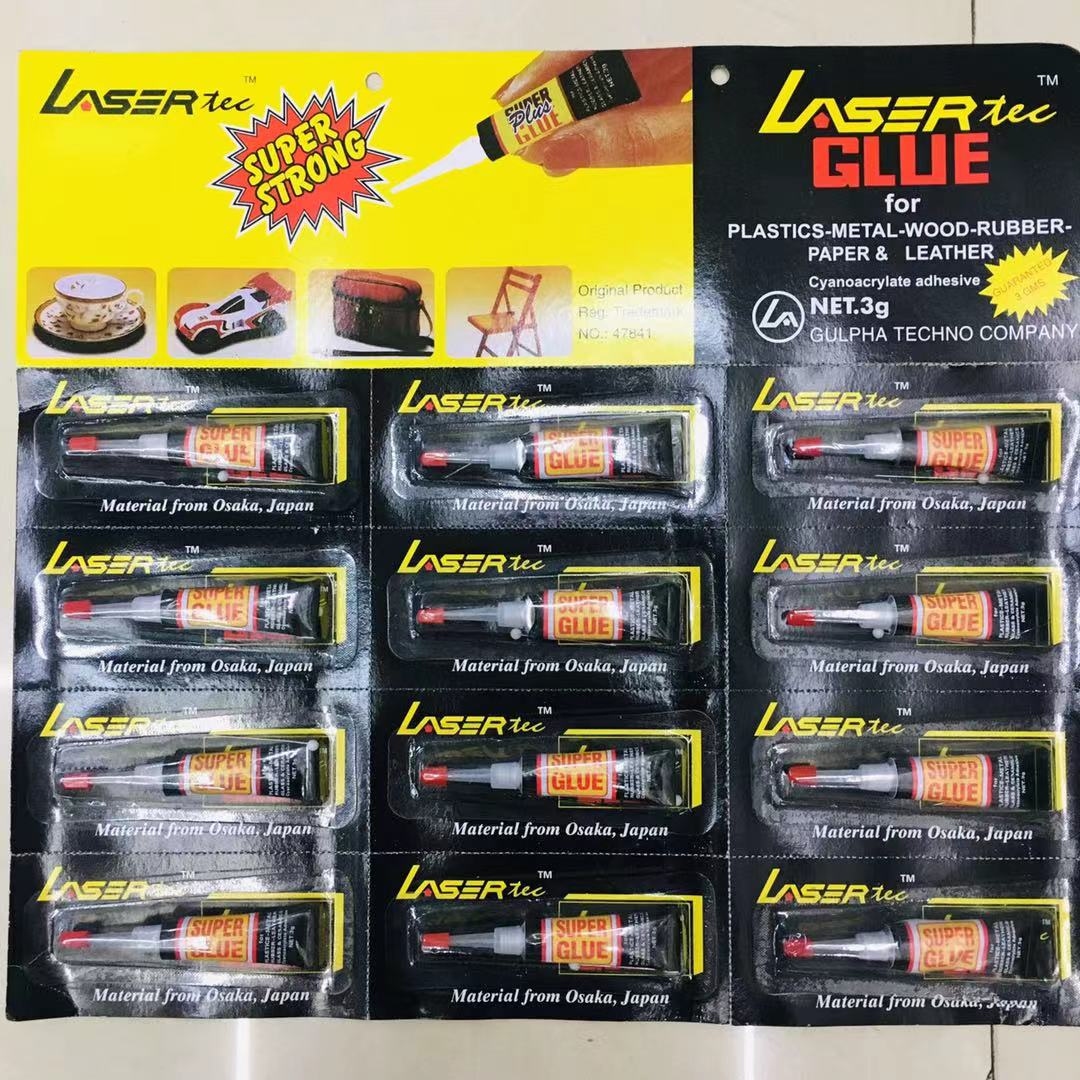
The public catalog lists 41 cyanoacrylate listings: 37 under Super Glue / 502 (mostly card packs, for example GLE-050) and 4 under Super Glue / 502 Bottle (for example GLE-068), plus GLE-037 listed by weight with a 2,000 g MOQ. Card titles do not state viscosity or set time. Send your parts, gap, orientation, takt time and pack, and GlueMFG can propose a viscosity and confirm the TDS, SDS and MOQ by inquiry. For drums, see bulk super glue packaging; for the OEM overview, see the super glue manufacturer page.

GLE-050 Super Glue 502
Card pack for retail and MRO. Grade viscosity confirmed by inquiry.
GLE-068 Bottle
Bottle format for workshop and line use. Ask for nozzle options.
GLE-037 By weight
Listed per gram, MOQ 2,000 g. Confirm grade and container by inquiry.
Related GlueMFG Resources
- Bulk Super Glue Packaging: 20 kg to 1000 kg
- Super Glue SDS: Full 16-Section Safety Data Sheet
- Adhesive Strength Testing for B2B Buyers
- OEM Adhesive Packaging Options
- GlueMFG product catalog
FAQ
Which cyanoacrylate viscosity should an assembly line start with?
Start from the joint gap and the part orientation. Tight, pre-assembled fits where the glue must travel into the seam suit water-thin or thin grades. Most general part-to-part bonds start with a medium grade. Gaps, porous parts and vertical or overhead surfaces need a thick or gel grade. Run a short trial on real parts before fixing the grade on the PO.
What viscosity range does GlueMFG supply for cyanoacrylate?
GlueMFG produces ethyl cyanoacrylate and sets viscosity per batch to order, from a wicking grade of around 3 mPa-s up to gap-filling gels above 1500 mPa-s, as described on the bulk super glue page. The exact viscosity, set time and pack for a given catalog SKU are confirmed by inquiry; catalog card titles do not state them.
Why do bonded parts turn white around the joint?
That haze is called blooming or frosting. Uncured monomer evaporates and settles back on the part as a fine white powder. It is worse with too much glue, slow cure, poor ventilation and closed parts. Use less adhesive, improve airflow, consider an accelerator, or ask about a low-odour, low-bloom grade for visible or clear parts.
Can super glue bond PP, PE or silicone rubber on a production line?
Not reliably on its own. Low-surface-energy plastics such as PP, PE and PTFE, and silicone rubber, usually need a polyolefin primer before cyanoacrylate, or a different adhesive family. Test with the primer and your real parts, and do not approve the grade on a bond made to ABS or steel.
When should a buyer not use cyanoacrylate at all?
Avoid it for gaps much wider than a gel grade can fill, for large flexible areas, for joints that stay wet or hot in service, and for bonds that must absorb repeated impact unless a toughened grade has been tested. In those cases a two-part epoxy, a contact adhesive or a sealant is usually the safer choice.