For a fabric glue range, choose by the job and the laundry: flexible water-based fabric glue for hems, patches and crafts, solvent-based contact adhesive for canvas, upholstery and outdoor gear, and hot melt or fusible film for production lines with heat presses. The specification that matters most to the end customer is flexibility after cure and wash resistance, so ask for wash-test data and print the cure time before washing. GlueMFG does not list a dedicated fabric glue today; it is confirmed by inquiry.
Searches for the best glue for fabric come from crafters, tailors, upholstery shops and outdoor-gear repairers, and each expects something different. A distributor or private-label brand that sells one bottle for all of them collects complaints about stiff hems, glue washing out, and patches peeling off nylon. This guide is for importers, distributors and private-label buyers deciding which fabric glue grades to stock and what to ask before ordering.
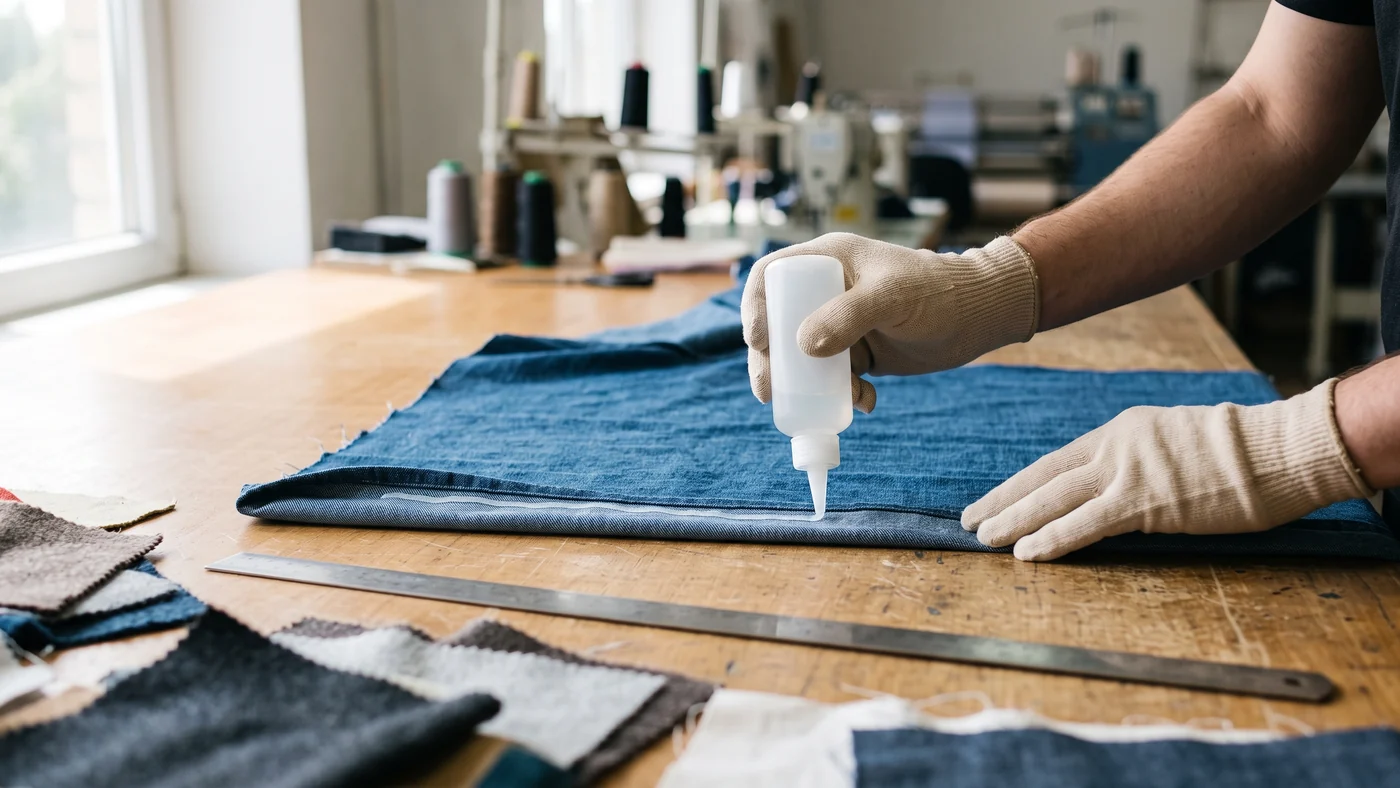
Match the Glue Type to the Fabric Job
| Type | Typical jobs | Strengths | Where it disappoints |
|---|---|---|---|
| Flexible water-based fabric glue | Hems, patches, appliqué, costume and craft | Low odour, soap-and-water clean-up, soft after cure | Slow cure; weaker on coated synthetics |
| Solvent-based contact adhesive | Canvas, upholstery, bags, outdoor gear | Strong grab, good on heavier fabrics and foam | Odour and flammable labels; can stain light fabric |
| Hot melt / fusible film | Garment and textile production with heat presses | Fast, clean, repeatable on a line | Needs equipment; heat-sensitive fabrics |
| Craft or white glue | Temporary craft, school projects | Low cost, familiar | Usually not wash resistant; stiff |
For the heavier, solvent-based side, see contact adhesive: solvent-based vs water-based; for production lines, see the hot melt adhesive selection guide.
Do not sell a standard cyanoacrylate super glue as a fabric glue. It cures hard and brittle, can leave a visible hard spot, can generate heat on cotton, and often cracks when the fabric flexes or is washed. Sell a flexible fabric grade or a contact adhesive instead.
Test Flexibility and Peel Before Approving a Grade
- Fabrics tested: ask for results on cotton, denim, polyester, nylon and any coated or water-repellent fabric your customers use. Synthetics and coatings are where general-purpose grades fail.
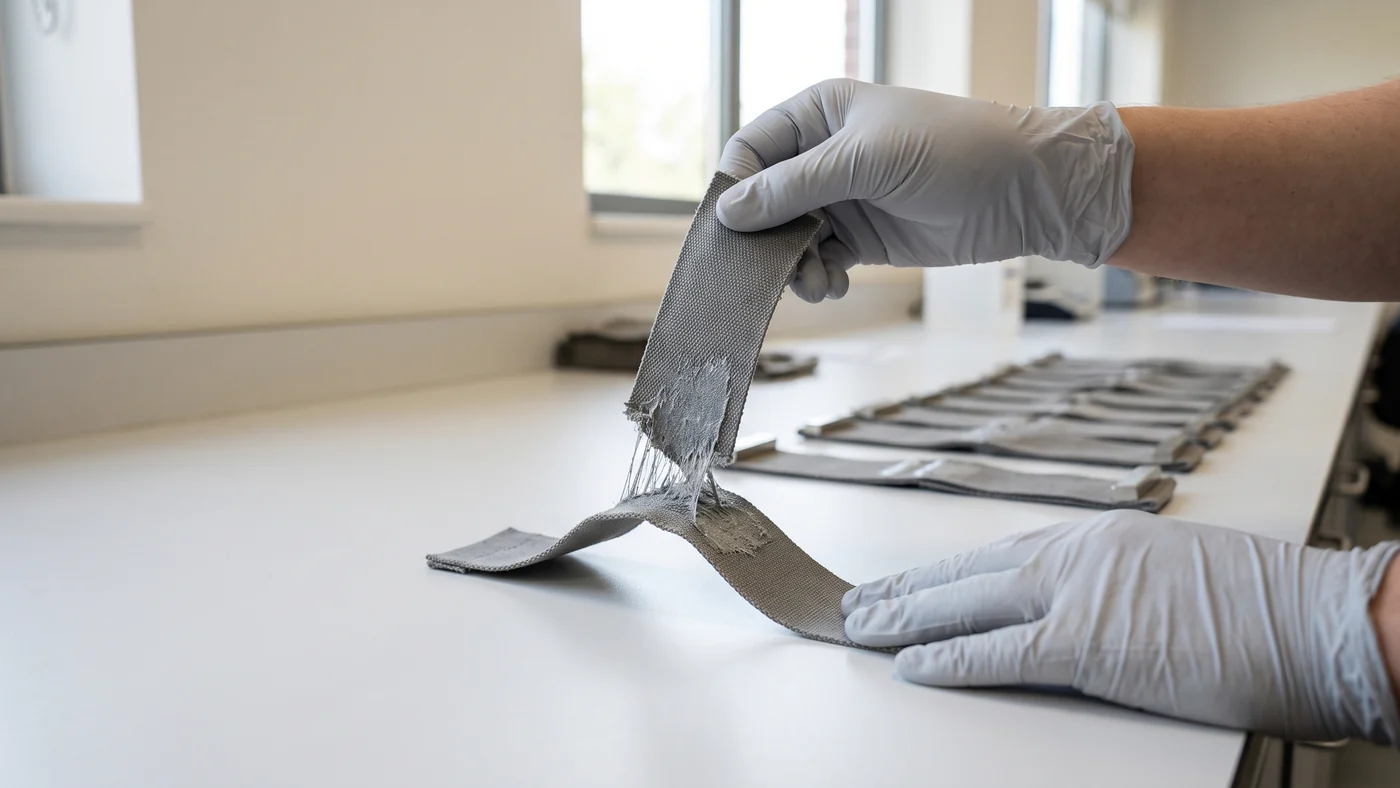
- Peel strength and failure mode: fabric joints fail in peel, not shear. Ask for peel data and look at whether samples fail in the glue or tear the fabric. See adhesive strength testing for buyers.
- Hand feel after cure: bend and crumple the sample. A stiff line on a garment is a complaint even if the bond holds.
- Strike-through and staining: check light-coloured and thin fabrics for dark marks after cure.
- Cure time: handling time and full cure, which decides when the item can be worn or washed.
Washing, Dry Cleaning and Heat
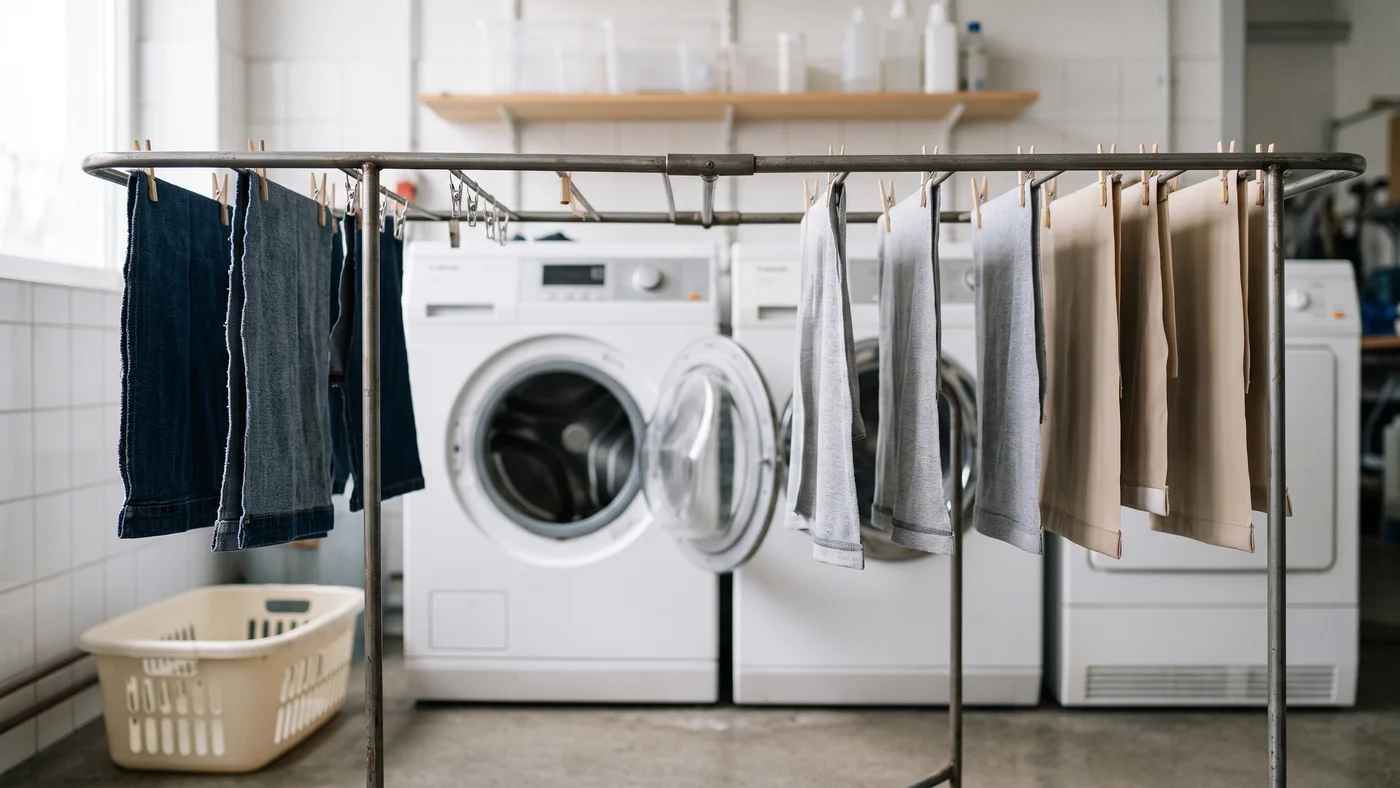
- Wash cycles: ask how many machine-wash cycles were tested and at what temperature. Only print what you have in writing.
- Cure before first wash: many grades need one or more days of cure before washing. Put it on the front of the pack.
- Dryers and ironing: heat can soften some glues; others need heat to set. Ask which applies and print it.
- Dry cleaning solvents can attack some adhesives. If the channel is tailoring or uniforms, ask for dry-cleaning results.
- Children's products: if the glue will be sold for school or toy use, ask what product-safety and labelling evidence the supplier can provide for your market. See craft glue and white school glue sourcing.
Packs, Labels and Documents
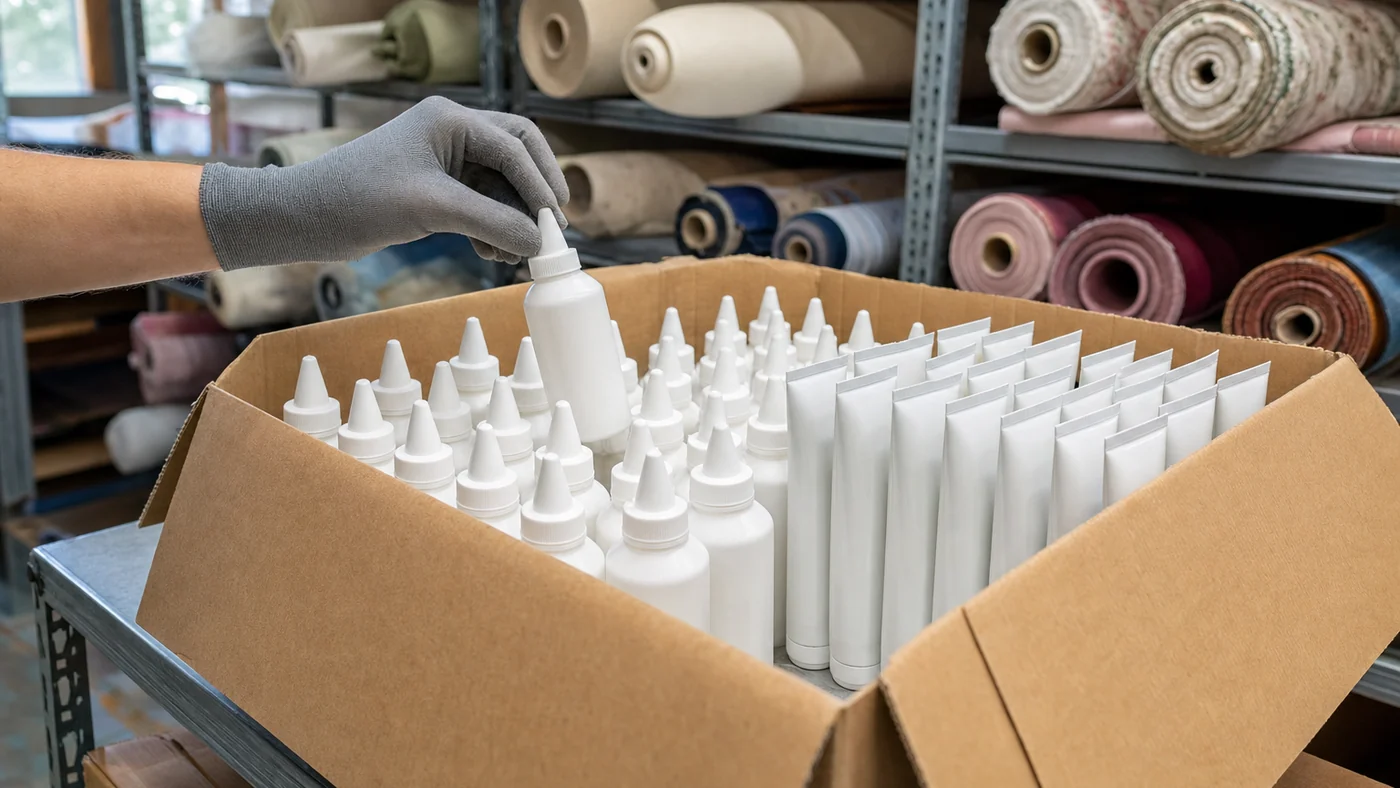
- Applicator: fine-tip nozzles for hems and appliqué, wider caps or brushes for upholstery, tubes for repair kits.
- Sizes by channel: small bottles and blister cards for craft and haberdashery retail; larger bottles for workrooms. See OEM adhesive packaging options.
- Label claims: washable, dry-cleanable, flexible or permanent only when backed by the supplier's test data for that grade.
- SDS and transport: water-based grades are usually simpler to ship than solvent-based contact adhesives; check SDS Sections 2 and 14 for the exact grade. See how to read an adhesive SDS.
- Freeze protection: water-based glues can be damaged by freezing in winter transit; ask for the stated storage range.
RFQ Checklist for Fabric Glue
- Channel (craft retail, haberdashery, tailoring, upholstery, outdoor gear, private label) and main jobs.
- Fabrics to bond, including coated or water-repellent fabrics.
- Glue type: flexible water-based, solvent contact, hot melt or fusible.
- Requested data: peel results, wash cycles and temperature, cure time before washing, heat and dry-cleaning behaviour.
- Pack: bottle or tube size, nozzle, blister or box, label languages, carton count.
- SDS in your market format, transport classification, storage range and stated shelf life.
- Quantity per SKU, destination, shipping mode and target price for sample and trial orders.
What GlueMFG Can Support Around This Topic
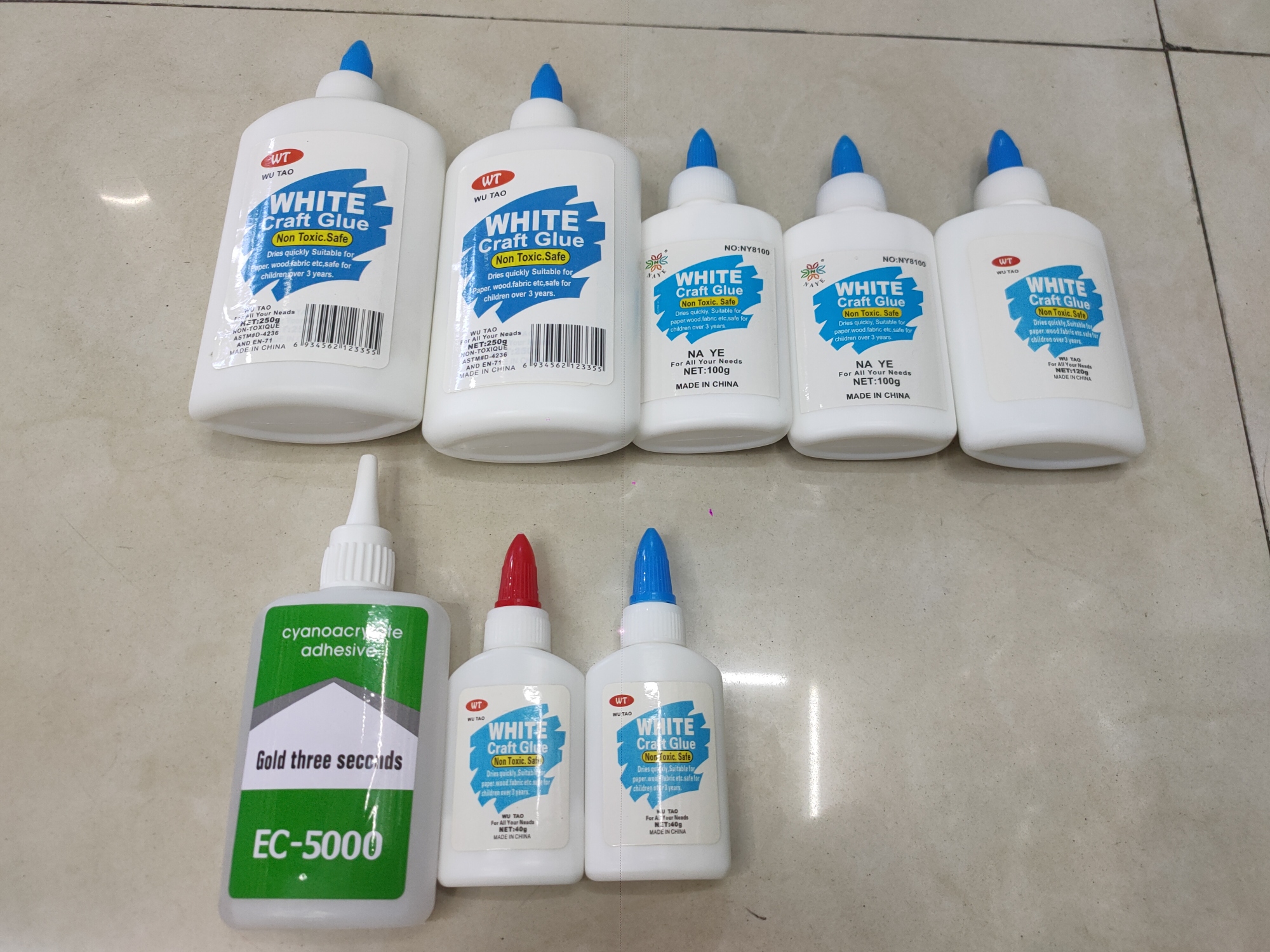
GLE-090 Craft glue
Listed white craft glue for retail and school ranges. Not a washable fabric grade; suitability confirmed by inquiry.
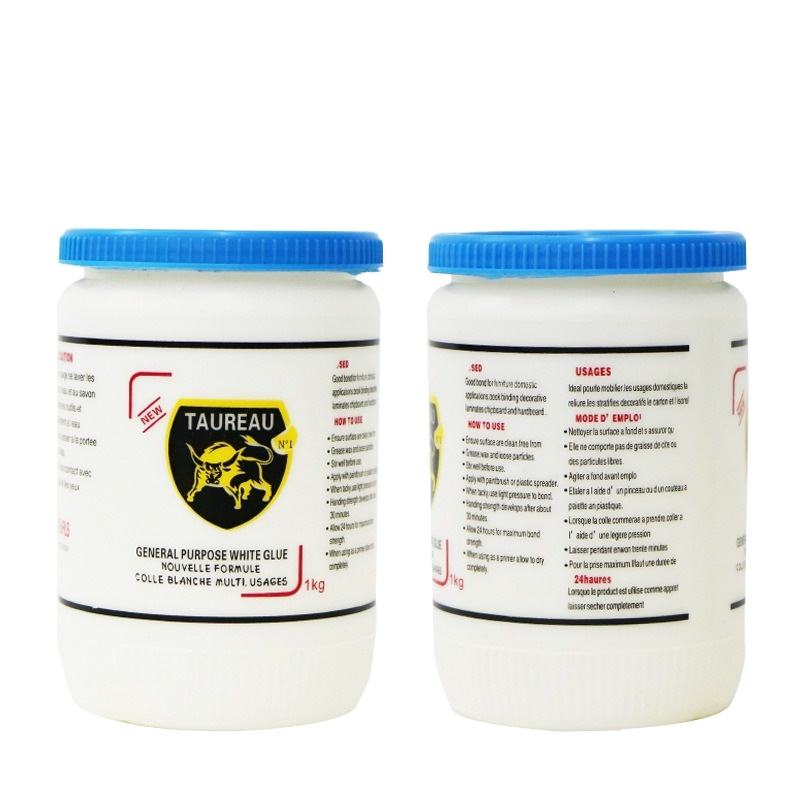
GLE-082 Water-based acrylic glue
Listed water-based glue. Fabric flexibility and wash behaviour confirmed by inquiry and sample test.
Fabric glue grades by inquiry
Not a listed SKU. Send fabrics, wash needs, pack size and markets; availability, documents and MOQ confirmed by inquiry.
Related GlueMFG Resources
- Craft Glue and White School Glue: Private-Label Sourcing
- Shoe Glue for Distributors and Private Label
- Contact Cement vs Spray Adhesive
- Hot Melt Adhesive Selection Guide
- GlueMFG product catalog
FAQ
What kind of glue works best on fabric?
It depends on the job. Flexible water-based fabric glues suit hems, patches and crafts; solvent-based contact adhesives suit heavier canvas, upholstery and outdoor gear; hot melt and fusible films suit production lines with heat presses. Rigid glues such as standard super glue usually crack or leave a hard spot on fabric that bends.
Is fabric glue washable?
Some grades are rated for machine washing after full cure and some are not. Ask the supplier how many wash cycles were tested, at what temperature, and how long the glue must cure before the first wash. Print that cure time and wash guidance on the pack.
Can I use craft glue or white glue on fabric?
Standard white school or craft glue is fine for temporary craft projects, but it usually softens or washes out in laundry and stays stiff. If customers expect a washable hem or patch, sell a grade made and tested for fabric instead.
Does fabric glue work on polyester and nylon?
Synthetic fabrics are harder to bond than cotton, especially when coated or water-repellent finished. Ask for test results on the exact fabrics your customers use, and run a peel and wash test on samples before ordering volume.
Does GlueMFG sell fabric glue?
A dedicated fabric glue is not a listed catalog SKU today. GlueMFG lists craft and white glues (GLE-090, GLE-082) and contact adhesives (GLE-005, GLE-006) that cover some textile jobs. For a fabric grade, send fabrics, wash needs, pack size and markets, and availability, documents and MOQ will be confirmed by inquiry.