For adhesive strength testing before a bulk order, pick the test by joint type: lap shear (ASTM D1002, ISO 4587) for rigid joints, peel (ASTM D1876, ASTM D903) for flexible ones, plus an aging step if the product sees humidity, heat or water. Compare suppliers only on the same standard, substrate, cure and temperature, and always record the failure mode. Strength values for a specific GlueMFG grade are confirmed by inquiry, not read off catalog titles.
Importers and OEM buyers often receive a TDS with one impressive number and no test conditions. That number cannot tell you whether the glue will hold your substrates after a humid sea voyage or a winter in a warehouse. This guide explains which tests to request, how to read them, and what a simple incoming check looks like.
Why Test Before a Bulk Order
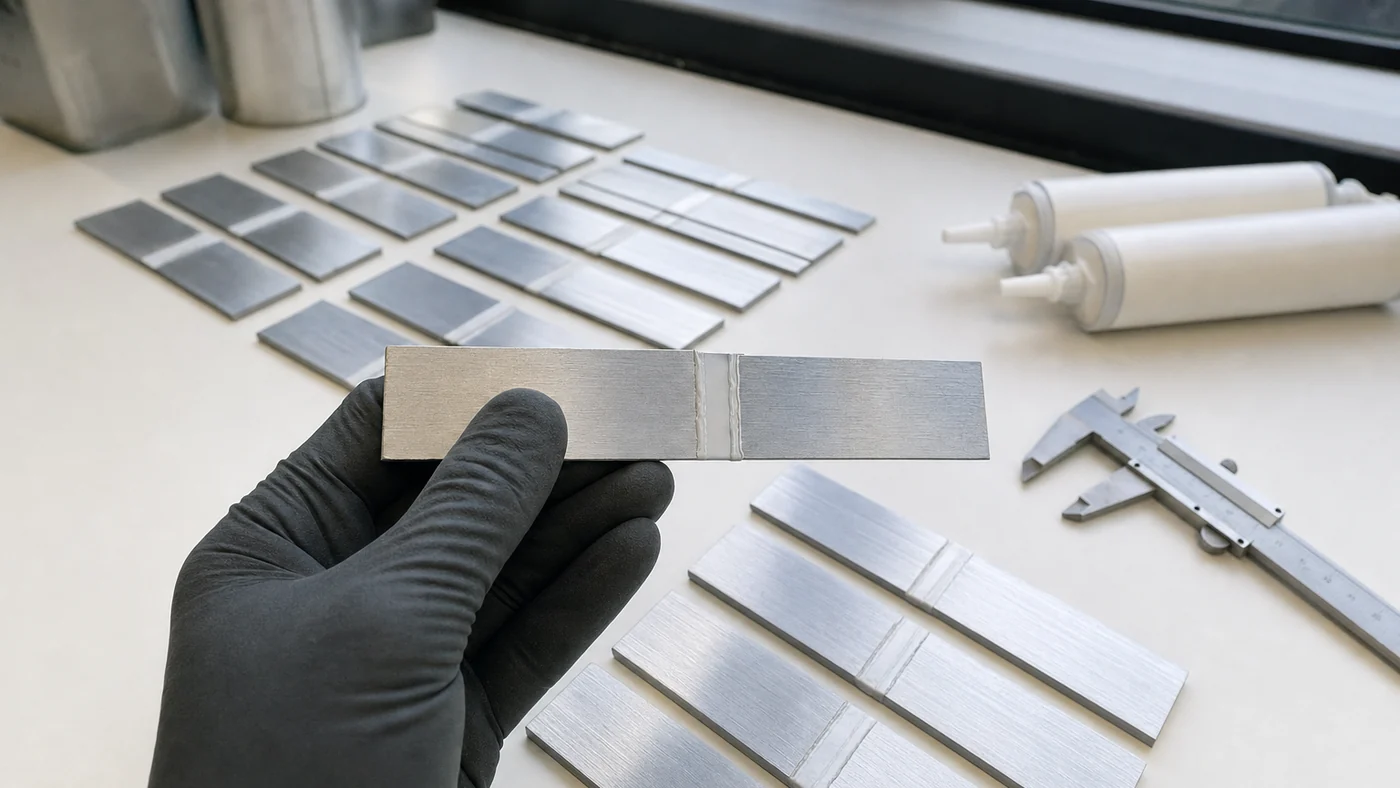
Testing earns its cost at three points: when you shortlist a grade, when you approve a trial order, and when a reorder batch arrives. The goal is not a lab report for its own sake; it is to catch a wrong grade, a weak surface preparation step, or a formula change before it reaches your customers.
- Grade fit: does this chemistry bond your actual substrates (painted steel, ABS, PVC, oak, glass)?
- Batch consistency: does a reorder batch behave like the approved sample?
- Claim support: can the numbers you plan to print on the pack be traced to a documented test?
Lap Shear for Rigid Joints
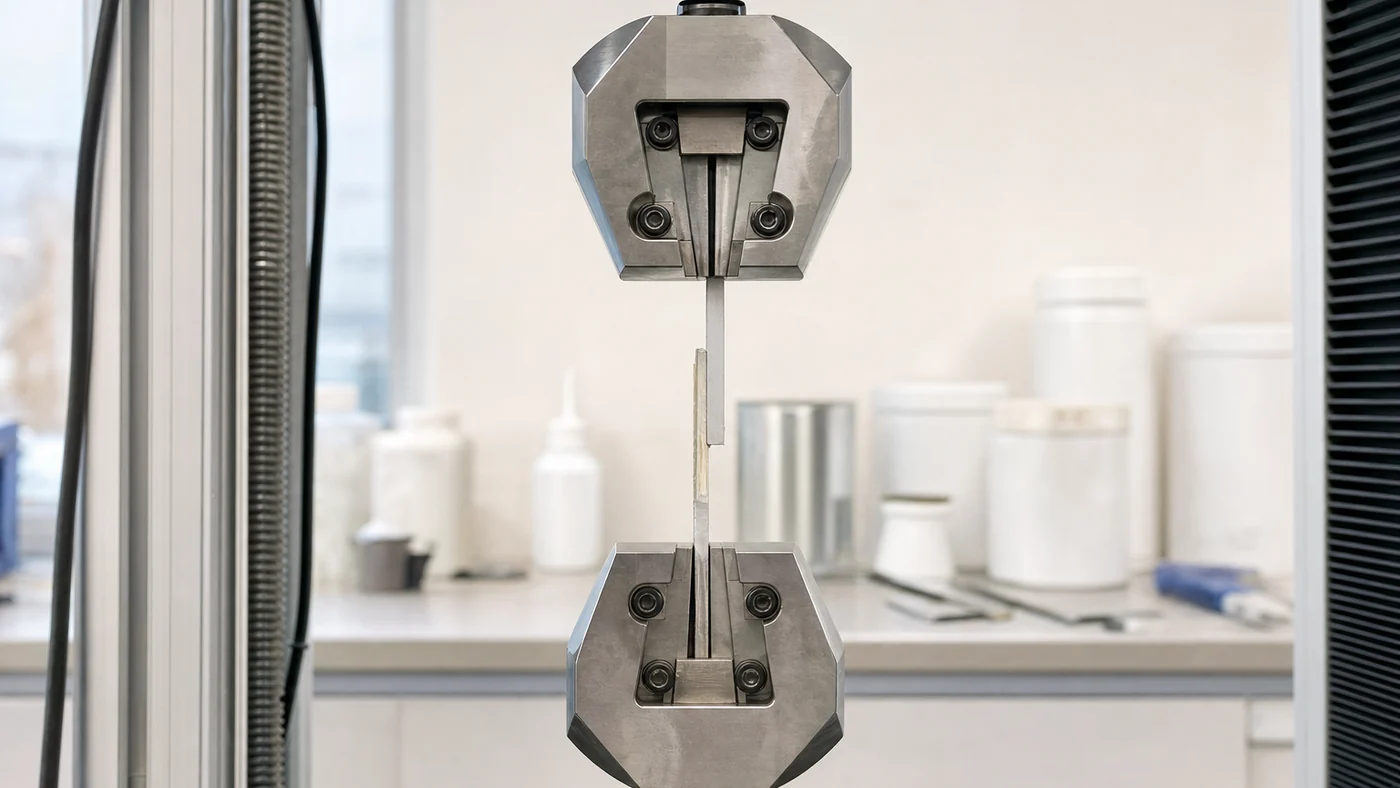
Lap shear is the most common number on epoxy, CA and structural adhesive data sheets. Two strips overlap by a set area, the adhesive cures, and a testing machine pulls them apart in-plane.
| Joint / material | Common methods | Ask the supplier |
|---|---|---|
| Metal to metal | ASTM D1002, ISO 4587 | Which alloy, which surface prep (abrade, degrease, primer)? |
| Rigid plastics | ASTM D3163 | Which plastic grade, was the surface treated? |
| Wood | EN 205 (with EN 204 D1 to D4 classes) | Which durability class and conditioning sequence? |
| Tensile (butt joint) | ASTM D897 | Only relevant if your joint is pulled straight apart |
Related reading: metal and plastic epoxy selection and PVA wood glue D3/D4 for exporters.
Do not choose between two suppliers on lap shear alone if your joint actually peels, such as a laminate edge, a label, a foam pad or a flexible hose. A glue with a high shear value can still fail early in peel.
Peel Tests for Flexible Bonds
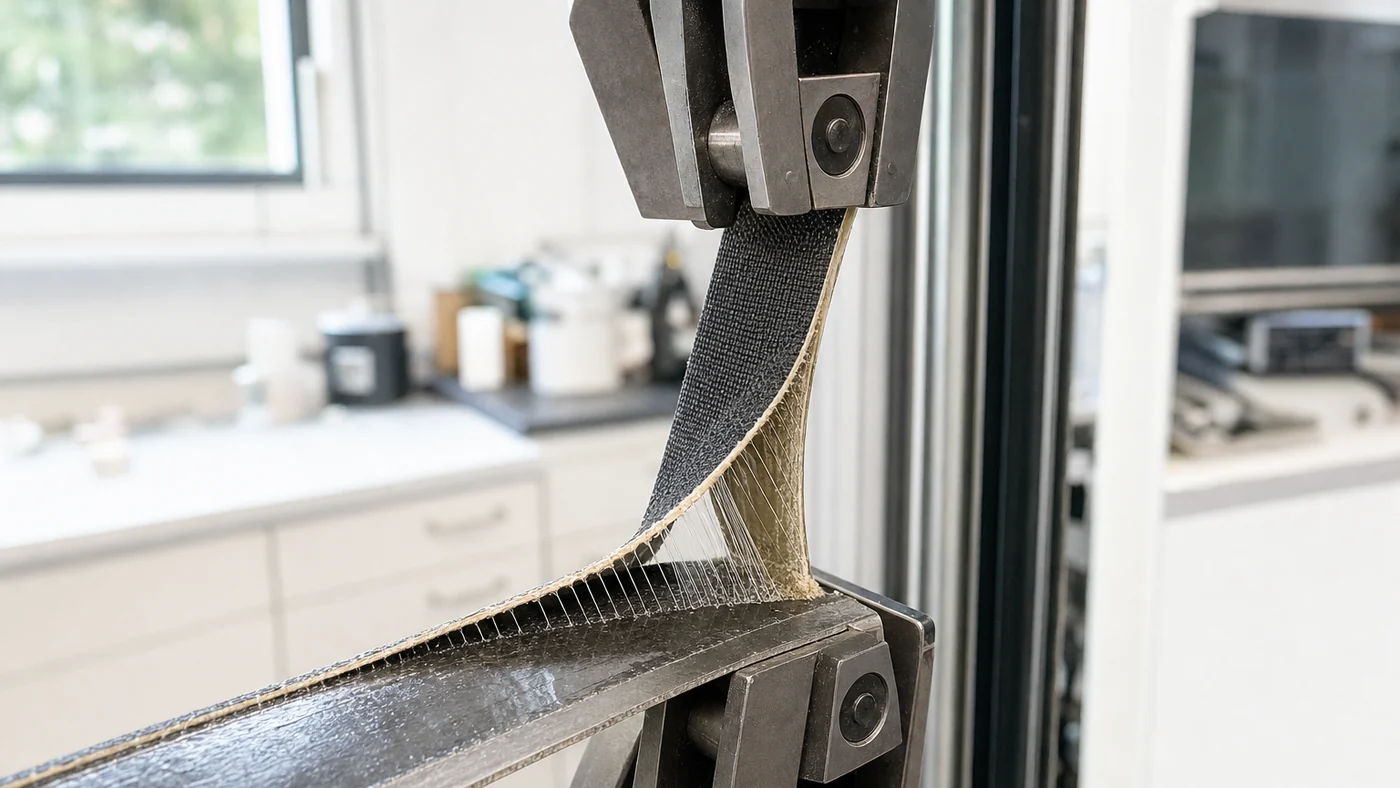
When one or both parts can bend, the load concentrates on a thin line at the edge of the bond. Peel tests measure that:
- T-peel (ASTM D1876): two flexible parts pulled apart in a T shape. Common for contact adhesive on foils, fabrics and laminates.
- 180-degree peel (ASTM D903): a flexible strip peeled back from a rigid panel. Common for laminates, edge bands and pressure-sensitive products.
- Sealant adhesion: sealants have their own methods (for example ASTM C794 peel adhesion), which matter for silicone and PU joints more than lap shear does.
For contact adhesive and spray grades, see solvent vs water-based contact adhesive and contact cement vs spray adhesive.
Aging, Failure Mode and an Incoming Check
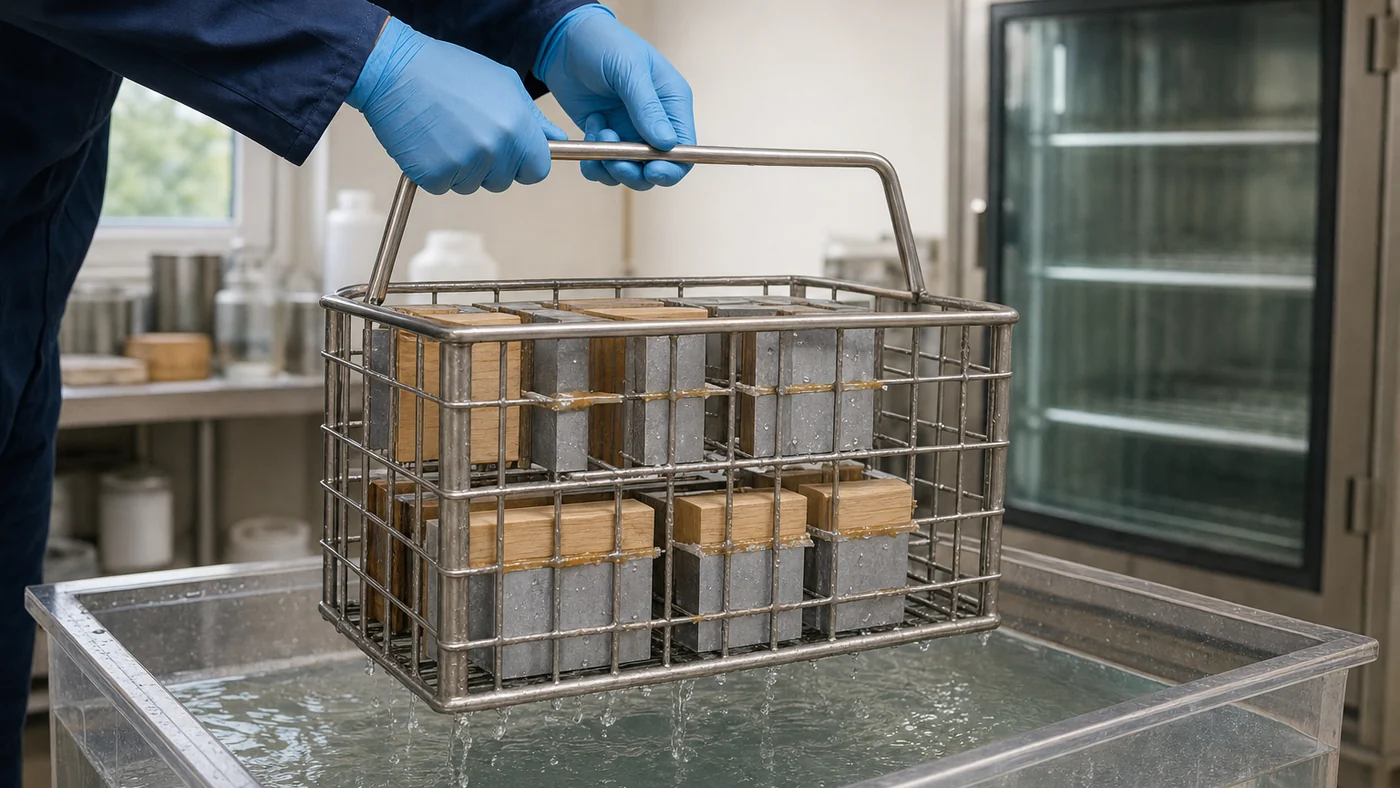
First-day strength is the easy number. Ask also for strength after the conditions your product will see: humidity, water soak, heat, or cold cycles. Then look at how the joint failed:
| Failure mode | What it usually means | Next step |
|---|---|---|
| Adhesive failure (glue peels clean off one surface) | Surface prep or grade-to-substrate fit problem | Check cleaning, abrasion, primer; try another grade |
| Cohesive failure (glue on both surfaces) | Bond to surfaces is good; glue strength is the limit | Compare grades if the value is too low |
| Substrate failure (the part breaks) | Bond is stronger than the part | Usually acceptable; confirm after aging |
A simple incoming check for each reorder batch: bond five coupons on your real substrate with your normal prep, cure them as the TDS states, pull them on the same machine or jig, and compare the average and the failure mode with the approved sample. ISO 10365 gives standard names for failure patterns if you need a shared language with the supplier.
If a strength or temperature number is not backed by a test on the exact grade, keep it off your pack and your sales sheet. Ask for the report by inquiry first.
What GlueMFG Can Support Around This Topic
GlueMFG lists 93 SKUs across 13 categories, including AB / epoxy (GLE-001 to GLE-004), contact / acrylic (GLE-005 to GLE-011), silicone / PU (GLE-028 to GLE-030) and wood glue such as GLE-089. Catalog cards do not list strength values. Send your substrates, joint type and the test standard you use, and GlueMFG can provide the TDS and any available test data for the grade, or agree a sample plan, by inquiry.
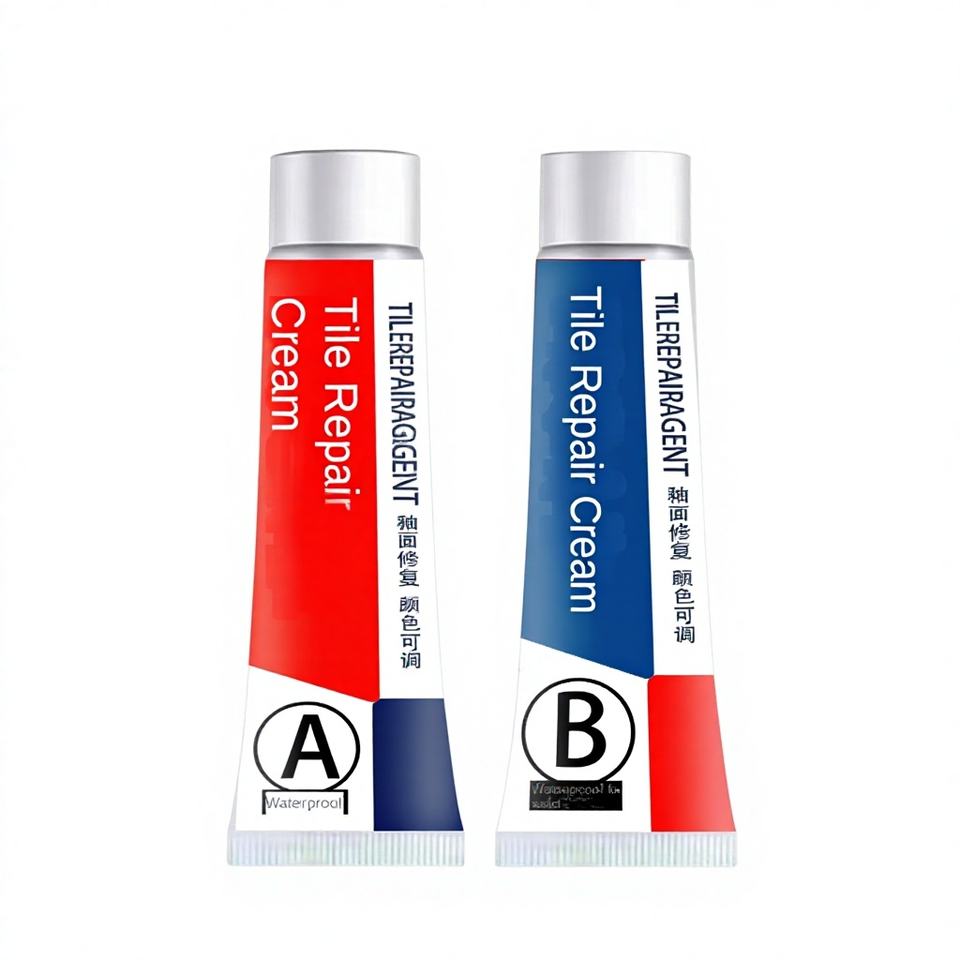
GLE-001 Direct Epoxy
AB epoxy for rigid joints. Ask for lap shear data and test conditions.
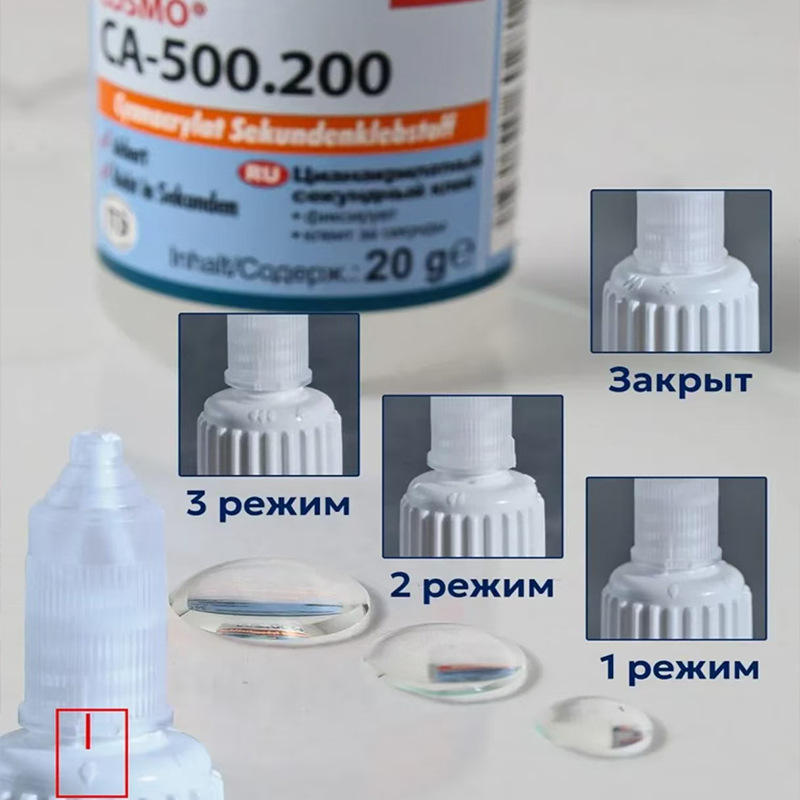
GLE-008 Oil-based acrylic
Contact-type adhesive. Peel data and open time confirmed by inquiry.
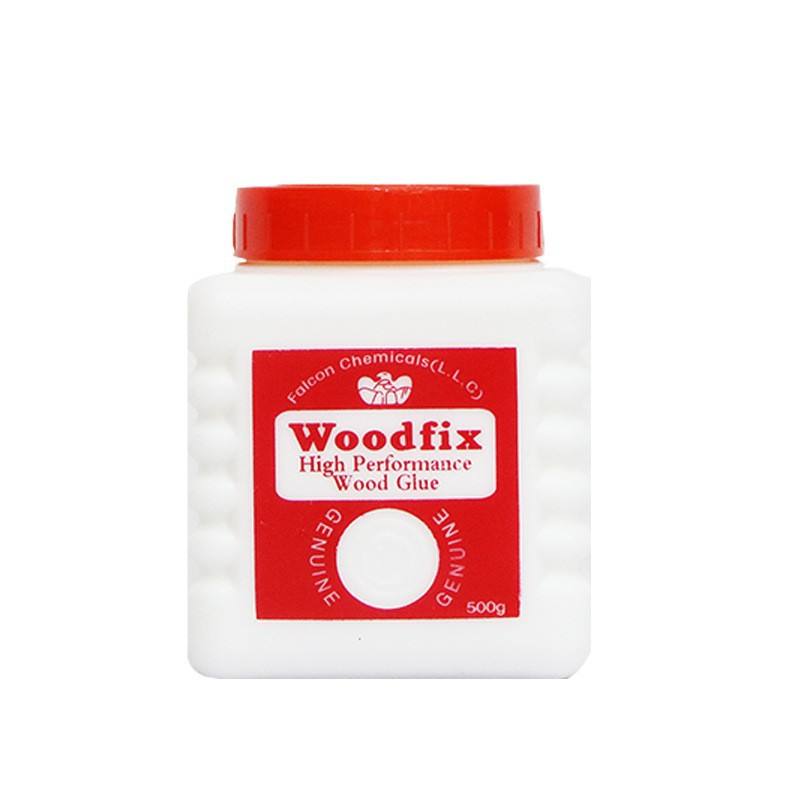
GLE-089 White wood glue
Ask which EN 204 class, if any, the grade has been tested to.
Related GlueMFG Resources
- Metal & Plastic Epoxy for Production: Selection Guide
- Epoxy Cure Time & Shelf Life
- PVA Wood Glue D3/D4 for Exporters
- Industrial Glue Supplier Shortlist Criteria
- GlueMFG product catalog
FAQ
Which adhesive strength test should a B2B buyer ask for?
Match the test to how the joint is loaded. Rigid-to-rigid joints (metal, hard plastic, wood) are usually checked with lap shear tests such as ASTM D1002 or ISO 4587. Flexible-to-flexible or flexible-to-rigid joints are checked with peel tests such as ASTM D1876 (T-peel) or ASTM D903 (180-degree peel). Sealant joints use their own sealant methods. Ask which standard and which substrates were used before comparing any numbers.
Can I compare strength numbers from two suppliers' TDS?
Only if the test standard, substrate, surface preparation, bond line thickness, cure schedule and test temperature are the same. Two lap shear values measured on different metals or after different cure times are not comparable. When those details are missing from a TDS, ask for them or run the same test on both samples yourself.
Does GlueMFG publish strength values for its catalog products?
The public catalog cards do not list strength values. Where a buyer needs lap shear, peel or other test data for a specific grade, ask for the TDS and any available test report by inquiry, and agree the test method if new testing is needed. GlueMFG does not publish numbers it has not documented.
Why do aging tests matter more than first-day strength?
Many bonds look strong after 24 hours and then weaken after humidity, heat, water soak or cold cycles. If the product will see outdoor exposure, a humid container, or wet service, ask for strength retained after aging, not only initial strength. For wood glue, the EN 204 durability classes (D1 to D4) are defined by tests after conditioning.
What should a buyer record when testing incoming samples?
Record the batch number, substrate and surface preparation, bond area, cure time and temperature, test speed, the peak load and the failure mode (adhesive failure at the surface, cohesive failure inside the glue, or substrate failure). The failure mode often tells you more about surface preparation or grade fit than the peak number.